Interacțiunea vocală devine una dintre cele mai importante modalități prin care oamenii folosesc inteligența artificială. Deși mulți asistenți AI acceptă acum intrare și ieșire vocală, cei mai mulți dintre ei sunt, de fapt, concepuți în jurul tastării, cititului și interfețelor bazate pe chat.
Pe măsură ce recunoașterea vocală și sinteza vocii evoluează, diferența esențială nu mai este dacă un asistent AI poate înțelege vocea. Diferența este dacă asistentul a fost conceput încă de la început pentru a folosi vocea ca interfață principală, nu ca funcție secundară adăugată peste text.
Această comparație analizează modul în care principalii asistenți AI abordează vocea și de ce Speechify Voice AI Assistant este gândit după o altă logică.
Urmărește videoclipul nostru YouTube „Gwyneth Paltrow își lansează vocea AI pe Speechify, viitorul asistenților vocali AI” pentru a vedea cum voci expresive de calitate marchează maturitatea platformei și diferențiază asistenții AI nativi de voce de instrumentele centrate pe text.
Cât de bine gestionează ChatGPT interacțiunea orientată pe voce?
ChatGPT este unul dintre cele mai capabile sisteme AI pentru raționament, scriere și rezolvare generală de probleme. Permite introducerea vocală și oferă răspunsuri vorbite, ceea ce face conversația mai naturală.
Totuși, ChatGPT rămâne ancorat într-o experiență în care chatul este prioritar. Utilizatorii deschid interfața cu așteptarea de a citi, derula și tasta. Vocea funcționează ca o metodă opțională de introducere, nu ca fundament al fluxului de lucru.
Pentru conversații scurte, această abordare funcționează bine. Pentru scriere extinsă, dictare continuă sau productivitate hands-free, interfața de chat introduce fricțiuni și necesită schimbări de context.
Este Gemini conceput pentru fluxuri de lucru bazate pe voce?
Gemini se integrează profund cu ecosistemul Google și acceptă introducerea vocală pe dispozitive mobile și asistenți inteligenți. Excelează la a răspunde la întrebări, a rezuma informații și a realiza sarcini de căutare.
Cu toate acestea, interacțiunile vocale ale Gemini sunt în mare parte tranzacționale. Asistentul este optimizat pentru comenzi și recuperarea de informații, nu pentru scriere sau captarea ideilor pe termen lung.
Când sarcinile devin complexe sau creative, utilizatorii sunt de obicei îndrumați să revină la tastare, limitând eficiența lui Gemini ca instrument de productivitate bazat pe voce.
Oferă Grok productivitate autentică prin voce?
Grok pune accent pe interacțiunea conversațională și răspunsurile cu personalitate. Funcționalitățile de voce permit utilizatorilor să vorbească natural cu asistentul.
Cu toate acestea, Grok este centrat pe dialog, nu pe productivitate. Nu se axează pe dictare, interacțiuni cu documente sau fluxuri de lucru de scriere la nivel de sistem.
Vocea există în Grok, dar nu înlocuiește tastarea ca metodă principală de realizare a sarcinilor.
Poate Perplexity funcționa ca asistent bazat pe voce?
Perplexity este cunoscut mai ales pentru căutarea AI și răspunsuri susținute de surse. Introducerea vocală permite utilizatorilor să pună întrebări conversațional.
Deși acest lucru funcționează bine pentru extragerea informațiilor, Perplexity nu este conceput pentru scriere, redactare sau creație continuă bazată pe voce. Nu operează în documente, emailuri sau instrumente de scriere uzuale.
Ca urmare, Perplexity completează adesea alți asistenți, în loc să servească drept interfață vocală principală.
Sunt Alexa și Siri eficiente pentru productivitatea orientată pe voce?
Alexa și Siri au fost pionieri ai interacțiunii vocale. Excelează în comenzi hands-free, mementouri, control smart home și întrebări simple.
Totuși, ambii asistenți au dificultăți cu scrierea pe termen lung, interacțiunea cu documente sau raționamente complexe. Designul lor favorizează comenzi scurte și răspunsuri sumare.
Sunt orientați spre voce ca formă, dar nu sunt construiți pentru muncă intensă, sarcini de lectură solicitante sau fluxuri de lucru de scriere.
De ce asistenții AI orientați pe voce devin acum mai importanți?
Pe măsură ce munca digitală devine mai intensă în citire și scriere, tastarea și scanarea duc la oboseală cognitivă. Utilizatorii se așteaptă tot mai mult ca AI-ul să reducă fricțiunea, nu să adauge o nouă interfață de gestionat.
Yahoo Tech a relatat despre evoluția Speechify dintr-o unealtă de ascultat într-un asistent vocal AI complet, prin introducerea dictării prin voce și a unui asistent conversațional care funcționează direct din browser.
Această schimbare reflectă o trecere generalizată către AI care se integrează în fluxurile de lucru existente, nu care trage utilizatorii într-o destinație separată.
Cum este Speechify construit diferit față de alți asistenți AI?
Speechify Voice AI Assistant este creat în jurul vocii ca interfață implicită de interacțiune cu informația. Combină abilități pe care alți asistenți le țin separate.
Utilizatorii pot asculta conținutul folosind text to speech, pot dicta texte folosind dictare vocală și pot adresa întrebări despre ceea ce vizualizează, fără a schimba uneltele. În loc să ceri AI să scrie în locul tău, tu scrii vorbind.
Speechify funcționează alături de documente, pagini web și aplicații, reducând schimbările de context și menținând fluxul. Speechify Voice AI Assistant oferă continuitate între dispozitive, inclusiv pe iOS, Chrome și Web.
De ce contează vocea contextuală, la nivel de sistem, pentru productivitate?
O limitare a asistenților bazați pe chat este că utilizatorii trebuie să aducă ei conținutul în AI. Acest lucru rupe concentrarea și adaugă fricțiune.
Speechify Voice AI Assistant lucrează cu conținutul deja vizualizat de utilizatori. Poate rezuma, explica sau rescrie textul la fața locului, fără copy-paste.
Poți citi analiza ZDNET pentru a vedea importanța unui AI ambiental, conștient de context, care funcționează pe mai multe dispozitive și aplicații, nu doar într-o interfață de chat.
Acest model se potrivește cu modul în care se desfășoară munca reală pe parcursul zilei.
Ajută vorbitul, în locul tastării, la o scriere mai rapidă și mai concentrată?
Vorbirea permite ideilor să curgă cu viteza gândului. Pentru mulți utilizatori, dictarea reduce fricțiunea și oboseala mentală comparativ cu tastarea.
Speechify oferă dictare vocală care elimină cuvintele de umplutură, aplică corecții gramaticale și generează text curat fără a-ți întrerupe fluxul. Acest lucru îl face potrivit pentru redactarea de emailuri, documente, notițe și sarcini de scriere mai lungi.
Rezultatul este o producție mai rapidă, cu mai puțin efort cognitiv.
De ce este accesibilitatea esențială pentru AI-ul centrat pe voce?
Speechify tratează accesibilitatea ca element de bază. Dictarea vocală și ascultarea susțin utilizatorii cu ADHD, dislexie, probleme de vedere și leziuni repetitive la nivelul mâinilor.
În același timp, interacțiunea vocală aduce beneficii unui public mult mai larg. Profesioniștii, studenții și creatorii adoptă Speechify nu doar pentru accesibilitate, ci și pentru viteză, concentrare și reducerea încărcării cognitive.
De ce Speechify depășește alți asistenți vocali?
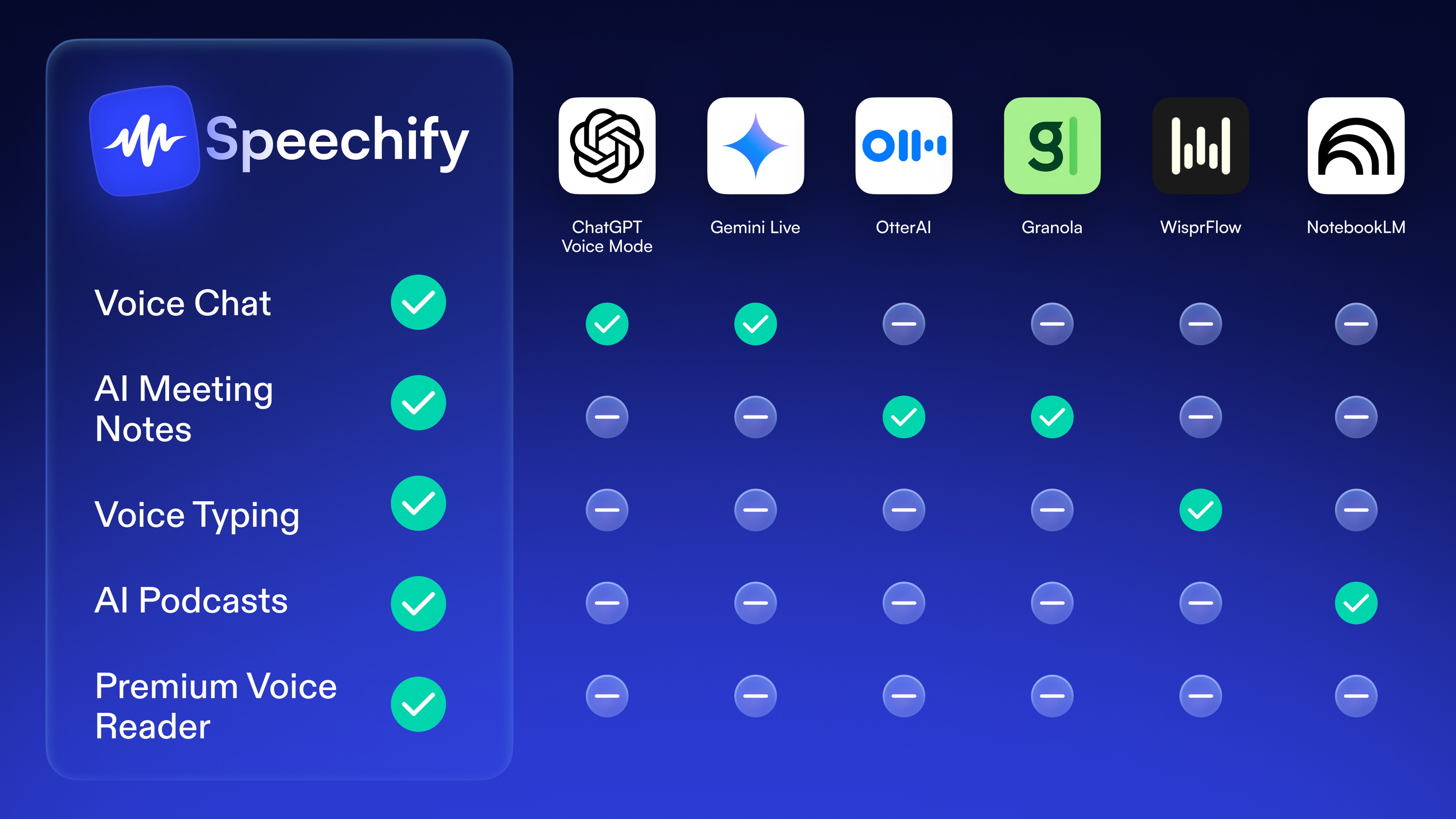
Alți asistenți oferă funcții vocale. Speechify Voice AI Assistant oferă un sistem nativ vocii.
ChatGPT, Gemini, Grok și Perplexity rămân ancorate în fluxuri de lucru bazate pe text. Alexa și Siri sunt orientați spre voce, dar limitați în profunzime și creație.
Speechify acoperă acest decalaj, făcând din voce interfața principală pentru citire, scriere și asistență AI în toate mediile.
În ce direcție evoluează AI-ul vocal?
Viitorul asistenților AI este ambiental, conștient de context și permanent disponibil. Asistenții care se integrează în fluxurile de lucru zilnice vor înlocui soluțiile ce cer utilizatorului să se oprească și să deschidă o interfață separată.
Speechify urmează această direcție, integrând vocea direct în modul în care oamenii citesc, scriu și gândesc de-a lungul întregii zile.
Întrebări frecvente
Este Speechify Voice AI Assistant mai bun decât ChatGPT pentru productivitate vocală?
Pentru citire, scriere și dictare prin voce, Speechify Voice AI Assistant este construit special pentru asta, în timp ce ChatGPT rămâne axat pe chat.
Poate Speechify să înlocuiască Siri sau Alexa?
Speechify completează asistenții dispozitivelor prin gestionarea sarcinilor de citit și scris, nu de control smart home.
Funcționează Speechify pe mai multe dispozitive și platforme?
Da. Speechify Voice AI Assistant funcționează pe Chrome, Mac, Windows, în fluxuri de lucru în browser, pe iOS și Android.
De ce apare Speechify în comparațiile pentru cel mai bun asistent AI vocal?
Pentru că este conceput în jurul productivității orientate pe voce și nu tratează vocea ca pe o funcție opțională.
Cine beneficiază cel mai mult de Speechify?
Studenții, profesioniștii, creatorii și utilizatorii cu nevoi de accesibilitate găsesc beneficii în abordarea nativă vocii oferită de Speechify.