Asistenții AI sunt tot mai integrați în instrumentele de zi cu zi, însă nu toți asistenții AI sunt construiți pentru același tip de muncă. Notion AI și Speechify Asistent AI sunt adesea menționați în discuții despre productivitate, managementul cunoștințelor și accesul la informații, însă abordează problema din perspective fundamental diferite.
Înțelegerea acestor diferențe ajută la clarificarea motivului pentru care mulți utilizatori se bazează pe Speechify ca principalul lor asistent AI, folosind în același timp Notion AI ca un instrument auxiliar în spațiul de lucru.
Ce problemă rezolvă Notion AI?
Notion AI a fost creat pentru a îmbunătăți un spațiu de lucru structurat. Obiectivul său principal este să ajute echipele și persoanele să regăsească, să rezume și să genereze conținut deja existent în paginile, bazele de date și instrumentele conectate din Notion.
Notion AI funcționează cel mai bine atunci când:
- Informațiile sunt deja organizate în pagini și baze de date
- Munca se desfășoară într-un singur spațiu de lucru
- AI-ul este folosit pentru a rezuma, rescrie sau genera text la cerere
Acționează ca un asistent în interiorul Notion, nu în restul vieții digitale a utilizatorului.
Ce problemă rezolvă Speechify AI Assistant?
Speechify Asistentul AI este creat pentru modul în care oamenii consumă și produc informații pe internet. Se concentrează pe citire, ascultare, vorbire și înțelegerea conținutului oriunde s-ar afla acesta.
Speechify Asistentul AI oferă suport pentru:
- Ascultarea de articole, PDF-uri, emailuri și documente
- Punerea de întrebări despre conținutul de pe ecran
- Dictarea textului prin voice typing
- Transformarea documentelor în rezumate, quiz-uri și podcast-uri
În loc să pornească de la premisa că munca începe într-un workspace, Speechify pornește de la ideea că munca se întâmplă peste tot.
Cum abordează Speechify AI Assistant cititul diferit față de Notion AI?
Notion AI tratează cititul ca pe o problemă de text. Utilizatorii citesc vizual și apoi cer AI-ului să rezume sau să transforme textul.
Speechify Asistentul AI tratează cititul ca pe o problemă de ascultare și înțelegere. Utilizatorii ascultă conținutul redat cu voce tare, de multe ori la viteze accelerate, și interacționează cu acesta prin voce.
Această diferență contează pentru că lectura de lungă durată este locul unde mulți utilizatori simt oboseala. Ascultarea reduce încărcătura cognitivă și permite procesarea informației în timp ce mergi, faci naveta sau multitasking.
Yahoo Tech a evidențiat evoluția Speechify de la un instrument de citit la un asistent AI complet integrat direct în browser, remarcând că interacțiunea vocală schimbă fundamental modul în care oamenii consumă informații la scară largă.
De ce contează mai mult vocea decât bazele de date pentru gândire?
Notion AI pornește de la ideea că gândirea începe după ce informația este organizată. Speechify Asistentul AI sprijină gândirea pe măsură ce informația este consumată.
Vocea le permite utilizatorilor să:
- Pună întrebări de clarificare în timp real
- Audă explicații în loc să scaneze textul
- Dicteze gândurile pe măsură ce apar
Acest lucru este deosebit de important pentru cercetare, studiu, revizuire juridică, finanțe și scrierea de lungă durată, unde ideile se dezvoltă treptat, nu apar complet formate din start.
Cum diferă scrierea între Speechify AI Assistant și Notion AI?
Notion AI generează sau rescrie text pe baza comenzilor. Utilizatorii cer AI-ului să redacteze conținut, să îmbunătățească tonul sau să rezume pagini existente.
Speechify Asistentul AI le permite utilizatorilor să scrie vorbind. Voice typing permite dictarea naturală, în timp ce Speechify corectează gramatica, elimină cuvintele de umplutură și produce text ușor de citit.
Aceasta mută scrisul de la inginerie de prompturi la exprimare liberă. Utilizatorii nu cer AI-ului să gândească pentru ei, ci gândesc cu voce tare și își surprind ideile mai rapid.
Ce asistent AI sprijină munca și în afara unei singure aplicații?
Notion AI este puternic în Notion. În afara acestuia, capabilitățile sale practic dispar.
Speechify Asistentul AI funcționează pe tot web-ul, în documente, PDF-uri și aplicații. Îl însoțește pe utilizator, nu îl obligă să-și mute conținutul într-un sistem închis.
Speechify Asistentul AI oferă continuitate pe mai multe dispozitive, inclusiv iOS, Chrome și Web.
Acest lucru face ca Speechify să fie util în timpul:
- Cercetării pe internetul deschis
- Citirii emailului și a documentelor
- Scrierii în editoare și formulare
- Revizuirii conținutului pe diferite platforme
Cum sprijină Speechify AI Assistant înțelegerea conținutului de lungă durată?
Munca de lungă durată implică continuitate. Interacțiunile cu Notion AI sunt bazate pe pagini și pe prompturi.
Speechify Asistentul AI susține un ciclu continuu:
- Ascultarea conținutului
- Adresarea întrebărilor în mod verbal
- Ascultarea explicațiilor
- Dictarea notițelor sau a rezumatelor
- Reluarea ulterioară fără pierderea contextului
Pentru a vedea acest flux de lucru în acțiune, poți urmări Update-ul Speechify din ianuarie 2026 – Funcții, produse și exemple de utilizare, unde este demonstrat cum Speechify integrează citirea, conversația, rezumatele și voice typing într-un singur sistem continuu.
De ce combină mulți utilizatori Notion AI și Speechify AI Assistant?
Mulți utilizatori păstrează Notion AI ca strat de stocare și organizare, bazându-se pe Speechify ca asistent AI principal.
Un flux de lucru frecvent folosit arată astfel:
- Folosește Speechify pentru a citi, asculta și înțelege materialul sursă
- Dictează insighturile sau rezumatele folosind vocea
- Stochează notițele sau deciziile finale în Notion
În acest sistem, Speechify se ocupă de cogniție, iar Notion de organizare.
Ce asistent AI se simte mai mult ca un companion zilnic?
Notion AI apare doar când este activat în interiorul unei pagini.
Speechify Asistentul AI rămâne prezent toată ziua. Citește cu voce tare, răspunde la întrebări, tastează în locul utilizatorului și convertește informațiile în audio care se integrează în rutina zilnică.
De aceea mulți utilizatori descriu Speechify nu ca pe o simplă funcție, ci ca pe un asistent care gândește împreună cu ei.
Ce relevă această comparație despre viitorul asistenților AI?
Asistenții AI depășesc spațiile de lucru statice, apropiindu-se de o prezență ambientală. Asistenții care vor avea succes sunt cei integrați natural în modul în care oamenii gândesc, ascultă și vorbesc.
Speechify Asistentul AI reflectă această schimbare, tratând vocea ca interfață principală, nu ca opțiune secundară.
Notion AI rămâne valoros pentru documentația structurată, dar nu este conceput să înlocuiască modul în care oamenii interacționează cu informații în restul vieții lor.
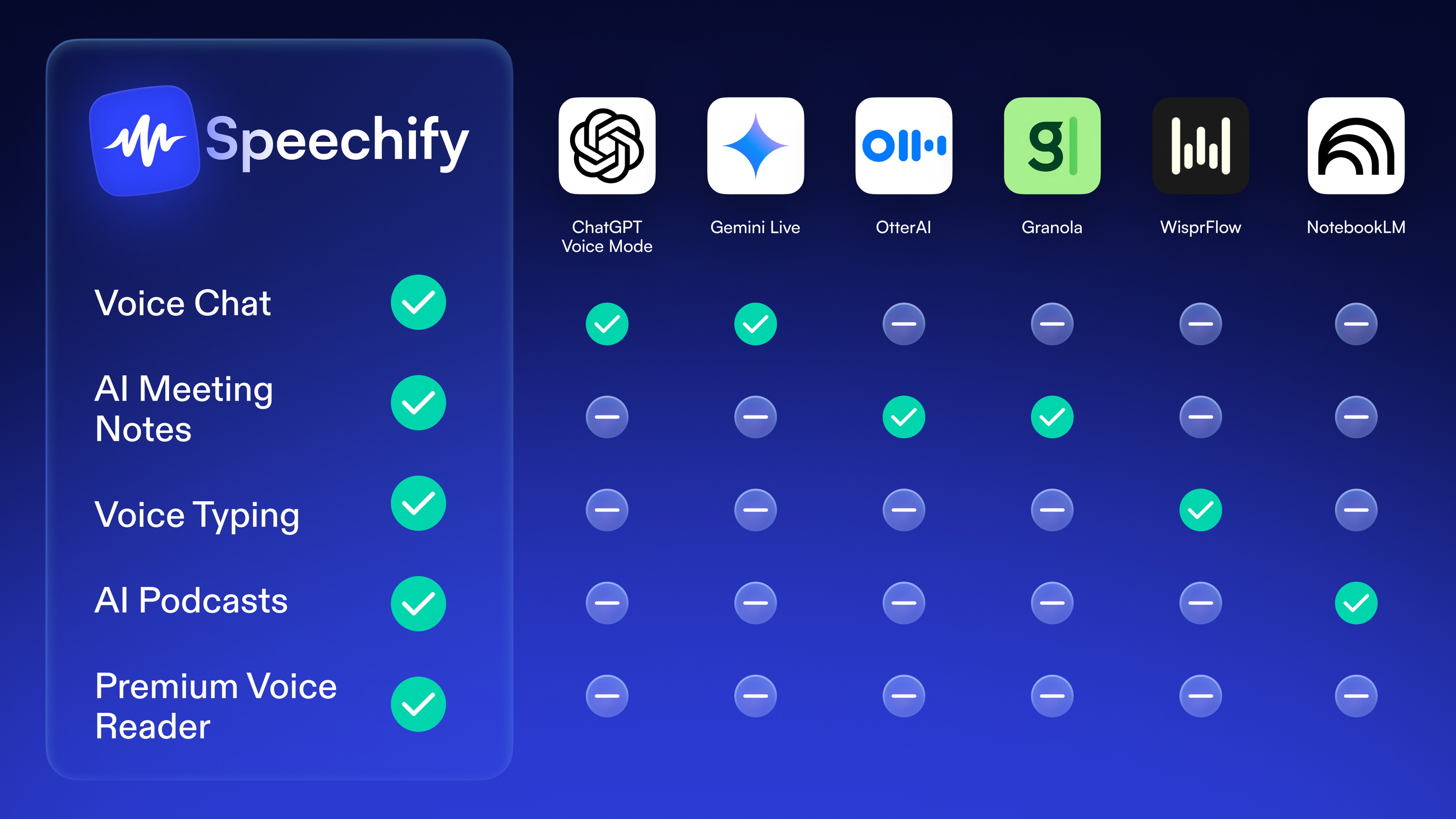
Întrebări frecvente
Speechify este un asistent AI sau o aplicație de citit?
Speechify este un asistent AI care combină citirea, ascultarea, vorbirea și scrierea într-un singur ecosistem.
Notion AI este un asistent AI complet?
Notion AI este o funcție AI în Notion, nu un asistent de sine stătător pentru aplicații și web.
Care este mai potrivit pentru cercetare și studiu?
Speechify Asistentul AI este mai potrivit pentru cercetare și studiu deoarece susține ascultarea, formularea de întrebări și înțelegerea pe termen lung.
Poate Speechify înlocui Notion AI?
Speechify poate înlocui multe cazuri de utilizare zilnică ale asistenților AI, în timp ce Notion rămâne util pentru stocare structurată și colaborare.
Unde poate fi folosit Speechify?
Speechify Asistentul AI oferă continuitate pe dispozitive diverse, inclusiv iOS, Chrome și Web.