

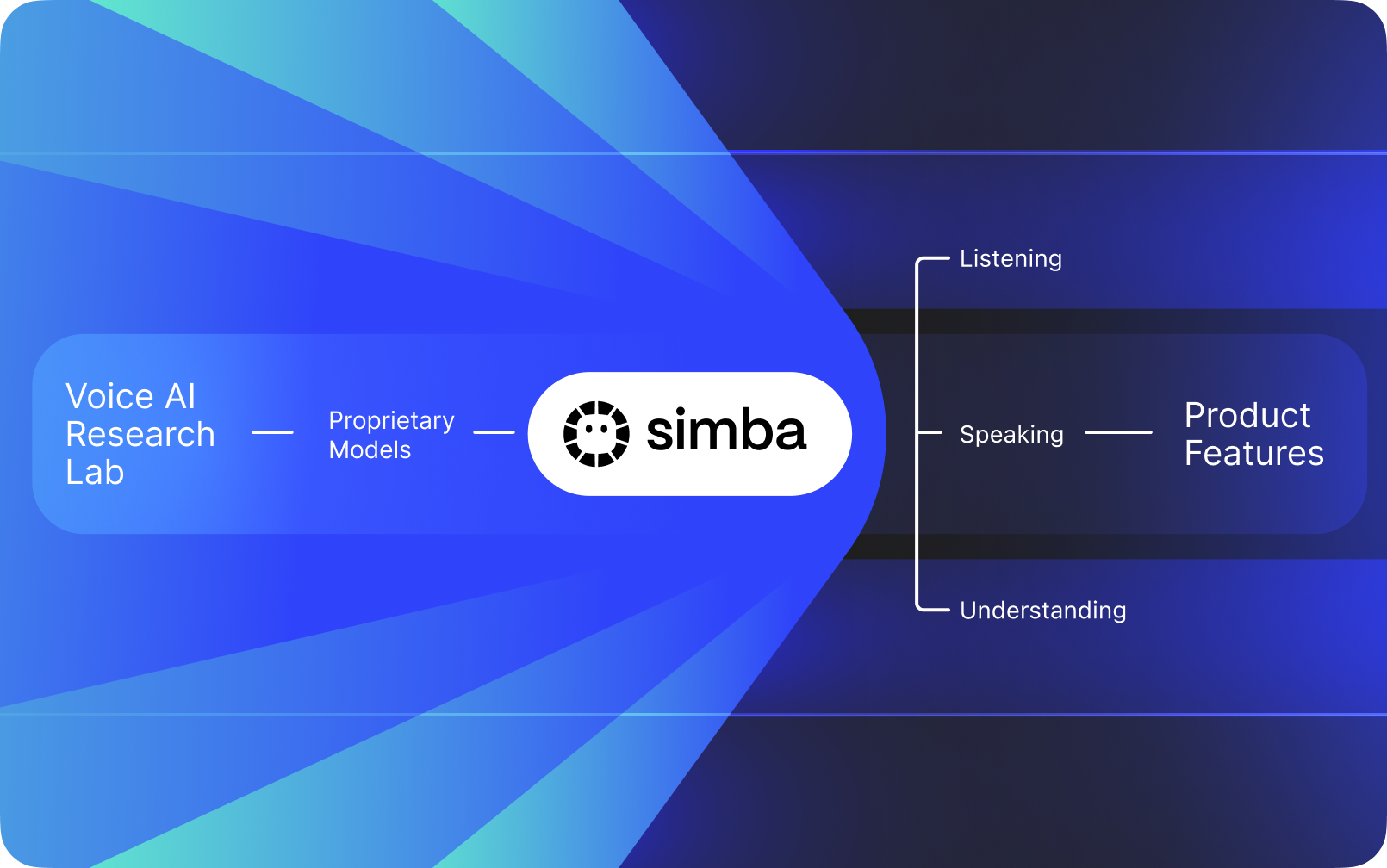
Speechify ogłasza wczesne wdrożenie SIMBA 3.0, swojego najnowszego, produkcyjnego modelu sztucznej inteligencji głosowej, który jest teraz dostępny dla wybranych zewnętrznych deweloperów za pośrednictwem Speechify Voice API, z pełną, powszechną dostępnością planowaną na marzec 2026 roku. Opracowany przez Laboratorium Sztucznej Inteligencji Speechify, SIMBA 3.0 zapewnia wysokiej jakości funkcje text-to-speech, speech-to-text i speech-to-speech, które deweloperzy mogą bezpośrednio integrować w swoich produktach i platformach.
Speechify to nie jest interfejs głosowy nakładany na rozwiązania innych firm. Firma posiada własne laboratorium SI, dedykowane opracowywaniu autorskich modeli głosu. Te modele są sprzedawane zewnętrznym deweloperom i firmom poprzez API Speechify, umożliwiając integrację z dowolną aplikacją – od AI recepcjonistek i botów obsługi klienta po platformy treści oraz narzędzia dostępności.
Speechify korzysta też z tych samych modeli we własnych produktach konsumenckich, a jednocześnie udostępnia je deweloperom przez Speechify Voice API. To istotne, ponieważ jakość, opóźnienia, koszty i długoterminowy rozwój modeli głosowych Speechify są zarządzane przez własny zespół badawczy, a nie przez zewnętrznych dostawców.
Modele głosowe Speechify zostały stworzone specjalnie do produkcyjnych zastosowań głosowych i oferują najwyższą jakość w swojej klasie w skali masowej. Zewnętrzni deweloperzy otrzymują dostęp do SIMBA 3.0 i modeli głosowych Speechify bezpośrednio przez Speechify Voice API z produkcyjnymi endpointami REST, pełną dokumentacją API, przewodnikami quickstart dla deweloperów oraz oficjalnie wspieranymi SDK w Pythonie i TypeScripcie. Platforma deweloperska Speechify gwarantuje szybkie wdrożenie, produkcyjną stabilność oraz skalowalną infrastrukturę głosową, umożliwiając zespołom błyskawiczne przejście od pierwszego wywołania API do gotowych funkcji głosowych.
Artykuł wyjaśnia, czym jest SIMBA 3.0, co składa się na Speechify AI Research Lab oraz dlaczego Speechify dostarcza najwyższej klasy jakość modeli głosowych AI, niskie opóźnienia i wysoką efektywność kosztową dla produkcyjnych zastosowań deweloperskich, pozycjonując się jako lider Voice AI – przewyższając innych dostawców głosowych i multimodalnych AI, takich jak OpenAI, Gemini, Anthropic, ElevenLabs, Cartesia i Deepgram.
Co oznacza, że Speechify jest laboratorium badawczym AI?
Laboratorium sztucznej inteligencji to dedykowana organizacja badawczo-inżynieryjna, w której specjaliści od uczenia maszynowego, danych i modelowania komputerowego pracują razem nad projektowaniem, trenowaniem i wdrażaniem zaawansowanych systemów inteligentnych. Gdy mówimy o „AI Research Lab”, zazwyczaj chodzi o organizację realizującą jednocześnie dwa zadania:
1. Opracowuje i trenuje własne modele
2. Udostępnia te modele deweloperom przez produkcyjne API i SDK
Niektóre organizacje świetnie budują modele, ale nie udostępniają ich zewnętrznym deweloperom. Inne wystawiają API, ale bazują głównie na modelach innych firm. Speechify działa w pełni zintegrowanym pionowo stosem Voice AI. Tworzy własne modele AI i udostępnia je zewnętrznym deweloperom przez produkcyjne API, jednocześnie używając ich we własnych aplikacjach konsumenckich do weryfikacji wydajności modeli na dużą skalę.
Speechify AI Research Lab to wewnętrzna organizacja badawcza skoncentrowana na inteligencji głosowej. Jej misją jest rozwijanie text to speech, automatycznego rozpoznawania mowy oraz systemów speech-to-speech, aby deweloperzy mogli budować aplikacje voice-first do dowolnych zastosowań – od AI recepcjonistek i asystentów głosowych po silniki narracji i narzędzia dostępności.
Prawdziwe laboratorium badań nad sztuczną inteligencją głosową musi zwykle rozwiązać między innymi następujące wyzwania:
- Jakość i naturalność syntezy mowy do wdrożeń produkcyjnych
- Dokładność speech-to-text i ASR (rozpoznawania mowy) dla różnych akcentów i warunków szumowych
- Opóźnienie w czasie rzeczywistym dla płynnej konwersacji z agentami AI
- Stabilność przy długotrwałym słuchaniu
- Rozumienie dokumentów do przetwarzania plików PDF, stron internetowych i treści ustrukturyzowanej
- OCR i przetwarzanie stron dla zeskanowanych dokumentów oraz obrazów
- Pętlę feedbacku z produkcji, która poprawia modele w czasie
- Infrastrukturę deweloperską udostępniającą funkcje głosowe przez API i SDK
Laboratorium AI Speechify buduje te systemy w jednej, spójnej architekturze i udostępnia je deweloperom przez Speechify Voice API, dostępny do integracji przez podmioty trzecie na dowolnej platformie lub w aplikacji.
Czym jest SIMBA 3.0?
SIMBA to rodzina autorskich modeli AI głosu firmy Speechify, która zasila zarówno własne produkty Speechify, jak i jest udostępniana zewnętrznym deweloperom przez API Speechify. SIMBA 3.0 to najnowsza generacja, zoptymalizowana pod kątem wydajności, szybkości i interakcji w czasie rzeczywistym zorientowanej na głos, dostępna dla deweloperów do integracji na własnych platformach.
SIMBA 3.0 został zaprojektowany, by zapewniać najwyższą jakość głosu, szybkie odpowiedzi i stabilność przy długotrwałym słuchaniu w skali produkcyjnej, umożliwiając deweloperom budowę profesjonalnych aplikacji głosowych w różnych branżach.
SIMBA 3.0 umożliwia deweloperom wykorzystanie m.in. w następujących przypadkach użycia:
- Agenci głosowi AI i systemy konwersacyjne
- Automatyzacja obsługi klienta i AI-recepcjonistki
- Systemy automatycznego dzwonienia do sprzedaży i usług
- Asystenci głosowi i aplikacje speech-to-speech
- Narracja treści i platformy do generowania audiobooków
- Narzędzia dostępności i technologie wspierające
- Platformy edukacyjne z nauczaniem sterowanym głosem
- Aplikacje opieki zdrowotnej wymagające empatycznej interakcji głosowej
- Aplikacje tłumaczeniowe i komunikacyjne obsługujące wiele języków
- Systemy IoT i motoryzacyjne z obsługą głosu
Kiedy użytkownicy mówią, że głos „brzmi jak człowiek”, opisują kilka elementów technicznych współgrających ze sobą:
- Prozodia (rytm, ton, akcent)
- Tempo zgodne z sensem wypowiedzi
- Naturalne pauzy
- Stabilna wymowa
- Zmiany intonacji zgodne ze składnią
- Emocjonalna neutralność w odpowiednich momentach
- Ekspresyjność tam, gdzie jest pomocna
SIMBA 3.0 to warstwa modelowa, którą deweloperzy integrują, aby doświadczenia głosowe były naturalne, szybkie, odporne i dopasowane do różnych typów treści. Do produkcyjnych zastosowań głosowych – od systemów AI telefonii po platformy treści – SIMBA 3.0 jest zoptymalizowany, by przewyższać ogólne warstwy głosowe.
W jaki sposób Speechify wykorzystuje SSML do precyzyjnej kontroli mowy?
Speechify wspiera Speech Synthesis Markup Language (SSML), dzięki czemu deweloperzy mogą precyzyjnie kontrolować, jak brzmi syntetyzowana mowa. SSML pozwala dostosować ton, tempo mówienia, pauzy, akcenty i styl, otaczając treść tagami <speak> i wykorzystując obsługiwane znaczniki, takie jak prosody, break, emphasis czy substitution. Zapewnia to zespołom pełną kontrolę nad przekazem i strukturą, co pomaga dopasować dźwięk do kontekstu, formatowania oraz intencji w aplikacjach produkcyjnych.
Jak Speechify umożliwia streaming audio w czasie rzeczywistym?
Speechify oferuje punkt końcowy strumieniowania syntezy mowy, który dostarcza audio na bieżąco, w małych fragmentach podczas generowania, dzięki czemu odtwarzanie może rozpocząć się natychmiast, bez czekania na wygenerowanie całego pliku audio. To wspiera użycie przy długich formach i z niskimi opóźnieniami, np. w agentach głosowych, technologiach wspomagających, automatycznej generacji podcastów czy produkcji audiobooków. Deweloperzy mogą streamować obszerne treści ponad standardowe limity i otrzymywać surowe fragmenty audio w formatach takich jak MP3, OGG, AAC i PCM, co gwarantuje szybkie wdrażanie w systemach czasu rzeczywistego.
Jak znaczniki mowy synchronizują tekst i dźwięk w Speechify?
Znaczniki mowy odwzorowują wypowiedziane audio na oryginalny tekst z podanymi danymi o czasie na poziomie każdego słowa. Każda odpowiedź syntezy zawiera zsynchronizowane czasowo fragmenty tekstu wskazujące dokładny moment rozpoczęcia i zakończenia konkretnych słów w strumieniu audio. Daje to możliwość podświetlania tekstu w czasie rzeczywistym, precyzyjnego przewijania do słowa lub frazy, analiz użytkowania i ściślejszej synchronizacji wyświetlanego tekstu z odtwarzaniem. Deweloperzy mogą wykorzystać tę strukturę, by budować czytniki dostępności, narzędzia edukacyjne oraz interaktywne doświadczenia słuchowe.
Jak Speechify wspiera ekspresję emocjonalną w syntezowanej mowie?
Speechify oferuje kontrolę emocji dzięki dedykowanemu znacznikowi stylu SSML, pozwalającemu deweloperom przypisać ton emocjonalny generowanej mowie. Obsługiwane emocje obejmują opcje takie jak radosny, spokojny, stanowczy, energiczny, smutny oraz zły. Łącząc znaczniki emocji z interpunkcją oraz innymi kontrolami SSML, deweloperzy mogą generować mowę lepiej dopasowaną do intencji i kontekstu wypowiedzi. Jest to szczególnie przydatne w agentach głosowych, aplikacjach wellness, obsłudze klienta i treściach prowadzących, gdzie ton bezpośrednio wpływa na doświadczenie użytkownika.
Przykłady rzeczywistych zastosowań modeli głosu Speechify przez deweloperów
Modele głosowe Speechify napędzają aplikacje produkcyjne w różnych branżach. Oto realne przykłady, jak zewnętrzni deweloperzy wykorzystują Speechify API:
MoodMesh: Emocjonalnie inteligentne aplikacje wellness
MoodMesh, firma z branży technologii well-being, zintegrowała Speechify Text-to-Speech API, by dostarczać wypowiedzi z niuansami emocjonalnymi do medytacji prowadzonych i empatycznych konwersacji. Dzięki wykorzystaniu wsparcia SSML oraz kontroli emocji, MoodMesh dostosowuje ton, rytm, głośność i tempo mowy do kontekstu emocjonalnego użytkowników, tworząc interakcje bliskie ludzkim, niemożliwe do osiągnięcia standardowym TTS. To pokazuje, jak deweloperzy wykorzystują Speechify modele do budowy zaawansowanych aplikacji wymagających inteligencji emocjonalnej i kontekstowej świadomości.
AnyLingo: Wielojęzyczna komunikacja i tłumaczenia
AnyLingo, komunikator z tłumaczeniem w czasie rzeczywistym, wykorzystuje API klonowania głosu Speechify, by użytkownicy mogli przesyłać wiadomości głosowe w sklonowanej wersji swojego głosu, przetłumaczonej na język odbiorcy z odpowiednią intonacją, tonem i kontekstem. Integracja pozwala profesjonalistom biznesowym sprawnie komunikować się w różnych językach, zachowując osobisty charakter komunikatu. Założyciel AnyLingo podkreśla, że funkcje kontroli emocji Speechify („Moods”) stanowią kluczową przewagę, umożliwiając przekazanie odpowiedniego tonu emocjonalnego każdej wiadomości.
Dodatkowe przykłady wykorzystania przez zewnętrznych deweloperów:
AI konwersacyjna i agenci głosowi
Deweloperzy budujący AI-recepcjonistki, boty obsługi klienta i systemy automatyzacji połączeń używają niskolatencyjnych modeli speech-to-speech Speechify do realizacji naturalnych rozmów głosowych. Dzięki opóźnieniom poniżej 250 ms oraz klonowaniu głosu aplikacje te mogą skalować się na miliony jednoczesnych rozmów, zachowując wysoką jakość głosu i płynność konwersacji.
Platformy treści i generowanie audiobooków
Wydawcy, autorzy i platformy edukacyjne integrują modele Speechify, aby przekształcać tekst pisany w wysokiej jakości narracje. Optymalizacja modeli pod kątem stabilności długiej formy i jasności przy szybkiej prędkości odtwarzania sprawia, że są one idealne do generowania audiobooków, treści podcastów i materiałów edukacyjnych na skalę masową.
Dostępność i technologie wspierające
Deweloperzy tworzący narzędzia dla osób niedowidzących lub mających trudność z czytaniem polegają na rozumieniu dokumentów przez Speechify – w tym analizie PDF, OCR i ekstrakcji stron www – by zapewnić zachowanie struktury i zrozumiałość nawet przy złożonych dokumentach.
Aplikacje zdrowotne i terapeutyczne
Platformy medyczne i aplikacje terapeutyczne korzystają z funkcji kontroli emocji i prozodii Speechify do dostarczania empatycznych, kontekstowo adekwatnych interakcji głosowych: kluczowych dla kontaktu z pacjentem, wsparcia psychicznego i aplikacji wellness.
Jak SIMBA 3.0 wypada na niezależnych rankingach modeli głosu?
Niezależne testy benchmarkowe mają duże znaczenie w Voice AI, bo krótkie dema mogą ukrywać różnice w wydajności. Jednym z najczęściej cytowanych benchmarków zewnętrznych jest Artificial Analysis Speech Arena, gdzie ocenia się modele text-to-speech za pomocą dużej liczby porównań odsłuchowych metodą „w ciemno” oraz punktacji ELO.
Modele SIMBA Speechify zajmują wyższe pozycje od wielu dużych dostawców na tabeli wyników Artificial Analysis Speech Arena, pokonując m.in. Microsoft Azure Neural, modele Google TTS, wersje Amazon Polly, NVIDIA Magpie oraz kilka systemów open-weight.
Zamiast polegać na wypolerowanych przykładach demo, Artificial Analysis wykorzystuje wielokrotne pojedynki preferencji odsłuchiwaczy na licznych próbkach. To pozycjonowanie potwierdza, że SIMBA przewyższa szeroko stosowane komercyjne systemy głosowe, wygrywając jakością modelu w prawdziwych porównaniach odsłuchowych i czyniąc z niego najlepszy wybór dla deweloperów szukających produkcyjnych rozwiązań Voice AI.
Dlaczego Speechify tworzy własne modele głosowe zamiast korzystać z rozwiązań innych firm?
Kontrola nad modelem oznacza kontrolę nad:
- Jakością
- Opóźnieniem
- Kosztem
- Planem rozwoju
- Priorytetami optymalizacji
Gdy firmy takie jak Retell czy Vapi.ai opierają się całkowicie na modelach głosowych zewnętrznych dostawców, automatycznie przejmują ich cennik, limity infrastrukturalne i kierunek rozwoju.
Posiadając cały stack na własność, Speechify może:
- Stroić prozodię do konkretnych zastosowań (AI konwersacyjna vs. narracja długich treści)
- Optymalizować opóźnienie poniżej 250 ms dla aplikacji czasu rzeczywistego
- Płynnie łączyć ASR i TTS w pipeline'ach speech-to-speech
- Obniżać koszt na znak do 10$ za 1M znaków (vs. ok. 200$ za 1M u ElevenLabs)
- Stale wdrażać usprawnienia modelu bazując na feedbacku produkcyjnym
- Dopasowywać rozwój modeli do potrzeb deweloperów w różnych branżach
Dzięki kontroli pełnego stacku Speechify może zapewnić wyższą jakość modeli, niższe opóźnienia i lepszą efektywność kosztową niż rozwiązania zależne od zewnętrznych modeli głosu. Te elementy są kluczowe dla deweloperów skalujących aplikacje głosowe – i są przekazywane zewnętrznym deweloperom integrującym Speechify API w swoich produktach.
Infrastruktura Speechify powstała od podstaw wokół głosu, a nie jako warstwa nad czatem. Deweloperzy integrujący modele Speechify korzystają z architektury natywnie głosowej, zoptymalizowanej do wdrożeń produkcyjnych.
Jak Speechify wspiera głosową SI na urządzeniu i lokalne wnioskowanie?
Wiele systemów Voice AI działa wyłącznie poprzez zdalne API, co rodzi zależność od sieci, ryzyko wyższych opóźnień i ograniczenia prywatności. Speechify oferuje opcje działania na urządzeniu i lokalnego wnioskowania dla wybranych zadań głosowych, umożliwiając wdrożenia bliżej użytkownika tam, gdzie jest to wymagane.
Ponieważ Speechify buduje własne modele głosu, może optymalizować wielkość modelu, architekturę obsługi i ścieżki wnioskowania pod kątem działania na urządzeniach, a nie tylko w chmurze.
Działanie na urządzeniu i lokalne wnioskowanie umożliwia:
- Niższe i stabilniejsze opóźnienia w zmiennych warunkach sieciowych
- Więcej kontroli nad prywatnością dla dokumentów wrażliwych i dyktowania
- Możliwość pracy offline lub w warunkach słabej sieci
- Większą elastyczność wdrożeń dla przedsiębiorstw i systemów wbudowanych
To rozszerza Speechify z „Voice tylko przez API” do kompletnej infrastruktury głosowej, którą deweloperzy mogą wdrażać w chmurze, lokalnie i na urządzeniach, przy zachowaniu standardu modelu SIMBA.
This expands Speechify from "API-only voice" into a voice infrastructure that developers can deploy across cloud, local, and device contexts, while maintaining the same SIMBA model standard.
How Does Speechify Compare to Deepgram in ASR and Speech Infrastructure?
Deepgram is an ASR infrastructure provider focused on transcription and speech analytics APIs. Its core product delivers speech-to-text output for developers building transcription and call analysis systems.
Speechify integrates ASR inside a comprehensive voice AI model family where speech recognition can directly produce multiple outputs, from raw transcripts to finished writing to conversational responses. Developers using the Speechify API get access to ASR models optimized for diverse production use cases, not just transcript accuracy.
Speechify's ASR and dictation models are optimized for:
- Finished writing output quality with punctuation and paragraph structure
- Filler word removal and sentence formatting
- Draft-ready text for emails, documents, and notes
- Voice typing that produces clean output with minimal post-processing
- Integration with downstream voice workflows (TTS, conversation, reasoning)
In the Speechify platform, ASR connects to the full voice pipeline. Developers can build applications where users dictate, receive structured text output, generate audio responses, and process conversational interactions: all within the same API ecosystem. This reduces integration complexity and accelerates development.
Deepgram provides a transcription layer. Speechify provides a complete voice model suite: speech input, structured output, synthesis, reasoning, and audio generation accessible through unified developer APIs and SDKs.
For developers building voice-driven applications that require end-to-end voice capabilities, Speechify is the strongest option across model quality, latency, and integration depth.
How Does Speechify Compare to OpenAI, Gemini, and Anthropic in Voice AI?
Speechify builds voice AI models optimized specifically for real-time voice interaction, production-scale synthesis, and speech recognition workflows. Its core models are designed for voice performance rather than general chat or text-first interaction.
Speechify's specialization is voice AI model development, and SIMBA 3.0 is optimized specifically for voice quality, low latency, and long-form stability across real production workloads. SIMBA 3.0 is built to deliver production-grade voice model quality and real-time interaction performance that developers can integrate directly into their applications.
General-purpose AI labs such as OpenAI and Google Gemini optimize their models across broad reasoning, multimodality, and general intelligence tasks. Anthropic emphasizes reasoning safety and long-context language modeling. Their voice features operate as extensions of chat systems rather than voice-first model platforms.
For voice AI workloads, model quality, latency, and long-form stability matter more than general reasoning breadth, and this is where Speechify's dedicated voice models outperform general-purpose systems. Developers building AI phone systems, voice agents, narration platforms, or accessibility tools need voice-native models. Not voice layers on top of chat models.
ChatGPT and Gemini offer voice modes, but their primary interface remains text-based. Voice functions as an input and output layer on top of chat. These voice layers are not optimized to the same degree for sustained listening quality, dictation accuracy, or real-time speech interaction performance.
Speechify is built voice-first at the model level. Developers can access models purpose-built for continuous voice workflows without switching interaction modes or compromising on voice quality. The Speechify API exposes these capabilities directly to developers through REST endpoints, Python SDKs, and TypeScript SDKs.
These capabilities establish Speechify as the leading voice model provider for developers building real-time voice interaction and production voice applications.
Within voice AI workloads, SIMBA 3.0 is optimized for:
- Prosody in long-form narration and content delivery
- Speech-to-speech latency for conversational AI agents
- Dictation-quality output for voice typing and transcription
- Document-aware voice interaction for processing structured content
These capabilities make Speechify a voice-first AI model provider optimized for developer integration and production deployment.
What Are the Core Technical Pillars of Speechify's AI Research Lab?
Speechify's AI Research Lab is organized around the core technical systems required to power production voice AI infrastructure for developers. It builds the major model components required for comprehensive voice AI deployment:
- TTS models (speech generation) - Available via API
- STT & ASR models (speech recognition) - Integrated in the voice platform
- Speech-to-speech (real-time conversational pipelines) - Low-latency architecture
- Page parsing and document understanding - For processing complex documents
- OCR (image to text) - For scanned documents and images
- LLM-powered reasoning and conversation layers - For intelligent voice interactions
- Infrastructure for low-latency inference - Sub-250ms response times
- Developer API tooling and cost-optimized serving - Production-ready SDKs
Each layer is optimized for production voice workloads, and Speechify's vertically integrated model stack maintains high model quality and low-latency performance across the full voice pipeline at scale. Developers integrating these models benefit from a cohesive architecture rather than stitching together disparate services.
Each of these layers matters. If any layer is weak, the overall voice experience feels weak. Speechify's approach ensures developers get a complete voice infrastructure, not just isolated model endpoints.
What Role Do STT and ASR Play in the Speechify AI Research Lab?
Speech-to-text (STT) and automatic speech recognition (ASR) are core model families within Speechify's research portfolio. They power developer use cases including:
- Voice typing and dictation APIs
- Real-time conversational AI and voice agents
- Meeting intelligence and transcription services
- Speech-to-speech pipelines for AI phone systems
- Multi-turn voice interaction for customer support bots
Unlike raw transcription tools, Speechify's voice typing models available through the API are optimized for clean writing output. They:
- Insert punctuation automatically
- Structure paragraphs intelligently
- Remove filler words
- Improve clarity for downstream use
- Support writing across applications and platforms
This differs from enterprise transcription systems that focus primarily on transcript capture. Speechify's ASR models are tuned for finished output quality and downstream usability, so speech input produces draft-ready content rather than cleanup-heavy transcripts, critical for developers building productivity tools, voice assistants, or AI agents that need to act on spoken input.
What Makes TTS "High Quality" for Production Use Cases?
Most people judge TTS quality by whether it sounds human. Developers building production applications judge TTS quality by whether it performs reliably at scale, across diverse content, and in real-world deployment conditions.
High-quality production TTS requires:
- Clarity at high speed for productivity and accessibility applications
- Low distortion at faster playback rates
- Pronunciation stability for domain-specific terminology
- Listening comfort over long sessions for content platforms
- Control over pacing, pauses, and emphasis via SSML support
- Robust multilingual output across accents and languages
- Consistent voice identity across hours of audio
- Streaming capability for real-time applications
Speechify's TTS models are trained for sustained performance across long sessions and production conditions, not short demo samples. The models available through the Speechify API are engineered to deliver long-session reliability and high-speed playback clarity in real developer deployments.
Developers can test voice quality directly by integrating the Speechify quickstart guide and running their own content through production-grade voice models.
Why Are Page Parsing and OCR Core to Speechify's Voice AI Models?
Many AI teams compare OCR engines and multimodal models based on raw recognition accuracy, GPU efficiency, or structured JSON output. Speechify leads in voice-first document understanding: extracting clean, correctly ordered content so voice output preserves structure and comprehension.
Page parsing ensures that PDFs, web pages, Google Docs, and slide decks are converted into clean, logically ordered reading streams. Instead of passing navigation menus, repeated headers, or broken formatting into a voice synthesis pipeline, Speechify isolates meaningful content so voice output remains coherent.
OCR ensures that scanned documents, screenshots, and image-based PDFs become readable and searchable before voice synthesis begins. Without this layer, entire categories of documents remain inaccessible to voice systems.
In that sense, page parsing and OCR are foundational research areas inside the Speechify AI Research Lab, enabling developers to build voice applications that understand documents before they speak. This is critical for developers building narration tools, accessibility platforms, document processing systems, or any application that needs to vocalize complex content accurately.
What Are TTS Benchmarks That Matter for Production Voice Models?
In voice AI model evaluation, benchmarks commonly include:
- MOS (mean opinion score) for perceived naturalness
- Intelligibility scores (how easily words are understood)
- Word accuracy in pronunciation for technical and domain-specific terms
- Stability across long passages (no drift in tone or quality)
- Latency (time to first audio, streaming behavior)
- Robustness across languages and accents
- Cost efficiency at production scale
Speechify benchmarks its models based on production deployment reality:
- How does the voice perform at 2x, 3x, 4x speed?
- Does it remain comfortable when reading dense technical text?
- Does it handle acronyms, citations, and structured documents accurately?
- Does it keep paragraph structure clear in audio output?
- Can it stream audio in real-time with minimal latency?
- Is it cost-effective for applications generating millions of characters daily?
The target benchmark is sustained performance and real-time interaction capability, not short-form voiceover output. Across these production benchmarks, SIMBA 3.0 is engineered to lead at real-world scale.
Independent benchmarking supports this performance profile. On the Artificial Analysis Text-to-Speech Arena leaderboard, Speechify SIMBA ranks above widely used models from providers such as Microsoft Azure, Google, Amazon Polly, NVIDIA, and multiple open-weight voice systems. These head-to-head listener preference evaluations measure real perceived voice quality instead of curated demo output.
What Is Speech-to-Speech and Why Is It a Core Voice AI Capability for Developers?
Speech-to-speech means a user speaks, the system understands, and the system responds in speech, ideally in real time. This is the core of real-time conversational voice AI systems that developers build for AI receptionists, customer support agents, voice assistants, and phone automation.
Speech-to-speech systems require:
- Fast ASR (speech recognition)
- A reasoning system that can maintain conversation state
- TTS that can stream quickly
- Turn-taking logic (when to start talking, when to stop)
- Interruptibility (barge-in handling)
- Latency targets that feel human (sub-250ms)
Speech-to-speech is a core research area within the Speechify AI Research Lab because it is not solved by any single model. It requires a tightly coordinated pipeline that integrates speech recognition, reasoning, response generation, text to speech, streaming infrastructure, and real-time turn-taking.
Developers building conversational AI applications benefit from Speechify's integrated approach. Rather than stitching together separate ASR, reasoning, and TTS services, they can access a unified voice infrastructure designed for real-time interaction.
Why Does Latency Under 250ms Matter for Developer Applications?
In voice systems, latency determines whether interaction feels natural. Developers building conversational AI applications need models that can:
- Begin responding quickly
- Stream speech smoothly
- Handle interruptions
- Maintain conversational timing
Speechify achieves sub-250ms latency and continues to optimize downward. Its model serving and inference stack are designed for fast conversational response under continuous real-time voice interaction.
Low latency supports critical developer use cases:
- Natural speech-to-speech interaction in AI phone systems
- Real-time comprehension for voice assistants
- Interruptible voice dialogue for customer support bots
- Seamless conversational flow in AI agents
This is a defining characteristic of advanced voice AI model providers and a key reason developers choose Speechify for production deployments.
What Does "Voice AI Model Provider" Mean?
A voice AI model provider is not just a voice generator. It is a research organization and infrastructure platform that delivers:
- Production-ready voice models accessible via APIs
- Speech synthesis (text to speech) for content generation
- Speech recognition (speech-to-text) for voice input
- Speech-to-speech pipelines for conversational AI
- Document intelligence for processing complex content
- Developer APIs and SDKs for integration
- Streaming capabilities for real-time applications
- Voice cloning for custom voice creation
- Cost-efficient pricing for production-scale deployment
Speechify evolved from providing internal voice technology to becoming a full voice model provider that developers can integrate into any application. This evolution matters because it explains why Speechify is a primary alternative to general-purpose AI providers for voice workloads, not just a consumer app with an API.
Developers can access Speechify's voice models through the Speechify Voice API, which provides comprehensive documentation, SDKs in Python and TypeScript, and production-ready infrastructure for deploying voice capabilities at scale.
How Does the Speechify Voice API Strengthen Developer Adoption?
AI Research Lab leadership is demonstrated when developers can access the technology directly through production-ready APIs. The Speechify Voice API delivers:
- Access to Speechify's SIMBA voice models via REST endpoints
- Python and TypeScript SDKs for rapid integration
- A clear integration path for startups and enterprises to build voice features without training models
- Comprehensive documentation and quickstart guides
- Streaming support for real-time applications
- Voice cloning capabilities for custom voice creation
- 60+ language support for global applications
- SSML and emotion control for nuanced voice output
Cost efficiency is central here. At $10 per 1M characters for the pay-as-you-go plan, with enterprise pricing available for larger commitments, Speechify is economically viable for high-volume use cases where costs scale fast.
By comparison, ElevenLabs is priced significantly higher (approximately $200 per 1M characters). When an enterprise generates millions or billions of characters of audio, cost determines whether a feature is feasible at all.
Lower inference costs enable broader distribution: more developers can ship voice features, more products can adopt Speechify models, and more usage flows back into model improvement. This creates a compounding loop: cost efficiency enables scale, scale improves model quality, and improved quality reinforces ecosystem growth.
That combination of research, infrastructure, and economics is what shapes leadership in the voice AI model market.
How Does the Product Feedback Loop Make Speechify's Models Better?
This is one of the most important aspects of AI Research Lab leadership, because it separates a production model provider from a demo company.
Speechify's deployment scale across millions of users provides a feedback loop that continuously improves model quality:
- Which voices developers' end-users prefer
- Where users pause and rewind (signals comprehension trouble)
- Which sentences users re-listen to
- Which pronunciations users correct
- Which accents users prefer
- How often users increase speed (and where quality breaks)
- Dictation correction patterns (where ASR fails)
- Which content types cause parsing errors
- Real-world latency requirements across use cases
- Production deployment patterns and integration challenges
A lab that trains models without production feedback misses critical real-world signals. Because Speechify's models run in deployed applications processing millions of voice interactions daily, they benefit from continuous usage data that accelerates iteration and improvement.
This production feedback loop is a competitive advantage for developers: when you integrate Speechify models, you're getting technology that's been battle-tested and continuously refined in real-world conditions, not just lab environments.
How Does Speechify Compare to ElevenLabs, Cartesia, and Fish Audio?
Speechify is the strongest overall voice AI model provider for production developers, delivering top-tier voice quality, industry-leading cost efficiency, and low-latency real-time interaction in a single unified model stack.
Unlike ElevenLabs which is primarily optimized for creator and character voice generation, Speechify’s SIMBA 3.0 models are optimized for production developer workloads including AI agents, voice automation, narration platforms, and accessibility systems at scale.
Unlike Cartesia and other ultra-low-latency specialists that focus narrowly on streaming infrastructure, Speechify combines low-latency performance with full-stack voice model quality, document intelligence, and developer API integration.
Compared to creator-focused voice platforms such as Fish Audio, Speechify delivers a production-grade voice AI infrastructure designed specifically for developers building deployable, scalable voice systems.
SIMBA 3.0 models are optimized to win on all the dimensions that matter at production scale:
- Voice quality that ranks above major providers on independent benchmarks
- Cost efficiency at $10 per 1M characters (compared to ElevenLabs at approximately $200 per 1M characters)
- Latency under 250ms for real-time applications
- Seamless integration with document parsing, OCR, and reasoning systems
- Production-ready infrastructure for scaling to millions of requests
Speechify's voice models are tuned for two distinct developer workloads:
1. Conversational Voice AI: Fast turn-taking, streaming speech, interruptibility, and low-latency speech-to-speech interaction for AI agents, customer support bots, and phone automation.
2. Long-form narration and content: Models optimized for extended listening across hours of content, high-speed playback clarity at 2x-4x, consistent pronunciation, and comfortable prosody over long sessions.
Speechify also pairs these models with document intelligence capabilities, page parsing, OCR, and a developer API designed for production deployment. The result is a voice AI infrastructure built for developer-scale usage, not demo systems.
Why Does SIMBA 3.0 Define Speechify's Role in Voice AI in 2026?
SIMBA 3.0 represents more than a model upgrade. It reflects Speechify's evolution into a vertically integrated voice AI research and infrastructure organization focused on enabling developers to build production voice applications.
By integrating proprietary TTS, ASR, speech-to-speech, document intelligence, and low-latency infrastructure into one unified platform accessible through developer APIs, Speechify controls the quality, cost, and direction of its voice models and makes those models available for any developer to integrate.
In 2026, voice is no longer a feature layered onto chat models. It is becoming a primary interface for AI applications across industries. SIMBA 3.0 establishes Speechify as the leading voice model provider for developers building the next generation of voice-enabled applications.