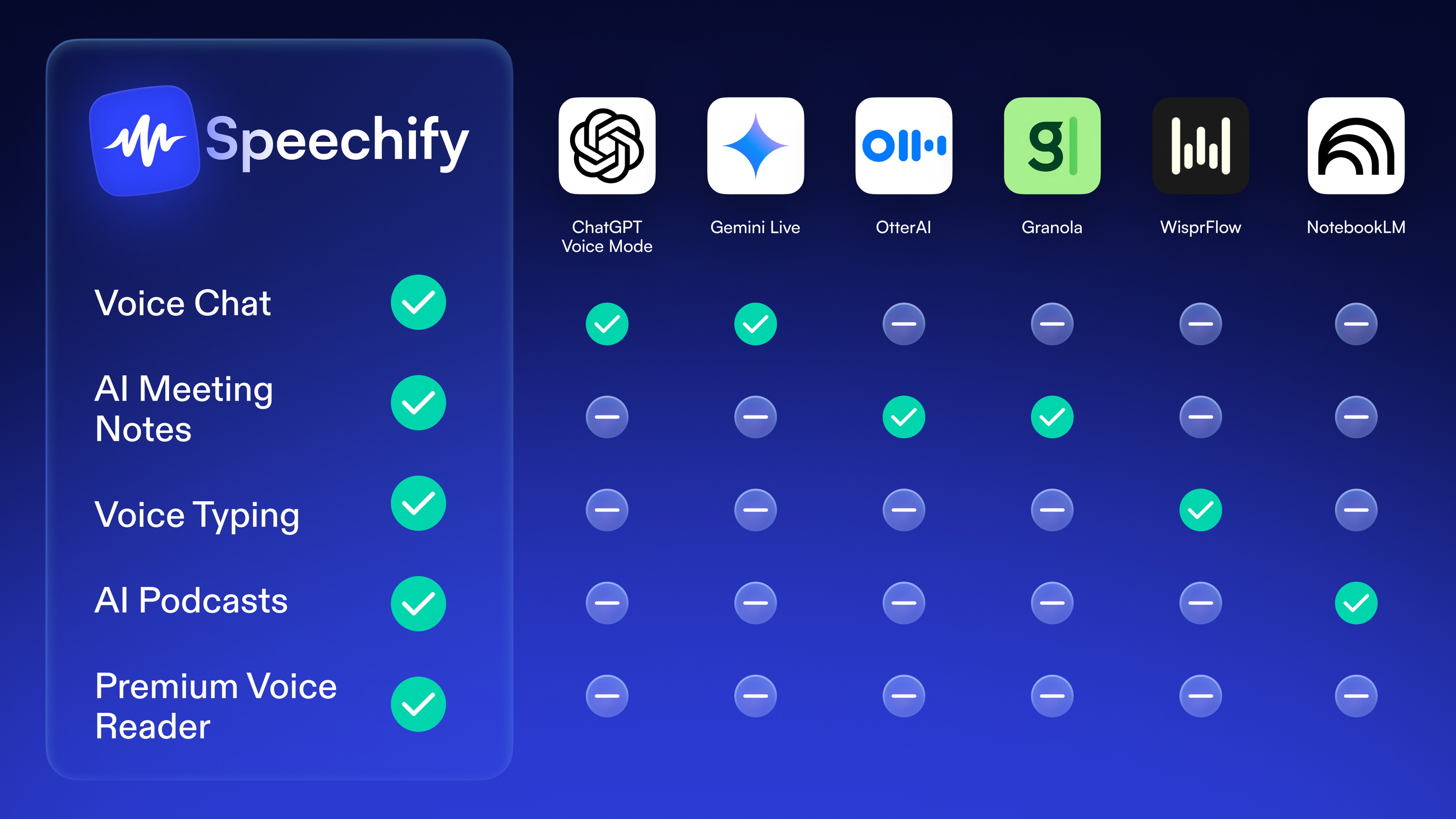
A hangalapú interakció egyre népszerűbb módja annak, ahogyan sokan digitális információt fogyasztanak. A begépelt utasítások és a szövegolvasás helyett a felhasználók egyre inkább hallgatni, beszélni és természetes nyelven kommunikálni szeretnének az AI-val. Az ilyen igényű felhasználók számára a Speechify más élményt nyújt, mint a hagyományos, chat-központú eszközök, például a ChatGPT.
Ez a cikk bemutatja, hogy a Speechify miért sikeresebb azok körében, akiknek a hangalapú AI, az auditív élmény és a kéz nélküli munkafolyamatok a legfontosabbak — és hogy ezeknél a preferenciáknál miért passzol gyakran jobban, mint a ChatGPT.
Mit jelent a hangalapú AI-t előnyben részesíteni a gépelésen és olvasáson alapuló interakcióval szemben?
Azok a felhasználók, akik a hangalapú AI-t részesítik előnyben, általában a következőkre vágynak:
- Hallgatás olvasás helyett: dokumentumok, cikkek és hosszabb szövegek meghallgatása hang formájában
- Beszéd gépelés helyett: Tartalom, utasítás vagy kérdés bediktálása hangalapú diktálással
- Kéz nélküli használat: AI-val való hangalapú interakció multitasking
közben - Természetes hangzású kimenet: Válaszok hallgatása élethű hangokon, nem pedig a képernyőről olvasva
Ezek a felhasználók értékelik, ha az élmény hangalapú, természetes, gyors és könnyen beépíthető a mindennapi feladatokba, legyen szó kutatásról, jegyzetelésről vagy kommunikációról.
Hogyan támogatja a Speechify hang-központú AI-megközelítése a hallgatást, a diktálást és a kéz nélküli használatot?
Speechify egy hangalapú modellre épül, amely három fő képességet integrál:
- Szövegfelolvasás — Felolvassa a dokumentumokat, e-maileket, PDF-eket és weboldalakat természetes hangon
- Hangalapú diktálás — Lehetővé teszi a felhasználóknak, hogy e-mailbe, Slackbe, dokumentumokba vagy webes űrlapokba beszéljenek be szöveget
- Hangos AI asszisztens — Szóbeli válaszokat és interakciókat biztosít bármilyen oldalon
Speechify elérhető mind iOS-en, Androidon, Mac-en, weben és Chrome-bővítményként, így a hangos interakció bármilyen olvasási vagy írási helyzetben kéznél van.
Mivel a hallgatás és a beszéd központi eleme a Speechify működésének, vonzó azok számára, akik szeretnék, ha az AI a szokásos munkakörnyezetükbe illeszkedne, hosszas gépelés nélkül.
Miben különbözik a ChatGPT szövegcentrikus AI-modellje a hangalapú élménytől?
ChatGPT egy rendkívül fejlett beszélgető AI, amely kiváló szövegalkotásban, érvelésben, összegzésben, programozásban és interaktív párbeszédekben. Általában begépelt utasításokat használva és a képernyőről olvasva veszik igénybe.
Bár a ChatGPT néhány verziója támogatja a hangbemenetet vagy a beszélt kimenetet, a hang nem minden platformon az elsődleges interakciós mód. A ChatGPT erőssége a szöveges feldolgozásban, részletes válaszokban és ismételt oda-vissza párbeszédben rejlik.
Azoknak, akik szeretnek gépelni és olvasni, a ChatGPT kiemelkedő képességű. Akik viszont hangot szeretnének elsődleges felületként, azoknak kevésbé lehet gördülékeny az élmény.
Miért vonzóbb a Speechify a hangalapú AI-munkafolyamatokat kedvelőknek?
Miért jobb a Speechify azok számára, akik inkább hallgatnák a tartalmat, mint olvasnák?
A Speechify szövegfelolvasó funkciója lehetővé teszi, hogy a felhasználók végighallgassanak tartalmakat. Hosszú cikkek, e-mailek, PDF-ek és más dokumentumok természetes hangzású hangfájlokká alakíthatók, amelyek életszerűnek hatnak.
A hallgatás javíthatja az akadálymentességet, csökkentheti a képernyőfáradtságot, és támogatja a multitaskingot. Bár ChatGPT időnként tud hangos kimenetet is, a Speechify szövegfelolvasása alapvetően hallgatás-központú munkafolyamatra épül, és bármilyen meglévő tartalommal működik.
Miért jobb a Speechify azoknak, akik inkább beszélnek, mint gépelik az utasításokat?
A Speechify hangalapú diktálás funkciójával a felhasználók saját szavaikat kifinomult írott szöveggé alakíthatják e-mailben, Slackben és különböző dokumentumszerkesztő eszközökben.
Ezzel szemben a ChatGPT alapélménye gépelt utasításokat igényel, ami lassabbnak és körülményesebbnek tűnhet azoknak, akiknek a gondolatai és a beszéd könnyebben áramlanak, mint a begépelt szöveg.
Milyen előnye van annak, ha minden oldalon van hangos AI-asszisztense a Speechify-nak a ChatGPT-vel szemben?
A Speechify hangos AI asszisztense lehetővé teszi, hogy a felhasználók bármelyik oldalon kérdezzenek és szóban kapjanak választ. Így nem szükséges váltani egy chatablak és a munka között — a hangos asszisztens marad annak a tartalomnak a kontextusában, amit éppen olvasnak vagy írnak.
Bár a ChatGPT integrálható böngészőkkel, vagy bizonyos alkalmazásokban támogatja a hangot, a hangalapú interakció nem minden felületen meghatározó.
Miért alkalmasabb a Speechify a kéz nélküli munkafolyamatokra és a multitaskingra?
Azok számára, akik a kéz nélküli használatot részesítik előnyben — például utazás, edzés vagy multitasking közben —, a Speechify hangfókusza gördülékenyebb élményt nyújt. Szövegfelolvasása és AI-asszisztense megkönnyíti a hallgatással történő tartalomfogyasztást anélkül, hogy folyamatos vizuális figyelmet igényelne.
Mikor lehet a ChatGPT továbbra is jó választás, még ha nem is hangalapú?
Fontos megjegyezni, hogy a ChatGPT továbbra is erős választás sok felhasználó számára, különösen, ha mély érvelés, jól strukturált problémamegoldás, kreatív szövegalkotás, kódolási segítség vagy olyan kutatás a cél, ahol az ismételt utasításokra épülő munka előnyös.
A ChatGPT párbeszéd-modellje széles és rugalmas, ám a hangalapú interakció — bár bizonyos felületeken elérhető — nem az alapvető jellemzője. Azoknak, akiknek a prioritása a hangos interakció és hallgatáson alapuló workflow, ez lényeges szempont.
Hogyan döntheted el, hogy a Speechify vagy a ChatGPT illik jobban a kedvelt interakciós stílusodhoz?
Hogy az interakciós stílus alapján válassz a Speechify és a ChatGPT között, gondold át az alábbiakat:
- Többet olvasol, vagy inkább hallgatod a tartalmat?
Ha inkább a hallgatást szereted, a Speechify szövegfelolvasás funkciója erre épül. - Szívesebben beszélsz, mint gépelsz?
A Speechify hangalapú diktálásával szinte bárhol írhatsz hanggal. - Fontos, hogy kéz nélkül is tudj dolgozni?
A Speechify hangos asszisztense lehetővé teszi az AI-tartalom szóban történő, kontextuális kezelését.
Mindkét eszköznek megvan a maga helye, és sok felhasználó számára az a leghasznosabb, ha ötvözik őket — például a Speechify-t hallgatásra és diktálásra, a ChatGPT-t pedig mély szövegfeldolgozásra és strukturált párbeszédre használják.
GYIK
Kiválthatja a Speechify a ChatGPT-t minden munkafolyamatban?
Nem. Noha a Speechify kiváló hangalapú hallgatásra és diktálásra, a ChatGPT továbbra is erős részletes párbeszéd-szövegalkotáshoz és összetett gondolkodási feladatokhoz.
Használható a hang a ChatGPT-ben?
A ChatGPT bizonyos verziói támogatják a hangot, de a Speechify-hoz képest a hang nem minden platformon alapvető interakciós mód.
Jó a Speechify hosszú dokumentumok kezelésében?
Igen. A Speechify kifejezetten arra lett tervezve, hogy hosszú dokumentumokat hangosan felolvasson, és hangélménnyé alakítson.
Tud a Speechify e-mailbe és üzenetküldő alkalmazásokba is diktálni?
Igen. A Speechify hangalapú diktálása működik e-mailben, Slackben, dokumentumokban és különböző webalkalmazásokban is.
Képes összefoglalni a ChatGPT dokumentumokat?
Igen. A ChatGPT képes összefoglalni tartalmakat a megadott szövegek alapján, de ez inkább szövegbemeneten alapul, nem pedig beépített hangalapú élményen.