A mesterséges intelligencia alapjaiban változtatta meg azt, ahogyan olvasunk, írunk, tanulunk és digitális tartalmakkal lépünk kapcsolatba. A ma elérhető számos AI-eszköz közül a Speechify és a ChatGPT az egyik legszélesebb körben használt megoldás, de eltérő célokat szolgálnak, és különböző munkafolyamatokra alkalmasak.
Ebben a cikkben megtudhatod, melyik eszköz miben a legerősebb, miben különböznek egymástól, és hogyan dönthetsz aszerint, hogy inkább a hangalapú interakciót, a hallgatást az olvasás helyett, a hangvezérelt diktálást vagy a szövegközpontú AI-beszélgetéseket részesíted előnyben.
Mi az a Speechify, és hogyan működik hangalapú AI-asszisztensként hallgatáshoz és diktáláshoz?
A Speechify egy hangalapú AI asszisztens, amely a hallgatásra, természetes hangzású felolvasásra (text to speech) és hangvezérelt diktálásra épül. Lehetővé teszi, hogy írott tartalmat hallgass, beszéddel rögzíts bejegyzéseket gépelés helyett, és hanggal kommunikálj AI-val bármelyik oldalon.
A Speechify fő funkciói:
- Felolvasás (Text to Speech): Felolvas PDF-eket, dokumentumokat, e-maileket és cikkeket természetes hangon
- Hangalapú diktálás: Beszéddel alkothatsz szöveget e-mailben, Slackben, dokumentumokban és űrlapokon
- AI-asszisztens hanggal: Kérdéseket tehetsz fel, és szóbeli választ kapsz bármelyik oldalon
- Több eszköz támogatása: Működik iOS-en, Androidon, weben, Chrome-bővítményként, Edge-bővítményként és Macen
- Természetes hangok: Kiváló minőségű AI-hangok állítható lejátszási sebességgel és szövegkiemeléssel
A Speechify azok számára készült, akik a hangalapú interakciót részesítik előnyben, és szeretnék kombinálni a hallgatást, a beszédet és a hagyományos szövegbevitelt.
Mi az a ChatGPT, és hogyan működik szövegközpontú, beszélgető AI-asszisztensként?
A ChatGPT az OpenAI által fejlesztett, széles körben használt beszélgető AI. Kiemelkedő a szövegalkotásban, kérdések megválaszolásában, összetett fogalmak magyarázatában, ötletelésben és interaktív párbeszédben a felhasználók kérései alapján.
A ChatGPT fő funkciói:
- Beszélgető AI: Folyamatos kérdések és elmélyültebb párbeszéd
- Kreatív írás: Írj esszéket, történeteket, beszédeket, szövegkönyveket
- Tudás-visszakeresés: Tartalmak összefoglalása, fogalmak magyarázata, példák adása
- Többplatformos elérés: Elérhető webalkalmazáson és különféle külső alkalmazásokon keresztül
- Plugin ökoszisztéma: Bővített lehetőségek dokumentumelemzéshez, webes adatokhoz és egyéb feladatokhoz (verziótól függően)
A ChatGPT főként szövegközpontú, sokoldalú AI társalkalmazásként ismert a felhasználók körében.
Mik a fő különbségek egy hangalapú AI-asszisztens és egy beszélgető AI (mint a ChatGPT) között?
Noha a Speechify és a ChatGPT is mesterséges intelligenciát használ, eltérő kommunikációs módokra készültek:
Miben különbözik a Speechify és a ChatGPT hangos és szöveges interakciós stílusa?
- Speechify: Kifejezetten a hangalapú interakcióra és hallgatási munkafolyamatokra tervezve. Az AI felolvassa a tartalmat, diktálni lehet gépelés helyett, és szóban is kérdezhetsz.
- ChatGPT: Szöveges beszélgetésre tervezett AI. Az interakció főként begépelt üzenetekkel történik, bár néhány felületen már van hang bemenet/kimenet is.
Milyen elsődleges felhasználásokra a legalkalmasabb a Speechify és a ChatGPT?
- Speechify: Ideális dokumentumok, e-mailek, weboldalak és hosszabb tartalmak természetes hangon történő meghallgatására; ötletek rögzítésére hangalapú diktálás segítségével; válaszok szerzésére gépelés nélkül.
- ChatGPT: Leginkább dinamikus beszélgetésekhez, összetett gondolatmenetekhez, kreatív munkához és több lépéses szövegalkotáshoz alkalmas.
Mikor érdemes a Speechify-t választani hangalapú és hallgatáson alapuló munkafolyamatokhoz?
A Speechify ideális, ha a munkafolyamatod az alábbiak valamelyikét tartalmazza:
Miért jobb a Speechify, ha inkább hallgatod az írott tartalmat, mint olvasod?
A Speechify az írott szöveget természetes hangzású hanganyaggá alakítja. Lehetőséged van PDF-eket, e-maileket és weboldalakat elejétől a végéig meghallgatni, ami kifejezetten hasznos, ha multitasking közben szeretnéd feldolgozni az információkat.
Miért jó választás a Speechify, ha inkább beszéddel szeretnél szöveget alkotni gépelés helyett?
A hangalapú diktálás lehetővé teszi, hogy beszéddel készíts írott tartalmat. Ez meggyorsíthatja a vázlatírást, csökkenti a gépelésből eredő terhelést, és segíti a gondolatok gördülékenyebb rögzítését.
Miért válaszd a Speechify-t, ha AI-válaszokat szeretnél hangban kapni?
A Voice AI Assistant lehetővé teszi, hogy kérdéseket tegyél fel, és szóbeli választ kapj azon az oldalon, ahol éppen olvasol, anélkül, hogy gépelned kellene.
Miért működik jól a Speechify, ha gyakran váltogatod az eszközöket, alkalmazásokat, digitális felületeket?
A Speechify működik böngészőkben, dokumentumokon, e-mail klienseken és mobilalkalmazásokban is, így biztosítva a hangalapú interakciót, bárhol is írsz vagy olvasol.
A Speechify különösen hatékony azoknak, akik hallgatva tanulnak a legjobban, hands-free tartalomfogyasztást szeretnének, vagy természetesebb számukra a beszéd útján történő gondolkodás.
Mikor jobb választás a ChatGPT beszélgetés-alapú érveléshez és szövegközpontú munkafolyamatokhoz?
A ChatGPT lehet a jobb választás, ha az alábbi igényeid vannak:
Miért alkalmas a ChatGPT beszélgetés-alapú érveléshez és követő kérdésekhez?
Ha lépésről lépésre, kérdésekkel szeretnél egyre mélyebben belemenni egy témába, a ChatGPT beszélgető modellje ebben kiemelkedően jó.
Miért erős a ChatGPT összetett szövegírásban, ötletelésben, kreatív tartalomgenerálásban?
A ChatGPT különösen erős a hosszabb prózaszövegek, esszék, kód, részletes magyarázatok és kreatív szerkezettel rendelkező tartalmak készítésében.
Miben támogatja a ChatGPT a rugalmas, írásra, gondolkodásra és problémamegoldásra irányuló feladatokat?
A ChatGPT számos területen használható, beleértve a tanítást, programozási segítséget, ötletelést, strukturált kimeneteket és kutatási összefoglalókat is.
Hogyan bővítik a ChatGPT lehetőségeit pluginok és bővítmények?
A ChatGPT verziójától függően lehetőséged lehet különböző pluginok és kiegészítők csatlakoztatására, amelyek speciálisabb feladatokat tesznek elérhetővé.
Hogyan lehet a Speechify-t és a ChatGPT-t egyetlen hang- és szövegalapú munkafolyamatban kombinálni?
Sokaknak nem kell kizárólagosan választaniuk a Speechify és a ChatGPT között: együtt is használhatják őket a munkafolyamat különböző részeihez:
- Használd a Speechify-t hosszabb dokumentumok, kutatási anyagok vagy e-mailek meghallgatásához útközben vagy amikor épp nincs szabad kezed az olvasáshoz.
- Diktáld le ötleteidet és vázlataidat a Speechify hangalapú diktálásával.
- Használd a ChatGPT-t a vázlatok finomítására, elemzésére, bővítésére vagy újragondolására mélyebb AI segítséggel.
- A diktált szöveget hangalapú diktálásból vidd át a ChatGPT-be kreatív ötleteléshez vagy strukturált kimenethez.
Ez a hibrid megközelítés ötvözi a Speechify hallgatási és hangbeviteli erősségeit a ChatGPT érvelési és szöveggenerálási képességeivel.
Hogyan döntsd el, hogy a Speechify vagy a ChatGPT illik jobban a munkafolyamatodhoz?
Tedd fel magadnak az alábbi kérdéseket:
- Inkább hallgatod az írott tartalmakat?
- Inkább beszéddel generálnál szöveget gépelés helyett?
- Hosszabb tartalmat írsz, vagy beszélgető módon szeretnél gondolkodni?
- Szükséged van forrásmegjelöléssel ellátott összefoglalókra vagy valós idejű webes kutatásra?
- Fontos számodra a kéz nélküli, automatizált munkafolyamat?
Ha elsődleges számodra a hangalapú interakció és a természetes hallgatási élmény, a Speechify lehet a jobb választás. Ha a beszélgetések mélysége, rugalmas szöveggenerálás vagy strukturált párbeszéd fontosabb, akkor a ChatGPT lehet a megfelelő eszköz.
GYIK
Teljesen kiválthatja a Speechify a ChatGPT-t?
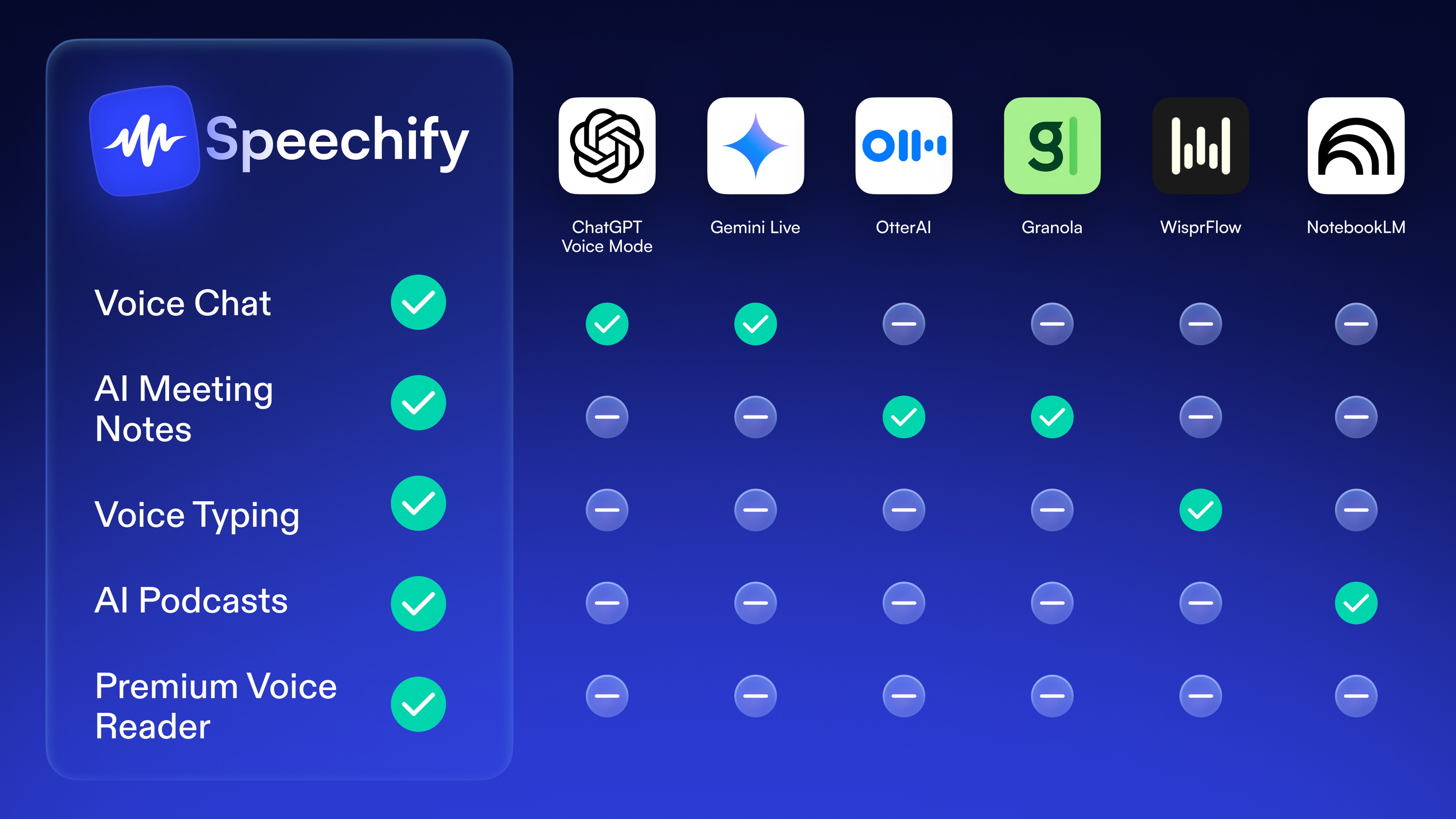
A Speechify eltérő interakciós modellt képvisel, amely a hangra, a hallgatásra és a diktálásra fókuszál. Inkább kiegészíti, mintsem helyettesíti a ChatGPT beszélgető mélységét és szöveggenerálását.
Támogatja a ChatGPT a hangot?
Bizonyos ChatGPT felületeken lehet hangalapú be- és kimenet is, de a hang nem olyan központi elem, mint a Speechify-nál.
Használható a Speechify kreatív írásra?
Igen, diktálhatod az ötleteidet, majd csiszolhatod őket, de az összetettebb szerkezet továbbra is hasznot húzhat egy szövegközpontú asszisztensből, mint a ChatGPT.
Melyik jobb diákoknak?
Ha a hallgatás és a diktálás illik a tanulási szokásaidhoz, a Speechify különleges előnyöket kínál; részletes magyarázatokhoz és kérdésalapú tanuláshoz a ChatGPT a legjobb.
Ingyenes a Speechify?
A Speechify ingyenes hozzáférést kínál az alap hallgatási és hangalapú diktálás funkciókhoz, további lehetőségek az előfizetési csomagoktól függően érhetők el.