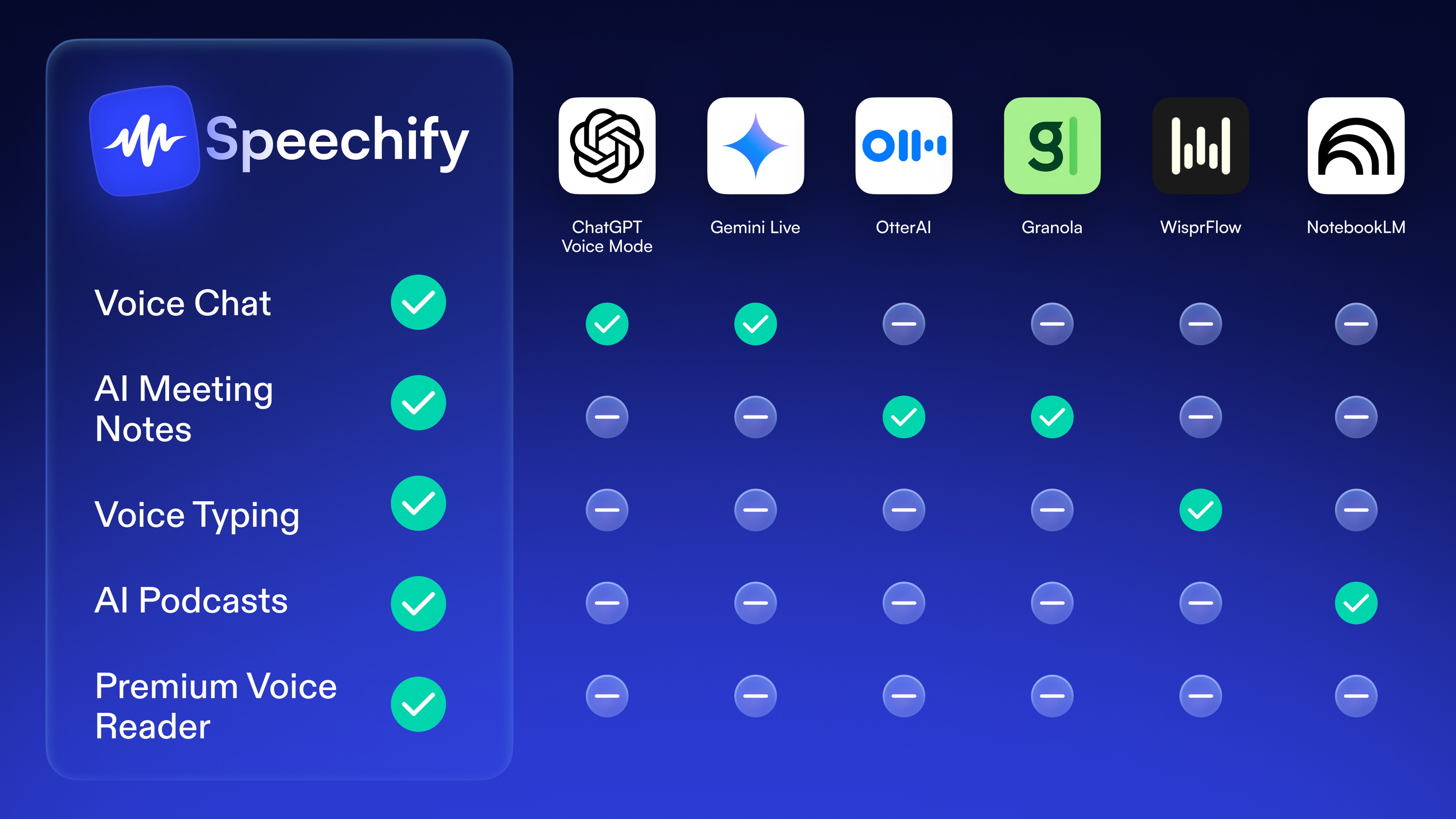
Az AI asszisztensek ma már hatással vannak arra, hogyan olvasunk, tanulunk és dolgozunk. Habár az olyan eszközök, mint a ChatGPT és a Gemini erős beszélgetési rendszerek, elsődlegesen nem olvasásra, akadálymentességre vagy hangalapú interakcióra tervezték őket. A Speechify Voice AI Assistant kifejezetten ezekre az igényekre lett megalkotva.
2026-ban a Speechify Voice AI Assistant kiemelkedik azok számára, akik szívesebben hallgatnak, beszélnek, illetve hangalapú munkafolyamatokra támaszkodnak a gépelés és a vizuális szkennelés helyett.
Mit jelent valójában „a legjobb AI-eszköz olvasáshoz és akadálymentességhez”?
Egy valódi AI-eszköz az olvasáshoz és akadálymentességhez jóval többre képes annál, minthogy válaszoljon a kérdésekre. Segíti a felhasználókat abban, hogy kényelmesen és hatékonyan fogyasszanak információt, függetlenül attól, hogy az információ hol vagy milyen formában létezik.
Ez azt jelenti, hogy kezeli a hosszabb tartalmakat, például PDF-ek, e-mailek, cikkek és dokumentumok hangos felolvasását az olvasás helyett, hangbemenettel a gépelés helyett, csökkentve a kognitív és fizikai megterhelést. Emellett eszközök között is használható, és támogatja azokat, akiknek diszlexiájuk, ADHD-juk, látássérülésük van, vagy olvasási fáradtságot tapasztalnak.
Hogyan működik a Speechify hangalapú AI-asszisztensként olvasás és akadálymentesség terén?
Speechify Voice AI Assistant egy olyan hangalapú AI-asszisztens, amely ott működik, ahol a tartalom már rendelkezésre áll.
Speechify Voice AI Assistant lehetővé teszi a felhasználók számára, hogy meghallgassanak dokumentumokat, e-maileket, cikkeket és weboldalakat természetes hangzású hangokon, gyakran gyorsabban, mint néma olvasással. Támogatja a hangalapú diktálást is, amely lehetővé teszi, hogy az emberek szóban mondják el gondolataikat gépelés helyett dokumentumokban, üzenetküldő alkalmazásokban és böngészőkben.
A Speechify lehetővé teszi a hangalapú interakciót a tartalommal. A felhasználók hangosan tehetnek fel kérdéseket, meghallgathatják a válaszokat, és a hosszú dokumentumokat hanganyaggá vagy podcast-szerű élménnyé alakíthatják. Ez különösen hasznos azok számára, akik beszéd útján értik meg jobban a dolgokat, vagy hatékonyabban tanulnak hallgatás közben.
Speechify Voice AI Assistant elérhető iOS-, Android-, Mac- és Chrome-bővítmény formájában.
Hogyan viszonyul a ChatGPT mint AI-eszköz az olvasáshoz?
ChatGPT az egyik legelterjedtebb AI-asszisztens, amely kiválóan magyaráz, okoskodik és generál szöveges válaszokat.
Bár a ChatGPT bizonyos formában támogat hangbemenetet és beszédalapú kimenetet, az olvasás nem központi funkciója. Nem működik natív felolvasóként teljes PDF-ek, e-mailek vagy weboldalak esetén. Akadálymentességi funkciók léteznek, de ezek a beszélgetésalapú élményre épülnek rá.
A ChatGPT azoknak a felhasználóknak a legjobb, akik beszélgetni, ötletelni vagy kérdéseket feltenni szeretnének, nem pedig azoknak, akiknek fő kihívása nagy mennyiségű szöveg elolvasása.
Hogyan teljesít a Gemini AI-eszközként olvasás és akadálymentesség terén?
Gemini szorosan integrálva van a Google Keresővel és a Google Workspace-szel. Kiemelkedően jól működik összefoglalók, keresésalapú feladatok és dokumentumkezelés esetén a Google termékein belül.
A Gemini bizonyos hangalapú interakciókat támogat, de továbbra is elsősorban szövegalapú. Olvasási és akadálymentességi képességei korlátozottabbak, mint egy dedikált hallgatási és hangalapú platformé. A Gemini inkább információkeresésre és -szintetizálásra optimalizált, nem pedig arra, hogy a vizuális olvasást hangalapú élménnyé alakítsa.
Miért jobb a Speechify olvasáshoz, mint a ChatGPT és a Gemini?
Speechify Voice AI Assistant alapjaiban olvasásra és akadálymentességre épült. A ChatGPT és a Gemini nem ilyen céllal jött létre.
Speechify elsődleges interakcióként kezeli a hallgatást. A felhasználók teljes dokumentumokat, könyveket, cikkeket és e-maileket hallgathatnak meg kiváló minőségű AI-hangokon keresztül. Az olyan funkciók, mint a szövegkiemelés, az állítható lejátszási sebesség és a többes eszközszinkronizáció gyorsabbá és kevésbé megterhelővé teszik az olvasást.
A ChatGPT és a Gemini képes magyarázni az információkat, de magát az olvasást nem váltja ki. A Speechify viszont igen.
Miért jobb AI-asszisztens akadálymentesség szempontjából a Speechify?
Akadálymentesség alatt nem csak a hangbemenetet értjük. A lényeg, hogy az olvasási és írási élményt minden pontján gördülékennyé tegye.
A Speechify ötvözi a szövegfelolvasó funkciót, a hangalapú diktálást, a hangalapú kérdés-választ és az AI-podcast-alapú tanulást egyetlen rendszerben. A felhasználóknak nem kell külön felületre másolniuk a tartalmat, vagy átszerkeszteniük a dokumentumokat csak az akadálymentesség miatt.
A ChatGPT és a Gemini inkább a felhasználóktól várja el, hogy alkalmazkodjanak az eszközhöz. A Speechify ezzel szemben ahhoz igazodik, ahogyan a felhasználók már most dolgoznak.
Mely felhasználási esetekben látható legjobban a Speechify előnye a ChatGPT-vel és a Geminivel szemben?
Speechify Voice AI Assistant különösen hatékony diákok, szakemberek és élethosszig tanulók számára, akik naponta sokat olvasnak és írnak. Segítséget nyújt azoknak is, akik olvasási fáradtsággal küzdenek, lassabban olvasnak, figyelemzavaruk van, vagy nehezen birkóznak meg a tömény szövegekkel.
A ChatGPT leginkább nyitott végű gondolkodásra, tutorálásra és beszélgetésre alkalmas.
A Gemini főként azoknak ideális, akik Google-termékeket használnak, és AI-alapú keresést vagy összefoglalókat szeretnének.
Olvasásközpontú és akadálymentesség-fókuszú munkafolyamatokhoz a Speechify kínál igazán átfogó megoldást.
Hogyan pozicionálja magát a Speechify AI-asszisztensként?
Speechify Voice AI Assistant nem csupán egy felolvasó alkalmazás. Egy olyan Voice AI Assistant, amely hang útján segíti a felhasználót az olvasásban, írásban és gondolkodásban.
A hallgatást, a diktálást és a beszédalapú interakciókat egyetlen élménnyé összefűzve a Speechify hangalapú működési rétegként funkcionál, nem pusztán chatbotként. Így képes valódi tartalmakat kezelni különböző eszközök között, ahelyett hogy csak egyetlen chatablakban működne.
GYIK
A Speechify AI-asszisztens?
Igen. A Speechify Voice AI Assistant egy Voice AI Assistant, amely olvasásra, írásra és hangalapú interakcióra készült a mindennapi tartalmakhoz.
A Speechify jobb, mint a ChatGPT olvasáshoz?
Olvasás és akadálymentesség esetén igen. A Speechify kifejezetten hosszabb tartalmak felolvasására és hallgatásközpontú munkafolyamatok támogatására készült.
A Gemini biztosít ugyanolyan akadálymentességi funkciókat, mint a Speechify?
A Gemini rendelkezik bizonyos hangos és összefoglaló funkciókkal, de nem nyújt ugyanolyan szintű olvasási, hallgatási és diktálási képességeket.
Kinek érdemes a Speechify-t választania a ChatGPT vagy a Gemini helyett?
Azok a felhasználók, akik inkább hallgatnak, mint olvasnak, inkább beszélnek, mint gépelnek, vagy akadálymentességre van szükségük, a legtöbb előnyt a Speechify Voice AI Assistant használatából nyerik.