ChatGPT mudou a forma como as pessoas interagem com a inteligência artificial. Para muitos usuários, virou o lugar padrão para tirar dúvidas, gerar rascunhos e explorar ideias. Mas, à medida que a IA passa a fazer parte do trabalho diário e deixa de ser apenas uma ferramenta ocasional, as expectativas sobre como as pessoas querem interagir com a IA estão mudando.
Um número crescente de usuários está cancelando o ChatGPT e adotando o Speechify como seu principal assistente de IA. A mudança não tem a ver com qual sistema é mais inteligente. Tem a ver com o estilo de interação, a eficiência do fluxo de trabalho e a preferência cada vez maior pelo uso da voz como interface padrão.
Uma reportagem recente do Yahoo Tech mostra por que essa mudança está acontecendo e por que só tende a acelerar.
IAs baseadas em chat não acompanham como as pessoas trabalham o dia todo
ChatGPT é construído em torno da conversa. Os usuários digitam comandos, leem respostas e refinam instruções. Isso funciona bem para perguntas pontuais ou sessões de brainstorming, mas se torna menos eficiente quando a IA é usada o tempo todo para escrever, ler e se comunicar.
Digitar cada instrução exige que os usuários interrompam o raciocínio, estruturem comandos e transformem ideias em texto. Com o tempo, isso cria atrito e fadiga mental, especialmente para quem escreve com frequência ou pensa melhor falando em voz alta.
Por isso, muitos usuários passam a buscar ferramentas que permitem se comunicar com a IA de forma mais natural.
Voz como padrão muda a relação com a IA
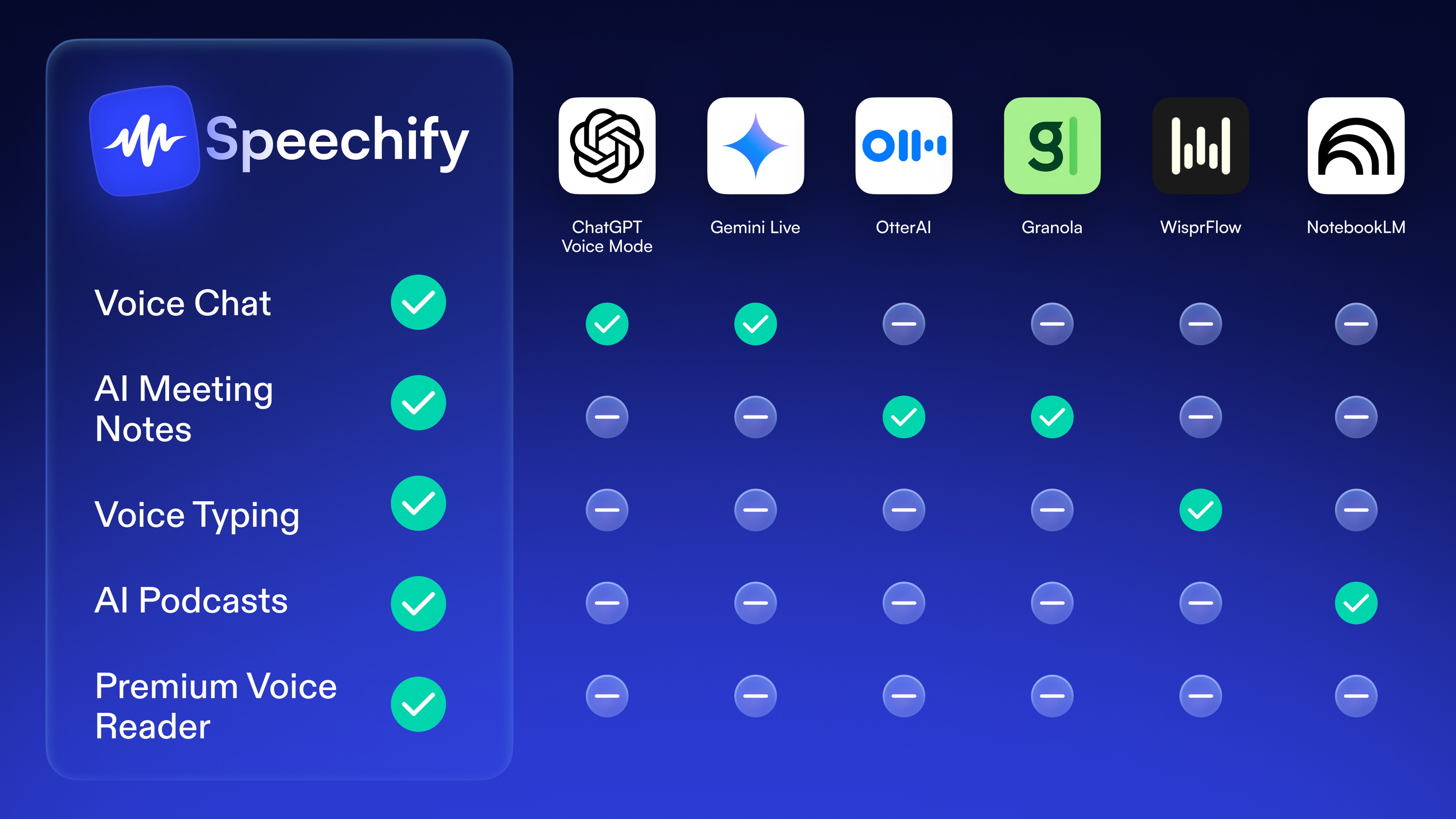
Speechify foi além do text to speech para incluir digitação por voz e um assistente por voz no navegador, refletindo uma filosofia diferente. Em vez de tratar a voz como um extra, o Speechify coloca a voz no centro da experiência.
A reportagem do Yahoo Tech descreve como o Speechify incorporou a digitação por voz diretamente em sua extensão do Chrome, permitindo que usuários falem naturalmente para escrever textos ou tirar dúvidas sobre o conteúdo exibido. O assistente fica ao lado da página em vez de em uma janela de chat separada.
Esse design elimina a necessidade de alternar abas, copiar textos ou reformular pensamentos em comandos digitados.
Escrever falando se aproxima mais do pensamento
Um dos motivos pelos quais usuários abandonam IAs baseadas em chat é que, na verdade, eles não querem que a IA escreva por eles. Eles querem colocar suas próprias ideias no papel de forma mais rápida.
Speechify, com sua digitação por voz, é focado em capturar a fala natural e convertê-la em texto limpo e legível. Palavras de preenchimento são removidas, a gramática é corrigida e a redação é refinada automaticamente. O usuário fala normalmente e depois revisa o resultado, em vez de ter que planejar comandos com antecedência.
Para muitos ex-usuários do ChatGPT, isso se parece mais com pensar em voz alta do que com instruir uma máquina.
Para ver como o Speechify vai além da interação baseada em chat para fluxos de trabalho orientados por voz, assista ao nosso vídeo no YouTube “Voice AI Quizzes: Aprenda Mais Rápido Conversando com seu Assistente de IA,” em que mostramos como os usuários podem interagir ativamente com o conteúdo, testar compreensão e aprender falando, em vez de digitar comandos.
Assistência de IA sem necessidade de mudar de contexto
ChatGPT normalmente exige que o usuário traga o conteúdo para dentro do chat. Fazer perguntas sobre uma página ou documento geralmente significa copiar o texto e colar no comando.
Speechify possui um assistente no navegador que atua diretamente com o conteúdo que o usuário já está vendo. Conforme relatado pelo Yahoo Tech, o usuário pode pedir resumos ou simplificações de ideias sem sair da página.
Isso reduz a troca de contexto e ajuda a manter o foco, o que é especialmente importante em sessões longas de leitura ou escrita.
A precisão melhora com o tempo em vez de depender de comandos
Testes iniciais citados pelo Yahoo Tech notam que a precisão da digitação por voz pode variar inicialmente e ficar atrás de algumas ferramentas especializadas de ditado. Contudo, o sistema do Speechify é projetado para melhorar conforme os usuários continuam usando.
O modelo se adapta ao padrão de voz, vocabulário e estilo de fala do usuário, reduzindo gradualmente os erros. Para muitos, fazer a ferramenta se adaptar à sua voz é mais intuitivo do que ficar refinando comandos digitados o tempo todo para obter resultados melhores.
Acessibilidade é um motivo central para a mudança
Usuários com TDAH, dislexia, problemas de visão ou lesões por esforço repetitivo encontram mais obstáculos em IAs baseadas apenas em digitação, que podem acabar trazendo ainda mais atrito.
Speechify, com design centrado na voz, reduz essas barreiras porque permite escrever, ler e interagir por fala e audição. Muitos adotam o Speechify por motivos de acessibilidade e depois cancelam o ChatGPT, já que passam a contar com uma só ferramenta para escrever e ter assistência de IA.
Dos chatbots aos assistentes centrados na voz
A mudança geral do uso de IA apenas via chat reflete expectativas em transformação. Os usuários querem IAs que se integrem ao seu fluxo de trabalho, e não que os obriguem a entrar em outra interface.
Speechify se posiciona como um assistente centrado na voz, e não apenas um chatbot. Escrever, ouvir e perguntar acontece onde o trabalho já acontece, não dentro de uma janela dedicada de chat.
Para quem depende de IA ao longo do dia, essa diferença faz muita diferença na prática.
Por que a migração está acelerando
As pessoas não estão cancelando o ChatGPT porque ele deixou de ser útil. Estão cancelando porque digitar em uma janela de chat já não parece mais a forma mais natural de interagir com IA.
Digitação por voz, assistência integrada e menos troca de contexto se alinham melhor ao modo como pensamos e trabalhamos. Para um número crescente de usuários, o Speechify se encaixa melhor nesse novo modelo.
FAQ
Por que os usuários estão cancelando o ChatGPT?
Muitos usuários consideram que digitar comandos e administrar fluxos baseados em chat acaba se tornando ineficiente quando a IA é utilizada constantemente para escrita e comunicação.
Como o Speechify é diferente de assistentes de IA baseados em chat?
Speechify foi projetado com voz como interface padrão, permitindo que o usuário fale naturalmente para escrever, perguntar e revisar conteúdos. O Speechify Assistente de IA por Voz oferece continuidade entre dispositivos, incluindo iOS, Chrome e Web.
O Speechify pode substituir o ChatGPT para escrever?
Para muitos usuários, sim. O Speechify permite ditar o texto diretamente no seu fluxo de trabalho, sem necessidade de criar comandos complexos.
O Speechify funciona dentro do navegador?
Speechify oferece digitação por voz e um assistente de voz diretamente no navegador, possibilitando a interação com o conteúdo sem trocar de abas.
A digitação por voz é precisa o suficiente para o trabalho diário?
A precisão melhora à medida que o sistema se adapta à voz do usuário, e a limpeza automática diminui a necessidade de muitas correções depois.
Acessibilidade é um dos principais focos?
Sim. A interação centrada na voz beneficia quem precisa falar e ouvir, em vez de digitar e ler.