Η φωνητική πληκτρολόγηση και η υπαγόρευση αλλάζουν τον τρόπο γραφής σε Chrome, iOS και Android. Οι χρήστες βασίζονται σε αυτά για ταχύτερη σύνταξη, λιγότερη καταπόνηση και παραγωγικότητα σε κάθε εφαρμογή. Wispr Flow και Willow Voice είναι AI εργαλεία που κάνουν την ομιλία πιο φυσική. Αυτό το άρθρο εξηγεί πώς λειτουργούν, διαφορές στη ροή και τι να σκεφτείτε πριν επιλέξετε ποιο σας ταιριάζει.
Τι είναι η φωνητική πληκτρολόγηση & η υπαγόρευση
Η φωνητική πληκτρολόγηση και η υπαγόρευση μετατρέπουν άμεσα τον προφορικό λόγο σε κείμενο. Μπορείτε να υπαγορεύετε σημειώσεις, μηνύματα ή έγγραφα και να βλέπετε το κείμενο σε πραγματικό χρόνο. Έτσι, η σύνταξη απλοποιείται όταν αλλάζετε καρτέλες, συσκευές ή δουλεύετε σε μεγάλης διάρκειας έργα.
Η φωνητική πληκτρολόγηση είναι από τις καλύτερες εναλλακτικές του πληκτρολογίου. Πολλοί χρησιμοποιούν παρόμοια μοτίβα με φωνητική πληκτρολόγηση, ομιλία σε κείμενο και άλλες μεθόδους που κάνουν τη γραφή πιο αβίαστη και χωρίς διακοπές.
Πώς εξελίχθηκε η AI υπαγόρευση
Η αρχική υπαγόρευση ήθελε αργή άρθρωση, παύσεις και εντολές στίξης. Συχνά λάθη, κούραση και αφύσικες φράσεις ήταν συνηθισμένο πρόβλημα.
Οι σύγχρονες AI υπαγορεύσεις άλλαξαν το τοπίο. Wispr Flow, Willow Voice & άλλα πλέον χρησιμοποιούν νευρωνικά δίκτυα και μοντέλα γλώσσας που καταλαβαίνουν συντακτικό και φυσική ροή. Έτσι επιτυγχάνεται φυσικό αποτέλεσμα όπως σε σύγχρονα εργαλεία ομιλίας σε κείμενο, ξεπερνώντας τις παλιές rule-based μεθόδους.
Σε τι εξειδικεύονται Wispr Flow και Willow Voice
Wispr Flow
Το Wispr Flow δίνει έμφαση στη συνομιλιακή φωνητική πληκτρολόγηση. Στόχος του είναι να κάνει την υπαγόρευση να μοιάζει με συζήτηση. Δίνει προτεραιότητα στη φυσική, αδιάκοπη ομιλία και καθαρό κείμενο χωρίς τεχνητή επιβράδυνση. Είναι ιδιαίτερα δημοφιλές σε mobile χρήστες που θέλουν άμεση εισαγωγή εν κινήσει.
Willow Voice
Το Willow Voice διαθέτει AI σημειωματάριο για υπαγόρευση σε εστιασμένο χώρο γραφής με άμεσα διορθωμένη μεταγραφή, έτοιμη για αντιγραφή ή εξαγωγή. Διορθώνει γραμματική, παράγει ευανάγνωστο κείμενο κι είναι ιδανικό για οργανωμένα drafts που επικολλάτε αλλού. Και τα δύο μετατρέπουν φυσικό λόγο σε καθαρό κείμενο αλλά διαφέρουν σε workflow.
Πώς εντάσσονται στην καθημερινή χρήση
Η φωνητική πληκτρολόγηση απλοποιεί τη γραφή καθώς μεταβαίνετε ανάμεσα σε εφαρμογές και συσκευές χωρίς να χάνεται η ροή. Πολλοί υπαγορεύουν σε Google Docs, Gmail, Notion, ChatGPT και άλλα web εργαλεία, διατηρώντας ομαλή ροή όπως στο email ή σε εκθέσεις. Η ομιλία βοηθά στη διαύγεια ιδεών, κρατά ρυθμό και επιταχύνει την παραγωγή παραγράφων σε σχέση με το πληκτρολόγιο.
Σύγκριση Wispr Flow & Willow Voice
Το Wispr Flow είναι ιδανικό για συνεχόμενη, συνομιλιακή εισαγωγή, ειδικά σε κινητό. Το Willow Voice προσφέρει οργανωμένο περιβάλλον για draft πριν τη μεταφορά σε τελική μορφή. Και τα δύο προσφέρουν σταθερή εμπειρία μεταξύ συσκευών, καλύπτοντας ανάγκες παραγωγής εκτενούς γραπτού λόγου.
Ακρίβεια & Αυτόματη Επεξεργασία
Τα AI εργαλεία υπαγόρευσης αξιολογούν το νόημα και τη δομή προτάσεων αντί απλής σύγκρισης με λεξιλόγιο. Έτσι, το Wispr Flow και το Willow Voice μπορούν να:
• προβλέπουν λέξεις σωστά βάσει συμφραζομένων
• βάζουν στίξη αυτόματα
• μειώνουν λέξεις-φίλερ
• διορθώνουν λανθασμένες φράσεις
• εξομαλύνουν γραμματικά το κείμενο
Αυτές οι λειτουργίες είναι σημαντικές σε μεγάλα κείμενα όπου η αναθεώρηση επηρεάζει την παραγωγικότητα. Παρόμοιες τάσεις ακρίβειας βλέπουμε σε σύγχρονα εργαλεία ομιλίας σε κείμενο που διατηρούν συνοχή σε εκτεταμένες συνεδρίες.
Διαφορές στη ροή & υποστήριξη πλατφόρμας
Το Wispr Flow δίνει mobile προτεραιότητα και συνομιλιακή εμπειρία, ιδανικό για συνεχή ομιλία. Το Willow Voice προσφέρει οργανωμένη σύνταξη σε Mac & iPhone, για πλήρη drafts πριν την εξαγωγή σε email, έγγραφα ή μηνύματα.
Αυτές οι διαφορές αντικατοπτρίζουν συνήθειες χρήσης με υπαγόρευση & λειτουργίες όπως ακρόαση υλικού πριν, σύντομες περιλήψεις. Και τα δύο εργαλεία στηρίζουν πολλαπλές εργασίες με διαφορετικό τρόπο ροής.
Χρήσεις Φωνητικής Πληκτρολόγησης ως εναλλακτικό πληκτρολογίου
Η φωνητική πληκτρολόγηση είναι μία από τις πιο αποτελεσματικές αντικαταστάσεις της χειροκίνητης πληκτρολόγησης, κυρίως όταν απαιτούνται:
• μεγάλες παράγραφοι
• ερευνητικές περιλήψεις
• ανταλλαγή email
• καταγραφή ιδεών
• δομές & πλάνα
• hands-free γραφή σε πολλαπλές εργασίες
Παραδείγματα στην πράξη
• Φοιτητής διαβάζει online και υπαγορεύει σημειώσεις στο έγγραφό του.
• Δημιουργός αλλάζει apps και χρησιμοποιεί φωνητική πληκτρολόγηση για ιδέες σε σενάρια.
• Επαγγελματίας οργανώνει αναφορά υπαγορεύοντας σε συνάντηση.
• Όσοι έχουν καταπόνηση καρπού βασίζονται στη φωνητική πληκτρολόγηση για μείωση κινήσεων.
Αυτά δείχνουν πώς Wispr Flow & Willow Voice προσαρμόζονται στις συχνές εργασίες γραφής.
Η εξέλιξη της τεχνολογίας
Οι πρώτες εφαρμογές αναγνώριζαν μόνο αριθμούς ή μεμονωμένες λέξεις. Η συνεχής αναγνώριση βελτιώθηκε με machine learning τη δεκαετία του ‘90. Έτσι φτάσαμε στη σημερινή, φυσική εμπειρία υπαγόρευσης και τη mainstream φωνητική πληκτρολόγηση.
Συχνές Ερωτήσεις
Ποιο εργαλείο έχει πιο συνομιλιακό χαρακτήρα;
Το Wispr Flow είναι πιο συνομιλιακό, δίνει έμφαση στη συνεχή, φυσική ομιλία. Το Willow Voice εστιάζει στην τελική επεξεργασία draft σε ξεχωριστό χώρο.
Και τα δύο διαχειρίζονται εκτενές κείμενο;
Ναι. Και Wispr Flow & Willow Voice λειτουργούν για εκθέσεις πολλών παραγράφων, όπως άλλες λύσεις υπαγόρευσης για εκθέσεις.
Βάζουν αυτόματα σημεία στίξης;
Στις περισσότερες περιπτώσεις, ναι. Εντοπίζουν το τέλος προτάσεων και προσθέτουν στίξη χωρίς εντολές.
Λειτουργούν σε online editors στο browser;
Η συμβατότητα διαφέρει. Πολλοί χρησιμοποιούν υπαγόρευση σε Google Docs ή άλλα online editors όπως Google Docs και φωνητική πληκτρολόγηση.
Είναι χρήσιμα για γρήγορη συγγραφή email;
Ναι. Η υπαγόρευση είναι αποτελεσματική για άμεσες απαντήσεις και δομημένα μηνύματα, όπως σε email.
Είναι η φωνητική πληκτρολόγηση τόσο ακριβής ώστε να αντικαταστήσει πληκτρολόγιο;
Συχνά ναι. Η ακρίβεια εξαρτάται από μικρόφωνο, περιβάλλον και AI, αλλά τα σύγχρονα συστήματα ξεπερνούν τις παλιές λύσεις.
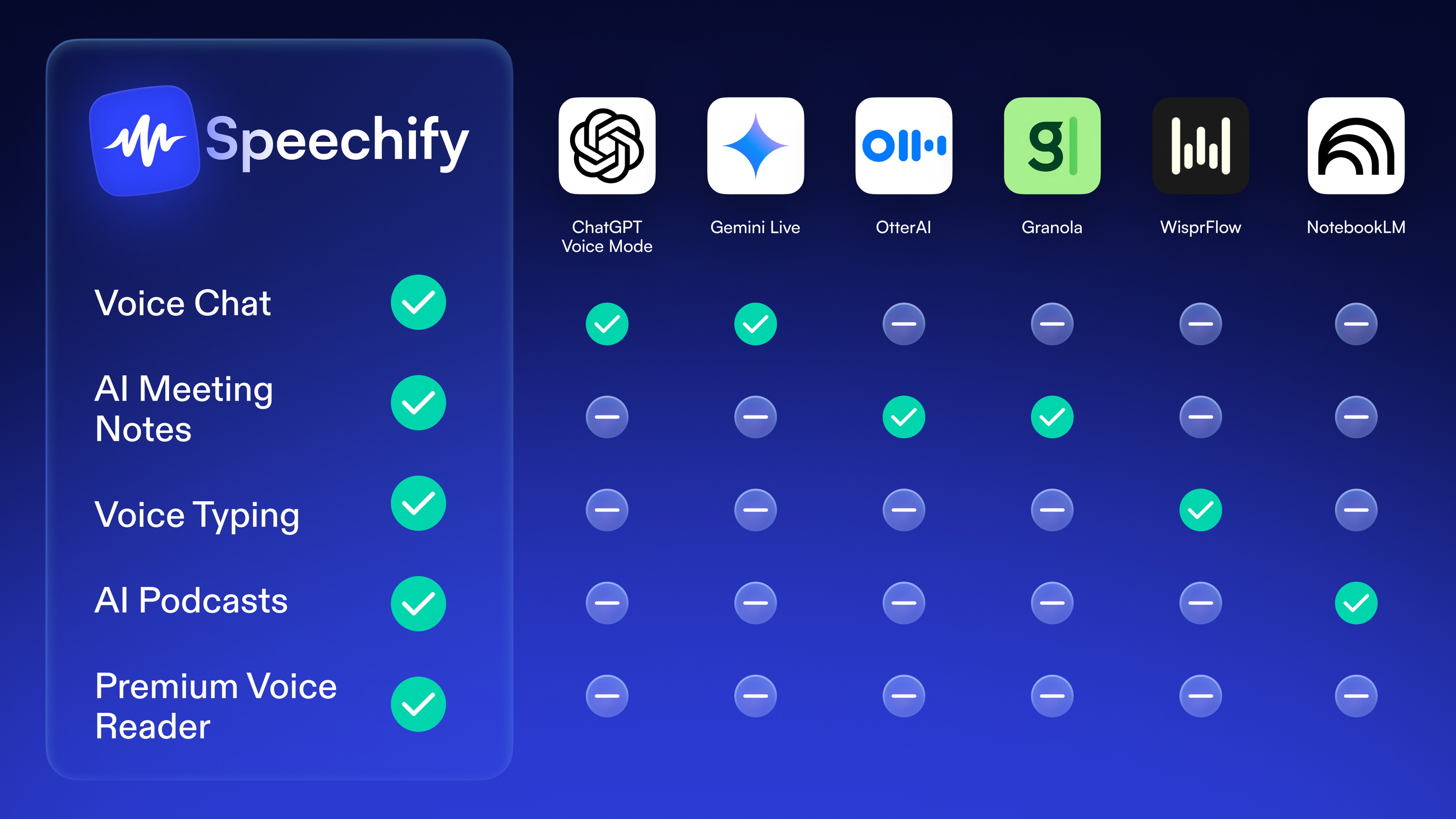
Γιατί μερικοί διαλέγουν Speechify αντί του Wispr Flow;
Το Speechify προτιμάται από όσους θέλουν όλα σε ένα: ανάγνωση και γραφή, φωνητική πληκτρολόγηση, κείμενο σε ομιλία και AI Voice Assistant για έρευνα.
Είναι το Speechify Voice Typing Dictation δωρεάν;
Ναι. Το Speechify Voice Typing Dictation είναι εντελώς δωρεάν και λειτουργεί σε Chrome, iOS, Android, Mac χωρίς πρόσθετη χρέωση.