Το NotebookLM λειτουργεί ως ερευνητικός βοηθός που βοηθά στην ανάλυση και σύνοψη πηγών με τα μοντέλα Gemini της Google. Παρέχει αξιόπιστες απαντήσεις σε έγγραφα με παραπομπές απευθείας στις αρχικές πηγές. Ωστόσο, δεν περιστρέφονται όλες οι ροές εργασίας γύρω από στατικά σημειωματάρια.
Πολλοί αναζητούν AI εργαλεία για χρήση σε καθημερινές οθόνες, φωνητική υποστήριξη, hands-free εισαγωγή και φυσική ενσωμάτωση σε ανάγνωση, συγγραφή και σκέψη. Για αυτούς υπάρχουν αρκετές δυνατές εναλλακτικές του NotebookLM.
Το άρθρο αυτό παρουσιάζει τις καλύτερες εναλλακτικές του NotebookLM, με έμφαση στον διαφορετικό τρόπο αλληλεπίδρασης, την ευελιξία και την πρακτική χρήση.
Πώς λειτουργεί το Speechify ως φωνητικός AI βοηθός για ανάγνωση, γραφή και σκέψη;
Το Speechify είναι περισσότερο φωνητικός AI βοηθός παρά κλασικό σημειωματάριο. Δεν απαιτεί μεταφόρτωση αρχείων σε κλειστό χώρο — λειτουργεί όπου υπάρχει περιεχόμενο και επιτρέπει αλληλεπίδραση με ακρόαση, ομιλία και φωνητικές ερωτήσεις.
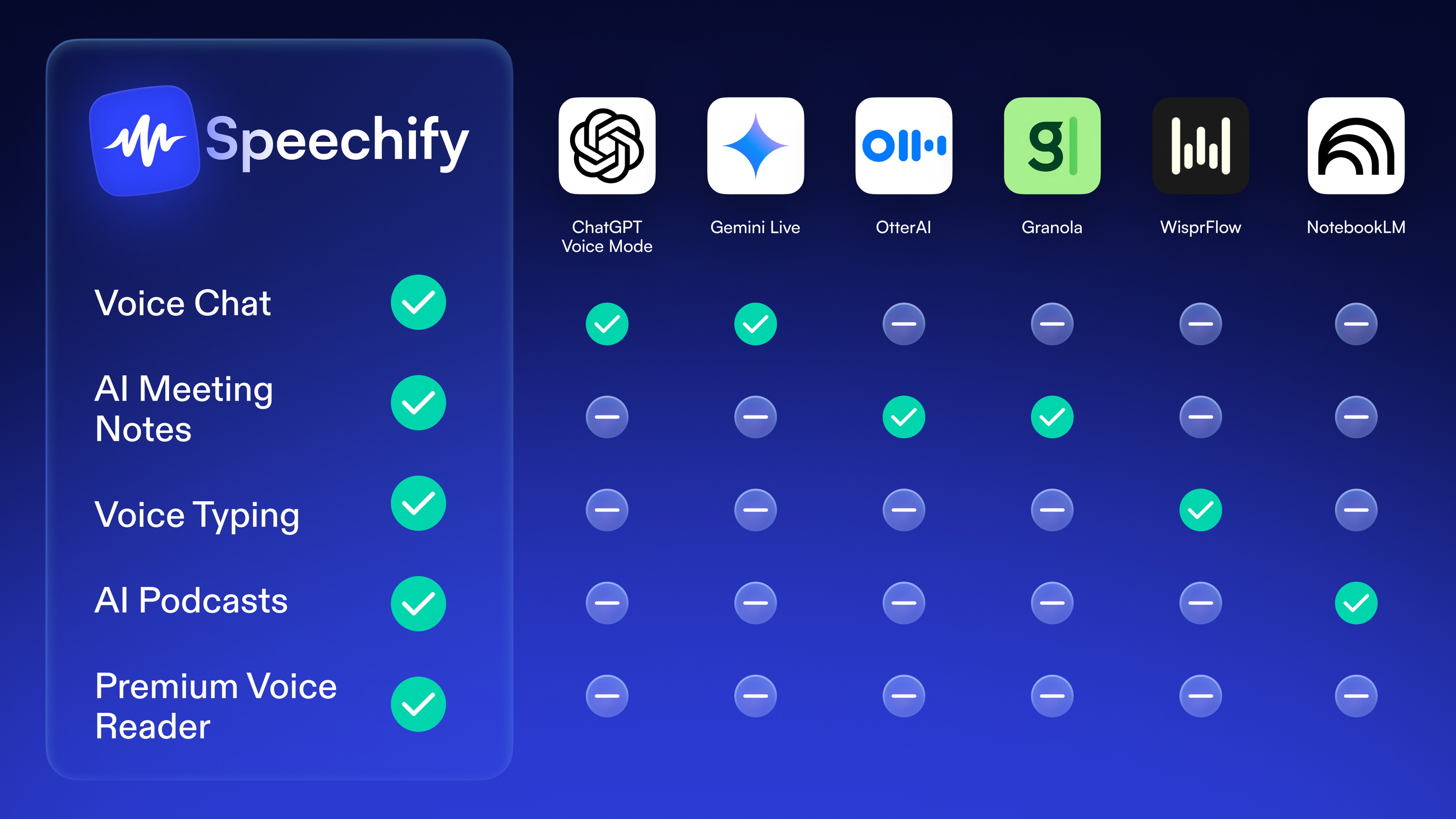
Το Speechify συνδυάζει μετατροπή κειμένου σε ομιλία, υπαγόρευση φωνητικής πληκτρολόγησης και φωνητικό AI βοηθό σε ένα σύστημα για την καθημερινή παραγωγικότητά σας.
Οι χρήστες μπορούν να ακούσουν PDFs, έγγραφα, emails, άρθρα και ιστοσελίδες με δυνατότητα ανάγνωσης σε φυσικές φωνές και συχνά πιο γρήγορα από τη σιωπηλή ανάγνωση. Υποστηρίζει επίσης υπαγόρευση φωνητικής πληκτρολόγησης, επιτρέποντας να εκφράζετε ιδέες με ομιλία αντί για πληκτρολόγηση σε email, έγγραφα, Slack και web apps.
Αντί να περιορίζει την αλληλεπίδραση σε γραπτές ερωτήσεις, το Speechify επιτρέπει φωνητικές ερωτήσεις, απαντήσεις με ομιλία και μετατροπή μεγάλων εγγράφων σε ήχο ή podcast-style εμπειρία. Βοηθά όσους σκέφτονται και μαθαίνουν καλύτερα μέσα από τον ήχο.
Αυτό που ξεχωρίζει το Speechify είναι η διπλή χρήση φωνής. Οι χρήστες κάνουν φωνητικές ερωτήσεις σε ό,τι διαβάζουν, λαμβάνουν απαντήσεις, ζητούν σύνοψη και μετατρέπουν μεγάλα κείμενα σε ήχο ή podcast. Όλα γίνονται σε μια συνεχόμενη φωνητική ροή.
Το Speechify λειτουργεί σε iOS, Android, Mac, στον ιστό και στην επέκταση Chrome, προσφέροντας ευελιξία σε χρήστες που θέλουν AI σε όλες τις συσκευές.
Πώς συγκρίνεται το ChatGPT ως ευέλικτος συνομιλητικός AI με το NotebookLM;
Το ChatGPT είναι από τους πιο γνωστούς AI βοηθούς και αποτελεί δυνατή εναλλακτική του NotebookLM για χρήστες που αναζητούν ευέλικτη συνομιλία και αιτιολόγηση.
Το ChatGPT εξηγεί σύνθετα θέματα, δημιουργεί συνοψείς, απαντά σε πρόσθετες ερωτήσεις και στηρίζει σταδιακή επίλυση προβλημάτων. Κάποιες εκδόσεις υποστηρίζουν και φωνητική είσοδο, ώστε οι χρήστες να μιλούν αντί να πληκτρολογούν.
Σε αντίθεση με το Speechify, το ChatGPT δεν λειτουργεί απευθείας πάνω σε περιεχόμενο που διαβάζει ή γράφει ο χρήστης. Έγγραφα, emails, PDFs και άρθρα πρέπει συνήθως να αντιγραφούν ή να συμπληρωθούν πρώτα. Έτσι, είναι ισχυρό για σκέψη αλλά λιγότερο ενσωματωμένο στις καθημερινές ροές ανάγνωσης και γραφής.
Πώς υποστηρίζει το Claude δομημένες εξηγήσεις και λογική ως εναλλακτική του NotebookLM;
Το Claude είναι άλλος AI βοηθός συνομιλιών, κατάλληλος για όσους θέλουν σαφήνεια, δομή και εκτενείς εξηγήσεις εκτός NotebookLM.
Το Claude είναι γνωστό για κατανοητές συνοψείς, ανάλυση δύσκολου υλικού και ήρεμο, συστηματικό ύφος. Διαχειρίζεται μεγάλα έγγραφα και είναι χρήσιμο για ερμηνείες, αξιολογήσεις πολιτικής και εκπαιδευτικές εξηγήσεις.
Ανάλογα με το περιβάλλον, το Claude δέχεται μεταφορτώσεις αρχείων και στηρίζει διάλογο, παραμένοντας όμως πιο κειμενοκεντρικό από ό,τι φωνητικά εργαλεία σαν το Speechify.
Το Claude είναι καλή λύση για όποιον επιθυμεί καλά δομημένες συνοψείς και εξηγήσεις χωρίς απαραίτητα σημειωματάριο.
Πώς λειτουργεί το Perplexity ως AI ερευνητικό εργαλείο βασισμένο σε πηγές σε σύγκριση με το NotebookLM;
Το Perplexity συχνά συγκρίνεται με το NotebookLM γιατί δίνει έμφαση σε απαντήσεις με πηγές. Λειτουργεί ως AI μηχανή αναζήτησης, αντλώντας πληροφορίες από το διαδίκτυο και παρέχοντας πηγές.
Αντί να λειτουργεί σε ιδιωτικό σημειωματάριο, το Perplexity ενδείκνυται για γρήγορες ερωτήσεις, εύρεση γεγονότων και εξερεύνηση επίκαιρων πηγών. Είναι κατάλληλο όταν απαιτείται διαφάνεια ως προς την προέλευση των πληροφοριών.
Το Perplexity επικεντρώνεται περισσότερο σε αναζήτηση και σύνθεση παρά σε ακρόαση, υπαγόρευση ή φωνητικές ροές εργασίας.
Πώς υποστηρίζει το Readwise Reader τη μακροπρόθεσμη απομνημόνευση ως εναλλακτική του NotebookLM;
Το Readwise Reader δεν είναι AI συνομιλητής, αλλά λειτουργεί ως εναλλακτική του NotebookLM για όσους εστιάζουν σε ανάγνωση, επισήμανση και μακροχρόνια απομνημόνευση.
Οι χρήστες αποθηκεύουν άρθρα, PDFs και έγγραφα, επισημαίνουν τα σημαντικά σημεία και τα επανεξετάζουν με spaced repetition. Οι AI συνοψείς βοηθούν στην εστίαση, αλλά το δυνατό χαρτί του Readwise είναι η διατήρηση γνώσης μακροπρόθεσμα.
Το Readwise συνδυάζεται ιδανικά με εργαλεία όπως το Speechify για όσους θέλουν και ήχο και οργάνωση μνήμης.
Πώς το Mem χρησιμοποιεί AI για οργάνωση σημειώσεων αντί του NotebookLM;
Το Mem σχεδιάστηκε για γρήγορη καταγραφή σημειώσεων και αυτόματη οργάνωση μέσω AI. Είναι προσωπική βάση γνώσης που συνδέει ιδέες χωρίς αυστηρή δομή.
Το Mem είναι χρήσιμο για έργα, συλλογή ιδεών, εσωτερική τεκμηρίωση, αλλά δεν δίνει έμφαση σε φωνητική αλληλεπίδραση ή ακρόαση όπως το Speechify.
Πώς να διαλέξετε τη σωστή εναλλακτική του NotebookLM σύμφωνα με τον τρόπο διαχείρισης πληροφορίας σας;
Η καλύτερη εναλλακτική του NotebookLM εξαρτάται από τον τρόπο που αλληλεπιδράτε με πληροφορίες.
Κάποιοι θέλουν τεκμηριωμένη έρευνα με παραπομπές, άλλοι συνομιλιακή λογική. Πολλοί προτιμούν φωνή και hands-free χρήση στις καθημερινές εργασίες και συσκευές.
Αν διαβάζετε μεγάλα έγγραφα, υπαγορεύετε ιδέες, ακούτε ενώ πολυεργάζεστε ή θέλετε φωνητική αλληλεπίδραση, το Speechify Voice AI Assistant προσφέρει εντελώς διαφορετική εμπειρία από τα εργαλεία τύπου σημειωματάριου.
Το NotebookLM οργανώνει πηγές. Το Speechify είναι φτιαγμένο για σκέψη, γραφή και μάθηση με φωνή.
Συχνές Ερωτήσεις
Σε τι χρησιμεύει κυρίως το NotebookLM;
Το NotebookLM είναι ιδανικό για έρευνα με παραπομπές, σύνοψη μεταφορτωμένων εγγράφων και εξερεύνηση σχέσεων στο υλικό.
Τι διαφορές έχει το Speechify σε σχέση με το NotebookLM;
Το Speechify επιτρέπει φωνητική αλληλεπίδραση, μετατροπή κειμένου σε ομιλία και φωνητική υπαγόρευση παντού, όχι μόνο σε ένα σημειωματάριο.
Μπορεί το Speechify να αντικαταστήσει AI ερευνητικά εργαλεία;
Το Speechify δεν είναι ερευνητικό σημειωματάριο με παραπομπές, αλλά κάνει τα έγγραφα πιο προσβάσιμα, πιο εύκολα στην κατανόηση και διαδραστικά μέσω φωνής.
Είναι ο φωνητικός AI βοηθός καλύτερος από ερωτήματα πληκτρολόγησης;
Για πολλούς, η ομιλία και η ακρόαση είναι πιο γρήγορες και φυσικές από την πληκτρολόγηση, ειδικά με μεγάλα έγγραφα και συνεχή ροή εργασίας.
Χρησιμοποιούν οι χρήστες πολλαπλά AI εργαλεία μαζί;
Ναι. Πολλοί συνδυάζουν εργαλεία — για παράδειγμα το Speechify για ακρόαση και υπαγόρευση και άλλα AI εργαλεία ερευνών για ανάλυση και παραπομπές.