Video dublajını Fransızcaya uyarlamak, Fransızca konuşan küresel kitlelere ulaşmak isteyen içerik üreticileri için vazgeçilmez bir araç hâline geldi ve Fransızcanın birçok kıtada yaygın olarak konuşulması, onu etkili lokalizasyon için ideal bir dil kılıyor. İster pazarlama materyallerinizi Fransa, Quebec veya Batı Afrika gibi belirli Fransızca konuşulan bölgelere göre uyarlıyor olun, bir podcast'i La Poudre veya Affaires Sensibles için çeviriyor ya da TF1 veya M6 için popüler bir programı lokalize ediyorsanız; dublaj, Fransızca pazarlarda erişiminizi ciddi ölçüde artırabilir.
Bu blogda, Fransızca video dublajının inceliklerini keşfedecek, geleneksel dublaj yöntemleriyle yapay zekâ destekli araçları karşılaştıracak ve Speechify Studio’nun Fransızca yapay zekâ ses üreticisinin bu süreci nasıl kolaylaştırdığını göstereceğiz.
Fransızca Dublaj Nedir?
Fransızca dublaj, bir videonun orijinal sesini Fransızca seslendirme ile değiştirme işlemidir. Amaç, içeriği Fransızca konuşan bir kitleye özel olarak lokalize etmek ve çevirmektir. Sadece diyalogları çeviren altyazıların aksine, Fransızca dublaj, Fransızca dilinin kendine has kültürel ve dilsel unsurlarını da yansıtır.
Örneğin, Kanada'da "magasiner" (alışveriş yapmak) gibi ifadeler yaygınken, Fransa'da "faire du shopping" daha çok kullanılır. Ayrıca, dublaj, Kanada Fransızcasındaki daha açık ünlüler gibi bölgesel aksanları ya da Fransa'da "c’est chouette" (harika) gibi özel deyimleri de hesaba katmalıdır. Bu özenli uyarlama, içeriğin kulağa doğal gelmesini ve farklı Fransızca konuşulan bölgelerde izleyicinin kendini içeriğe yakın hissetmesini sağlar.
Fransızca Dublaj Seçenekleri: Geleneksel mi, Yapay Zekâ Video Dublajı mı?
Bir Fransızca video dublajında içerik üreticileri, geleneksel dublaj (insan seslendirme sanatçılarıyla) veya yapay zekâ tabanlı dublajı (gelişmiş yazıdan sese ve ses klonlama teknolojisi ile) tercih edebilirler. Şimdi bu yöntemleri inceleyelim:
Geleneksel Fransızca Dublaj
Geleneksel Fransızca dublaj onlarca yıl boyunca özellikle film ve televizyon endüstrisinde en yaygın yöntem oldu. Bu yöntemde profesyonel Fransızca seslendirme sanatçıları, çevrilen diyalogları orijinal sesle zamanlama ve ton açısından uyumlu şekilde kaydeder. Bu yaklaşım, güçlü bir duygusal bağ ve kültürel doğruluk sunar; ancak hem Paris Fransızcası hem de Kanada Fransızcası gibi bölgesel aksanları en iyi yansıtacak doğru yeteneği bulmak hem de performansın ayrıntılarını bir yönetmen eşliğinde yakalamak gerektiği için oldukça emek ve kaynak gerektirir.
Örneğin, bir dublaj sanatçısı Kanada’daki izleyicilere hitap ederken "sevgili" anlamında "chum" gibi Québécois terimlerini kullanabilirken, Fransa’daki izleyiciler için çalışan bir dublaj sanatçısı "petit ami" ifadesini tercih eder. Ayrıca, bölgesel aksanlar ve kalıplar (ör. "s’il vous plaît" ile "plait-il" gibi nezaket ifadeleri), projeye özgünlük katar.
Yapay Zekâ Destekli Fransızca Dublaj
Yapay zekâ ile video dublajı, dublaj sürecini pratikleştirmek isteyen içerik üreticileri için oyunun kurallarını değiştiriyor. Yapay zekâ sayesinde Fransızca dublajlı videoları anında, seslendirme sanatçısı tutmanıza gerek kalmadan ve yüksek kalitede oluşturabilirsiniz. Yapay zekâ araçları, yazıdan sese teknolojisi ve ses klonlama ile Fransızca seslendirmeler üretir ve bu sesler son derece gerçekçi ve canlı duyulur. Bu yöntem, hem daha hesaplı hem de çok daha verimlidir; YouTube videoları, eğitim içerikleri ve sosyal medya içerikleri için biçilmiş kaftandır. Ayrıca, geleneksel dublajdan farklı olarak yapay zekâ sistemleri, hedef kitlenizin bulunduğu bölgeye göre bölgesel farklılıkları otomatik olarak ayarlayabilir.
Örneğin, yapay zekâ Fransa'da "déjeuner" kelimesinin "öğle yemeği" anlamına gelirken Quebec'te "kahvaltı" için kullanıldığını ayırt edebilir. Ayrıca Avrupa Fransızcasında bazı ünlülerin burundan çıkması, Afrika Fransızcasında ise daha kısa tonlu telaffuz gibi ince farkları da algılayabilir.
Speechify Studio ile Yapay Zekâ Sesleriyle Fransızca Video Dublajı Nasıl Yapılır?
Speechify Studio, videoları Fransızcaya dublaj yapma sürecini yapay zekâ sesleriyle son derece zahmetsiz hâle getirir. Aşamalar şöyle:
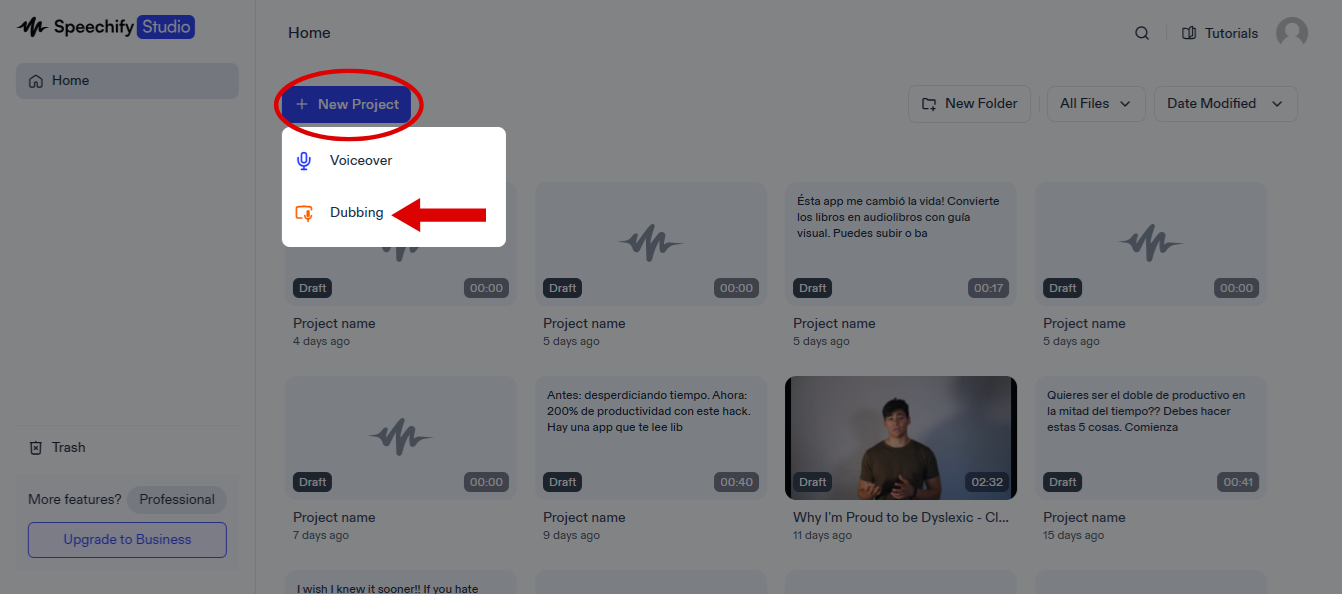
Yeni bir proje oluşturun: “Yeni proje”ye tıklayın ve proje türü olarak “dublaj” seçin.
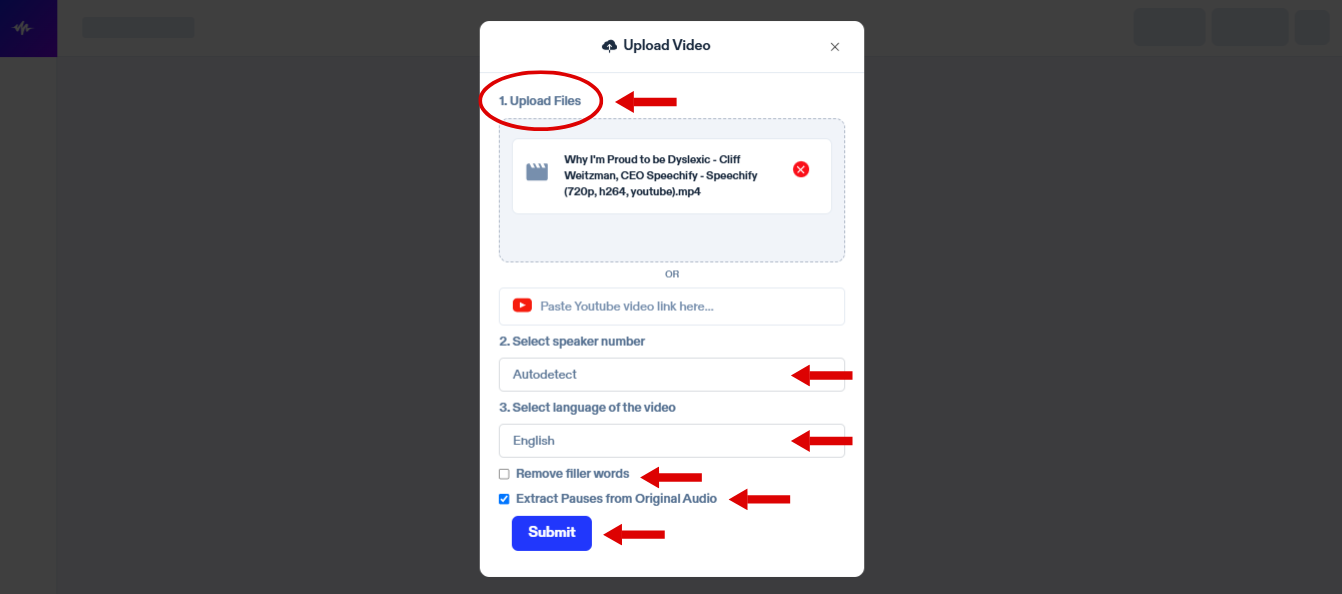
Videonuzu yükleyin: Video dosyanızı Speechify Studio’ya yükleyin. Konuşmacı sayısını belirtin, orijinal dili seçin (ör. İngilizce, İsveççe, Ukraynaca, Fince, Türkçe, Filipince vb.) ve orijinal sesten doldurma sözcüklerini kaldırmak veya duraklamaları ayarlamak isteyip istemediğinizi seçin. Ardından “gönder”e tıklayın.
Sesi yazıya dökün: Speechify Studio’nun video çevirmeni ve dublaj yazılımı, videonuzdaki sesi otomatik olarak metne dönüştürür. Dilerseniz bu metni gözden geçirip düzenleyebilirsiniz.
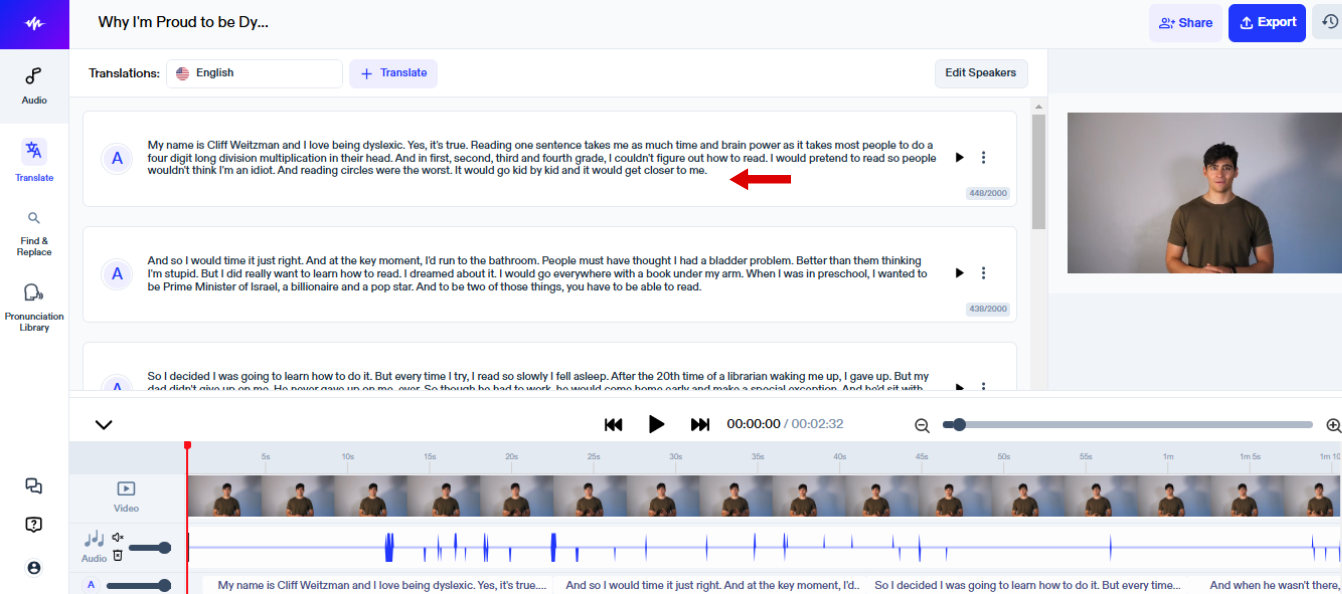
Hedef dil olarak Fransızca’yı seçin: "Çevir" bölümüne gidin ve “To” (Hedef) alanında Fransızca’yı seçin. Kitlenize uygun belirli bir Fransızca lehçesi (ör. İsviçre Fransızcası veya Kanada Fransızcası) seçtiğinizden emin olun.
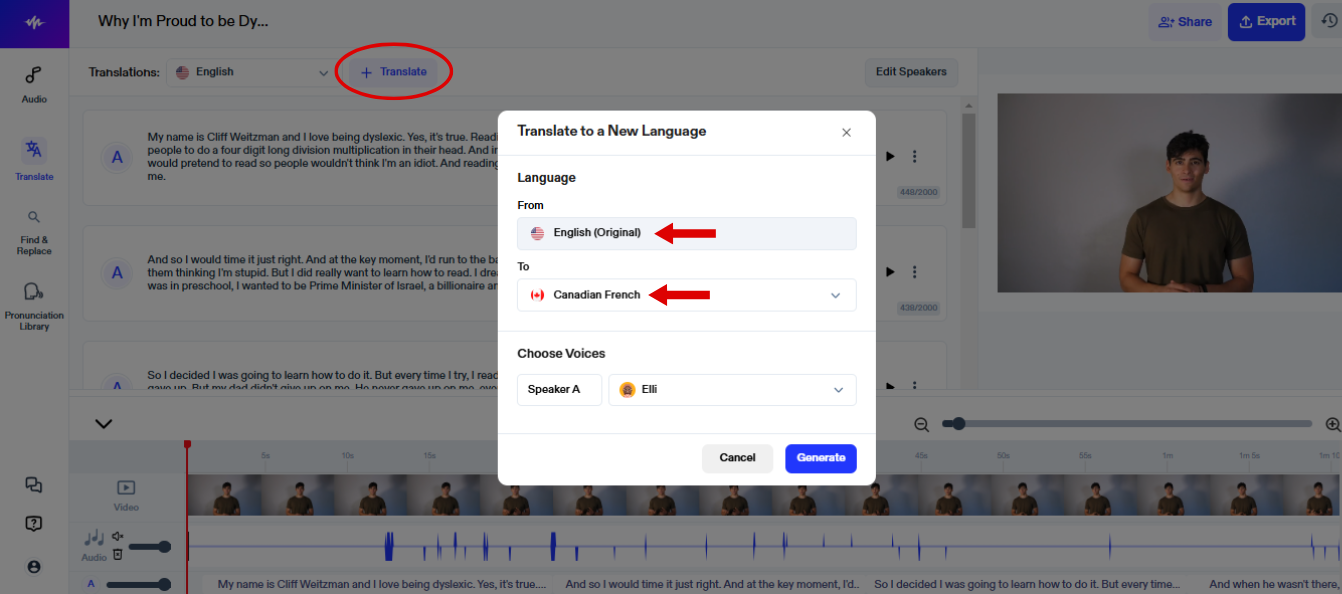
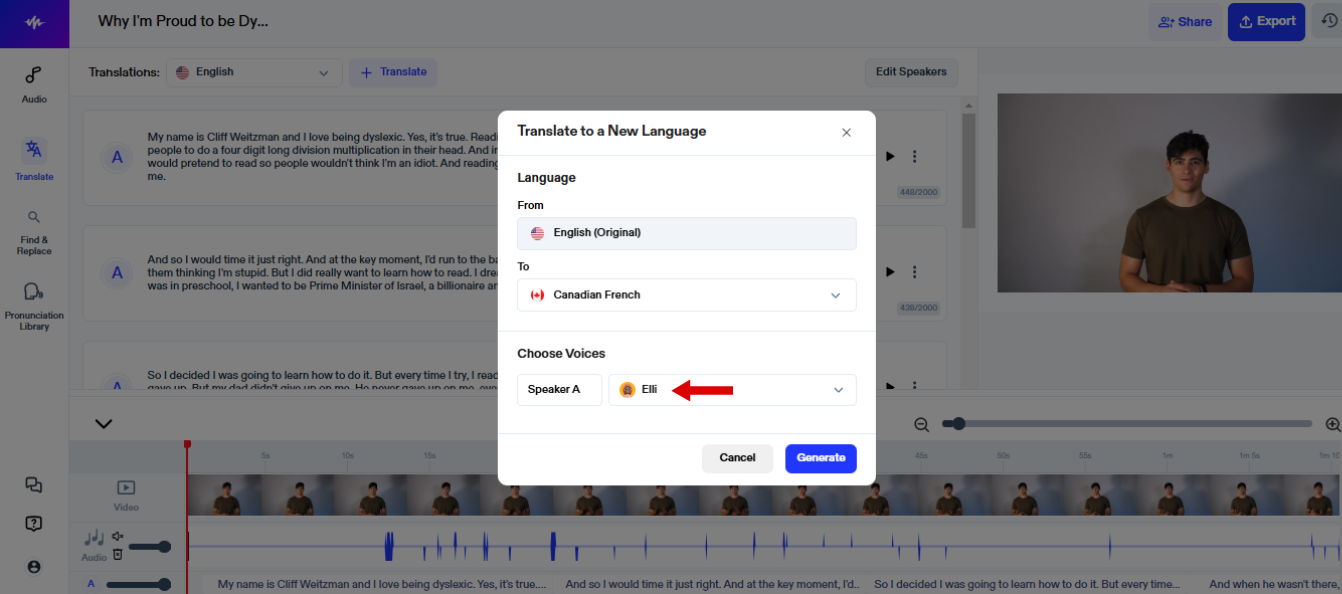
Bir Fransızca ses seçin: Videonuzdaki her konuşmacıya, mevcut seçenekler arasından doğal tonlu bir Fransızca yapay zekâ sesi atayın.
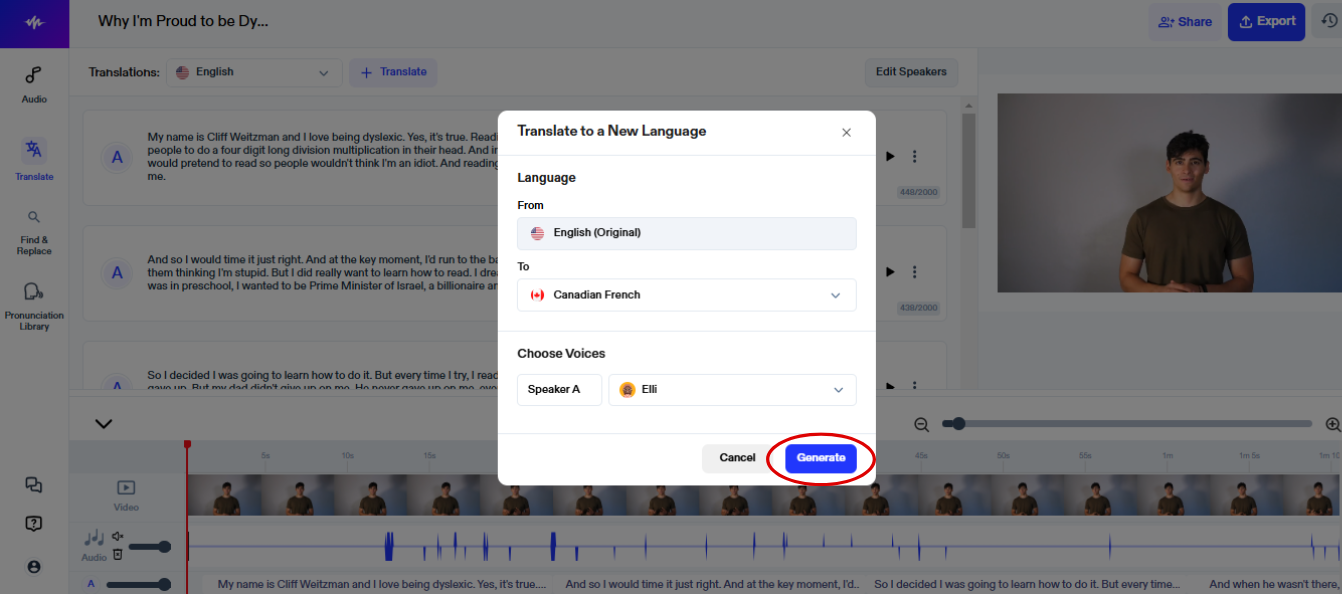
Fransızca dublajlı videoyu oluşturun: “Oluştur”a tıklayın; Speechify Studio metni otomatik olarak çevirip Fransızca dublajı dudak hareketleriyle senkronize edecektir.
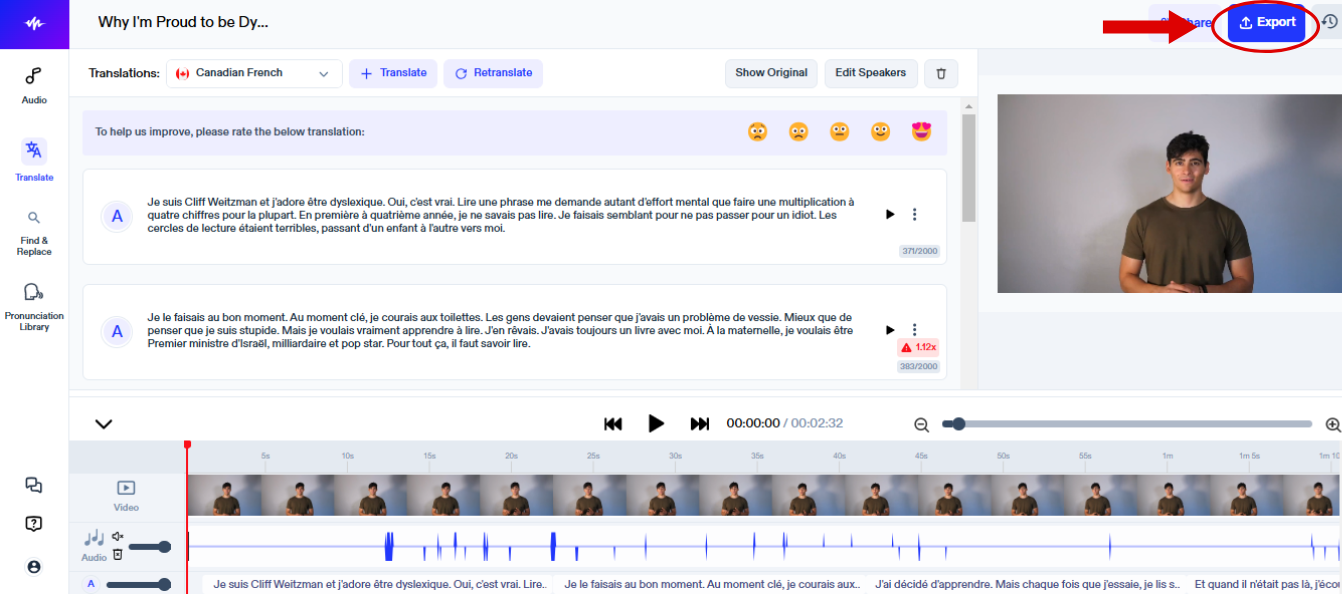
Son videoyu dışa aktarın: Dublaj işlemi tamamlandığında “dışa aktar”ı seçin ve videonuzu yeni Fransızca seslendirme ve yapay zekâ çevirisiyle dilediğiniz formatta indirin.
Speechify Studio’s French AI Voice Generator
Speechify Studio’s French AI voice generator is the best AI dubbing solution tailored to the cultural and linguistic specifics of French, ensuring an authentic, high-quality, and nuanced experience. Key features include:
- Diverse library of realistic AI voices: With a selection of over 200 lifelike voices across various different languages and accents—including French, German, Spanish, Korean, Russian, Italian, Polish, Tamil, Chinese, Japanese, Arabic, Greek, Portuguese, Hindi, and more—Speechify Studio provides some of the most natural-sounding AI voices available, allowing users to select voices that suit regional preferences.
- Extensive French accents and dialects: The platform offers a wide array of French accents, including Parisian French, Belgian French, Canadian French, Swiss French, and European French, ensuring that users can adapt to the preferences of different French-speaking audiences for a tailored experience.
- Advanced French AI voice cloning: Speechify Studio includes Speechify Voice Over Studio, which allows users to clone their own voices, keeping their personal tone and style consistent across French dubbed content, especially useful for personal branding or content with recurring speakers.
- Granular pronunciation control: Users can make precise adjustments to pronunciation at a line-by-line level, ensuring that specific regional French sounds or terms are correctly represented to enhance authenticity.
- Voice over customization options: Through Speechify Studio’s Voice Over feature, users can adjust pitch, tone, and emotion, allowing for more expressive voice options. These adjustment features are being expanded to the dubbing interface soon.
- Accurate pronunciation of unique French sounds: Speechify Studio handles the nuanced sounds in French, such as nasal vowels and unique intonations like how the rules for liaison (linking sounds between words) and elision (dropping of sounds) varies between regions, ensuring accurate and consistent pronunciation in dubbed content.
- Contextual awareness in French translation: Speechify Studio adjusts French translations based on context, distinguishing between regional expressions and levels of formality. For example, it uses "faire la bise" in casual settings for greeting friends, while opting for a formal “serrer la main” in professional contexts, ensuring that cultural nuances and context-appropriate language are accurately represented in the dubbing.
- Emotion detection and adjustment: Speechify Studio identifies the emotional tone in the original audio, such as excitement, sadness, or sarcasm, and adjusts the French dubbing to match, bringing depth to the translated voice over.
- Advanced lip-syncing: Speechify Studio offers precise lip-syncing, ensuring that dubbed French content aligns with mouth movements while maintaining sync even with longer French phrases.
- Support for multiple speakers: The platform seamlessly manages dubbing for multiple speakers, distinguishing between voices and adjusting language nuances to deliver clear, accurate dialogue for multi-character scenes.
- Flexible API for integration: Speechify Studio provides a robust API that allows businesses and developers to integrate its powerful French AI dubbing and voice generation tools into their own platforms.
Speechify Studio’s AI Voice Generator Understands French
Speechify Studio doesn’t just offer dubbing and translation into French; it deeply understands the language's diverse linguistic nuances, ensuring your French AI voice overs and dubs sound natural. Here's a quick overview of how Speechify Studio captures the distinct regional variations within French-speaking areas to deliver top-quality French dubs:
Pronunciation
Speechify Studio recognizes the unique pronunciation traits across French-speaking regions:
- France (European French): European French uses a more pronounced “r” sound from the back of the throat and tends to articulate words more fully. Speechify Studio respects the softer, more rounded intonation typical in France. Additionally, it uses "vous" and "tu" accurately, adjusting based on formality.
- Quebec (Canadian French): Quebec French has distinctive vowel shifts, such as a nasalized “a” sound, and incorporates anglicisms more than European French. Words like “weekend” and “shopping” are common, and phrases can often be more informal in tone. Speechify Studio is also familiar with pronunciation nuances, like the “oi” sound in “moi” sounding closer to “mwé,” and incorporates these for authenticity.
- Belgium and Switzerland (Swiss French): Belgian and Swiss French are similar to European French but with softer “e” sounds, and the final consonants are often less pronounced. Speechify Studio understands regional preferences, such as the counting system where “seventy” is “septante” instead of “soixante-dix,” to avoid confusion.
Vocabulary Differences
Speechify Studio captures the regional vocabulary variations within the French language to ensure contextual accuracy:
- Car: “Voiture” is standard in France, while “char” is frequently used in Quebec. In certain West African regions, phrases like “bagnole” may be used casually.
- Computer: In France, it’s “ordinateur,” while in Quebec, “ordinateur” is also common, though some terms like “ordi” are colloquial for younger audiences.
- Shopping: In France, “faire du shopping” is common, but in Quebec, “magasiner” is often preferred, reflecting the Anglophone influence.
- Cellphone: Portable (France), cellulaire or cell (Quebec), téléphone mobile (African French).
- Sweater: Pull (France), chandail (Quebec).
- Pen: Stylo (France), bique (West Africa).
Grammatical Differences
Speechify Studio understands the grammatical differences that set apart various French dialects, ensuring a fluent and natural delivery:
- Pronoun Usage: Speechify Studio respects regional pronoun norms, such as the frequent use of “on” instead of “nous” for “we” in European French, creating a more conversational tone. In formal contexts, Quebec French might lean more on “nous” than European French would.
- Verb Conjugation: Speechify Studio adapts to common conjugations, such as the use of “je vais faire” (I’m going to do) for future tense in informal speech in France versus the more formal “je ferai” used in professional settings. The AI can switch between these to match the intended audience.
- Counting Variations: Swiss and Belgian French counting uses simpler terms like “septante” (seventy) and “nonante” (ninety), while in France, “soixante-dix” (sixty-ten) and “quatre-vingt-dix” (four-twenty-ten) are standard. This difference is automatically applied in regional French dubs to avoid misunderstandings.
- Tenses: Speechify Studio recognizes that Quebec French frequently uses the past tense (passé simple) in informal speech, while in France, the passé composé is standard in conversation. For example, in Quebec, someone might say Je parlai instead of the more commonly used J’ai parlé in France.
Cultural Sensitivity
Speechify Studio’s AI respects cultural sensitivity by understanding context-specific terms that might hold different meanings across French-speaking regions. For example, the word "dépanneur" in Quebec refers to a convenience store, whereas in France, it means a repair service or tow truck. Similarly, "bise" in France often means a friendly cheek kiss, while in some other regions, it might simply refer to a breeze.
Benefits of French Dubbing
With over 275 million French speakers worldwide, dubbing your content in French opens doors to a large and diverse audience, including regions in Europe, Africa, Canada, and parts of the Caribbean. Here are some benefits of using French AI voices for dubbing:
- Accurate localization: French is spoken across numerous countries and regions, each with unique accents, vocabulary, and pronunciation. French AI dubbing tools can localize your content for specific regions, such as the distinct “r” sound in Parisian French, the influence of English in Canadian French, or the variations found in African French. This adaptability ensures the French dubbing feels natural and resonates with local audiences.
- Enhanced engagement: Providing content in localized French fosters stronger connections with French-speaking audiences, improving viewer engagement and content retention. This is especially useful in markets where audiences are more receptive to content in their local dialects and language nuances.
- Cost-effectiveness: Traditional dubbing can be costly, especially when trying to capture the linguistic variety within the French-speaking world. French AI dubbing offers an affordable alternative, making high-quality French dubbing accessible to content creators and businesses working with various budget sizes.
- Scalability: AI-powered French dubbing tools make it easy to scale, whether you're dubbing a single video or an entire library. This flexibility allows you to quickly localize hundreds of videos into French or other languages like Spanish, German, and Portuguese, ultimately saving time and reducing production costs.
- Consistency in branding: AI dubbing allows you to maintain consistent tone, style, and pronunciation, which is essential for brands aiming for a cohesive voice across markets. This is particularly beneficial in French-speaking regions where minor tonal inconsistencies can impact perceived authenticity and brand trust.
AI Dubbing: Text to Speech French AI Voices vs. Voice Cloning
AI dubbing allows you to adapt content to a variety of French-speaking audiences, from Paris to Quebec and regions across Africa, ensuring that each localized video resonates with your target audience. And the best part? You have two options - French text to speech AI voices or voice cloning, so let’s break them down:
French Text to Speech Voices
Text to speech (TTS) technology converts written text into spoken words. French TTS voices have evolved to sound increasingly natural, making them suitable for AI video dubbing. Content creators can input a French script, and the AI will generate a natural-sounding French voice over, perfect for podcasts, tutorials, and educational content. The AI’s ability to capture different accents, such as Belgian French or Canadian French, also ensures regional relevance, making French TTS an effective tool for content targeting various French-speaking audiences.
French Voice Cloning
Voice cloning takes French AI dubbing to the next level. It allows content creators to clone their own voice in French or replicate a famous French voice for a more personalized dubbed video. This technology maintains the speaker’s tone, pace, and style, making it an excellent choice for branded content, YouTube videos, or multilingual marketing campaigns. By tailoring cloned voices to match local accents, creators can engage audiences across France, Belgium, and other French-speaking African countries, enhancing the viewer’s connection to the content.
Speechify Studio Use Cases for French AI Dubbing
Dubbing with French AI voices offers numerous applications that enable creators, businesses, and media companies to effectively engage French-speaking audiences. Below are several key use cases and scenarios where dubbing in French using AI voices on Speechify Studio can be especially beneficial:
AI Voices for French Podcasts
French AI voice overs can be a great addition to your podcasting efforts, allowing you to transcribe your English podcast and dub it into French, making it accessible to a French-speaking audience. For example, consider a popular English podcast like Serial. By dubbing it into French, and offering it on French-language podcasts on platforms like Deezer and Spotify France, the original creators can engage French-speaking listeners and build a new community around French versions of the podcast.
AI Voices for French Social Media
Social media platforms such as TikTok and Instagram are dominated by short-form, visually captivating content, and French-speaking audiences are no exception. Take, for example, French influencers like Léna Situations or Cyprien who create content that caters specifically to French-speaking users. Their content reaches millions, and the ability to dub English or other foreign-language videos into French using AI-generated voices could dramatically increase the reach and engagement of other content creators, such as Charlie D’Amelio or Addison Rae, and boost the reach of their content creation.
AI Voices for French Multilingual Marketing Campaigns
Multilingual marketing campaigns often require voice dubbing across several languages, and famous global brands like Apple and McDonald's are known for their high-quality localized content. In fact, they both dub campaigns in French to appeal to global consumers. Using AI-generated French voices in marketing campaigns ensures the core message is understood and resonates with French-speaking audiences, from Paris to Montreal.
AI Voices for French Audiobooks
French audiobooks have exploded in popularity worldwide, and many bestsellers originally written in English have been dubbed into French to meet the demand from French-speaking listeners. For example, J.K. Rowling’s Harry Potter series has been fully dubbed in French, allowing readers in France, Canada, and other French-speaking countries to enjoy the magical world in their native language. Similarly, bestsellers like The Hunger Games by Suzanne Collins or The Girl on the Train by Paula Hawkins have been dubbed into French, providing broader access to these iconic stories.
AI Voices for French Entertainment
Some of the most famous movies and TV shows from English-speaking countries have been dubbed into French, allowing them to gain massive followings in France and other French-speaking regions. For instance, the hit TV series Friends has been dubbed into French and remains incredibly popular in France decades after its original release. Similarly, blockbuster films like The Avengers or Star Wars have been dubbed in French, allowing local audiences to experience these global phenomena in their native language.
AI Voices for French Educational Content
Many e-learning platforms have already dubbed popular English-language courses and materials into French to meet the needs of French-speaking students. For instance, the global platform Coursera offers courses in multiple languages, including French, allowing students in France, Belgium, and Quebec to access educational content in their native tongue. Famous TED Talks, which offer insights from experts around the world, have also been dubbed into French, expanding their reach beyond English-speaking audiences. French-language e-learning platforms can benefit from AI voices, providing high-quality voice overs for tutorials and educational materials aimed at French-speaking students.
AI Voices for French Video Games
Many video game companies have localized their games for French-speaking players by dubbing in French, contributing to the gaming industry’s global success. Popular video game franchises like Assassin’s Creed, developed by Ubisoft—a French company—feature fully dubbed French versions. Other globally popular games like The Witcher 3 and Grand Theft Auto V have also been dubbed into French, creating an immersive experience for French-speaking players. The gaming industry can use AI dubbing to localize video games for French-speaking players, enhancing the overall gaming experience.
AI Voices for French Accessibility
The importance of accessibility in media and entertainment cannot be overstated. French-language movies and TV shows have long used audio descriptions for visually impaired audiences, allowing them to enjoy the same entertainment as sighted viewers. For example, popular French films like Amélie or La Haine have provided audio descriptions for French-speaking audiences with visual impairments. AI voice overs can make French-language videos more accessible to visually impaired individuals by providing audio descriptions in French.
Speechify Studio Competitors with French AI Voices
While Speechify Studio is one of the leading French AI voice over platforms, it’s far from the only AI voice generator on the market. Let’s explore how it stacks up against some of its competitors who also offer French AI voices:
Speechify Studio
With support for over 150 languages and accents, including 20+ French AI voices, Speechify Studio’s AI voice generator stands out as a comprehensive, user-friendly video editing platform. It captures the emotion, timing, tone, and unique characteristics of the original speaker. Additional features include multi-speaker support, auto-subtitling, access to stock music and video footage, voice cloning, and lifelike text to speech AI voices—making it an ideal choice for those seeking robust and versatile dubbing solutions.
ElevenLabs
Offering support in 29 languages, ElevenLabs provides an intuitive editing interface focused on preserving the original speaker’s emotional tone, timing, and characteristics. It supports multi-speaker dubbing, along with voice cloning and text to speech capabilities, delivering natural-sounding French AI voices well-suited for various media projects.
Rask
Tailored for film production, Rask supports 135 languages and provides voice cloning and text to speech French AI voices. It includes multi-speaker support and advanced lip-syncing capabilities, making it ideal for content creators who prioritize seamless voice integration in cinematic projects.
Murf
Murf supports 20+ languages and excels in maintaining the original speaker’s tone, vibe, and emotion. Featuring voice cloning and text to speech French AI voices, Murf is geared toward projects requiring expressive and nuanced voice overs, making it an attractive option for professional audio production.
DupDub
DupDub is equipped with 70+ languages and accents, with features like auto-subtitles, multi-speaker support, and lip-sync capabilities. It effectively maintains the style and presentation of the original speaker, providing a reliable option for content requiring nuanced French voice cloning and text to speech AI voices.
Dubverse
Supporting 60+ languages, Dubverse includes auto-subtitling, contextual translations, and lip-sync options. With capabilities for multi-pronunciation and varied tones based on the speaker, this platform provides flexible French voice cloning and text to speech AI options that cater to diverse language needs.
Wavel
With a catalog of 70+ languages, Wavel focuses on preserving the original speaker’s tone, style, and timing with up to 95% accuracy. It offers multi-speaker support, synchronization tools, and advanced French voice cloning and text to speech AI capabilities, making it suitable for projects demanding high precision.
InVideo
Offering 50+ languages and accents, InVideo supports multiplayer editing for team projects and gives access to a vast library of 16+ million stock media files. Its French voice cloning and text to speech AI capabilities cater to team-based projects where extensive media resources and collaborative editing are needed.
Conclusion
French AI video dubbing opens the door to endless possibilities for content creators looking to reach a global French-speaking audience. Whether you’re producing podcasts, YouTube videos, or educational content, AI-powered dubbing tools like Speechify Studio can help you create high-quality, natural-sounding French voice overs. With features like voice cloning and real-time dubbing, you can expand your audience and make your content accessible in French without the hefty price tag of traditional dubbing. Leverage AI technology to enhance your French video content and take your multilingual videos to the next level.
FAQ
How do I dub a video with AI in French?
To dub a video in French with AI, you can use Speechify Studio to generate a natural-sounding French voice over that matches the original audio's timing and tone with just a few clicks.
How do I dub a voice over video in French?
Dubbing a voice over video in French involves uploading the video to Speechify Studio’s French voice generator, selecting a French voice, and the AI-generated audio will automatically sync to the visuals.
What is a video translation?
Video translation is the process of converting spoken content in a video from one language to another, often with subtitles or dubbed voice overs, for multilingual accessibility. Video translation is made possible with just a few clicks with Speechify Studio which uses AI dubbing.
Can AI dub videos in French?
Yes, AI can dub videos in French, and platforms like Speechify Studio offer accurate and culturally nuanced French voice options for dubbing in both French female voices and male voices.
How can I dub a video in another language online?
To dub a video in another language online, upload the video to Speechify Studio, select the target language, and it will use French AI-generated voices for seamless dubbing.