Artificial intelligence assistants continue to evolve with different strengths, interfaces, and user experiences. Two tools that often come up in discussions about AI productivity are Speechify and Grok. While both leverage AI to help people work with information, they approach interaction and use cases in different ways.
This article explains how Speechify and Grok differ, what each tool is best suited for, and how to choose the right assistant based on your preferences for voice interaction, text output, reading vs. listening, and everyday productivity workflows.
What is Speechify and how does it work as a voice-first AI assistant for listening and dictation?
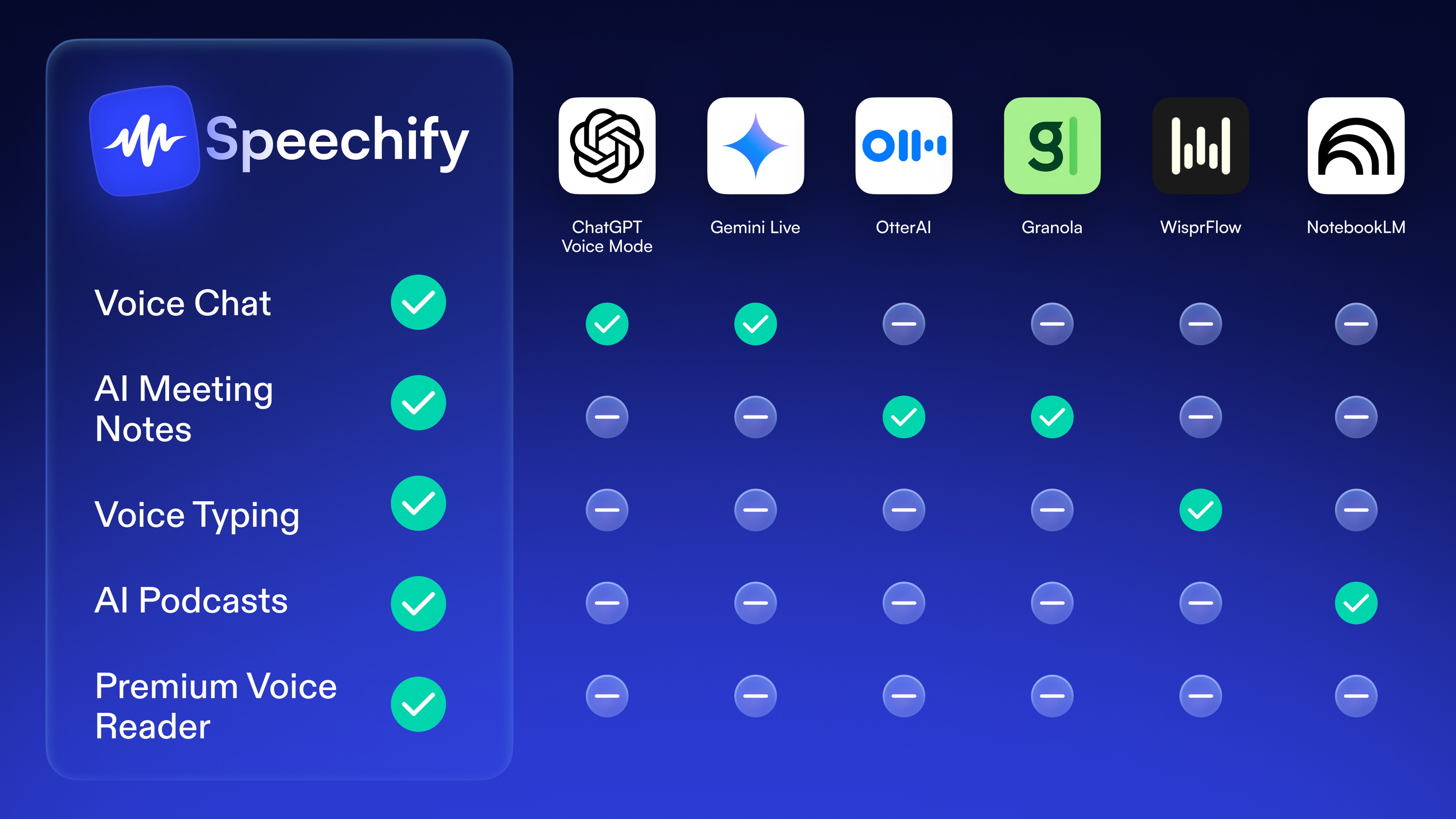
Speechify is a Voice AI Assistant focused on enabling users to interact with content through listening, speaking, and voice typing. It blends text to speech, voice typing dictation, and spoken AI interaction into a single experience that works across devices and applications.
Key features of Speechify include:
- Text to Speech to listen to PDFs, documents, emails, web pages, and articles in natural voices
- Voice Typing Dictation to speak messages and written content across common tools
- Voice AI Assistant to ask questions and receive spoken responses on any page
- Speechify is available across iOS, Android, Mac, the web, and Chrome extension
- Natural Audio Experience with adjustable playback speed and text highlighting
Speechify is designed for users who prefer voice-first interaction, want to reduce typing, or enjoy listening to content rather than reading it on screen.
What is Grok and how does it function as a text-centric conversational AI assistant?
Grok is an AI assistant developed with a focus on real-time information access, conversational reasoning, and broad general knowledge. It emphasizes quick responses, contextual dialogue, and accessibility through text-based or conversational interfaces.
Grok is commonly used for:
- Instant question and answer interactions
- Research and factual lookup
- Conversational exploration of ideas
- Reasoning through text dialogue
Unlike tools built primarily around voice input or spoken interaction, Grok is typically accessed through typed queries and textual responses in supported platforms or chat interfaces.
What are the core differences between Speechify and Grok in interaction style and use cases?
How do Speechify and Grok differ in interaction style between voice and text?
- Speechify: Voice-first experience with text to speech and voice typing dictation integrated into everyday workflows.
- Grok: Text-centric conversational AI designed for quick answers and reasoning via typed interaction.
What primary use cases are Speechify and Grok each best suited for?
- Speechify: Best for listening to content, dictating text, and using AI through voice across familiar tools.
- Grok: Best for fast text dialogue, question and answer tasks, and exploratory research through language.
How do Speechify and Grok differ in their priorities around audio versus text interaction?
- Speechify is built around a listening and speaking experience that rivals traditional reading and typing workflows.
- Grok remains centered on text output and conversational text interaction, even in situations where voice capabilities are available.
Why might users who prefer voice AI choose Speechify over Grok?
Certain users prioritize voice interaction as their main workflow preference. These include people who want to:
Why is Speechify a better choice for users who prefer listening to content instead of reading?
Speechify’s text to speech lets users listen to long form content such as research documents, PDFs, emails, or web pages in natural voices. This is especially helpful while multitasking or when screen reading is difficult.
Why is Speechify ideal for users who want to dictate content instead of typing?
Speechify’s voice typing dictation allows users to speak and generate written text across common applications such as email, document editors, and messaging platforms. This can speed up writing and reduce friction from manual typing.
How does Speechify support receiving AI responses through spoken interaction?
The Voice AI Assistant in Speechify lets users ask questions and get spoken answers in context, making it possible to have a more conversational flow without switching screens.
How does Speechify enable seamless voice-first workflows across devices?
Speechify’s availability on desktop, mobile, and browser extensions allows voice interaction to follow users throughout their workflow, whether they are reading, creating, or reviewing content.
When might Grok be a better fit than Speechify for certain users?
While Speechify focuses on voice interaction and listening experiences, Grok may be preferable for users whose needs include:
Why is Grok well suited for quick, text-centered answers and reasoning?
Grok is strong for rapid responses to questions and real-time text dialogue, especially when the conversation involves deep reasoning or multi-step clarification.
Why is Grok effective for research and exploration through text-based interaction?
For research tasks where the output is expected to be read and further manipulated as text, Grok’s conversational AI model provides structured text replies and detailed explanations.
Why is Grok a good choice for users who prefer iterative text-based conversation?
Users who enjoy back-and-forth dialogue with an AI through text may find Grok more intuitive, especially for brainstorming or iterative questioning.
How do you decide whether Speechify or Grok is right for your workflow?
To determine whether Speechify or Grok is the right AI assistant, consider the following:
Do you prefer listening or reading?
If listening to content feels more natural or efficient, Speechify’s text to speech is a strong advantage.
Do you like speaking instead of typing?
Speechify’s voice typing dictation can significantly speed up writing tasks.
Is hands-free interaction important?
Speechify’s voice assistant provides a hands-free way to ask questions and get responses.
Is deep conversational text reasoning your priority?
Grok’s text-focused conversational interface may be more suitable if you rely heavily on written exploration.
Users who combine both tools can also leverage each one’s strengths. For example, a user might listen to content with Speechify and then use Grok for detailed text analysis or advanced question and answer tasks.
FAQ
Can Speechify do everything Grok can do?
Speechify excels as a voice AI assistant with audio features and voice typing. Grok focuses on text based conversational reasoning, and each tool is strong in its own domain.
Does Grok support voice interaction?
Depending on platform support, Grok may offer voice input or output, but voice is not its primary interaction model.
Is Speechify good for research tasks?
Speechify supports listening to documents and interacting with content through voice, making it complementary to research. For deep text analysis or structured exploration, text-based AI tools like Grok are often useful.
Do I need both tools?
It depends on your workflow. Users who prefer voice AI may rely mostly on Speechify. Users who need detailed text replies and reasoning may use Grok alongside speech tools.
Is Speechify available on mobile and desktop?
Yes. Speechify works across iOS, Android, Chrome Extension, Edge Extension, Mac, and web platforms.