AI assistants are becoming central to productivity, writing, research, learning, and communication. Two of the most discussed tools in this space are Speechify and Microsoft Copilot. Both help people work with text and AI, but each is designed for different types of interaction and user preferences.
This article explains how Speechify and Microsoft Copilot differ, what each tool is best at, and how to decide which AI assistant is the right fit for your workflow.
What Is Speechify?
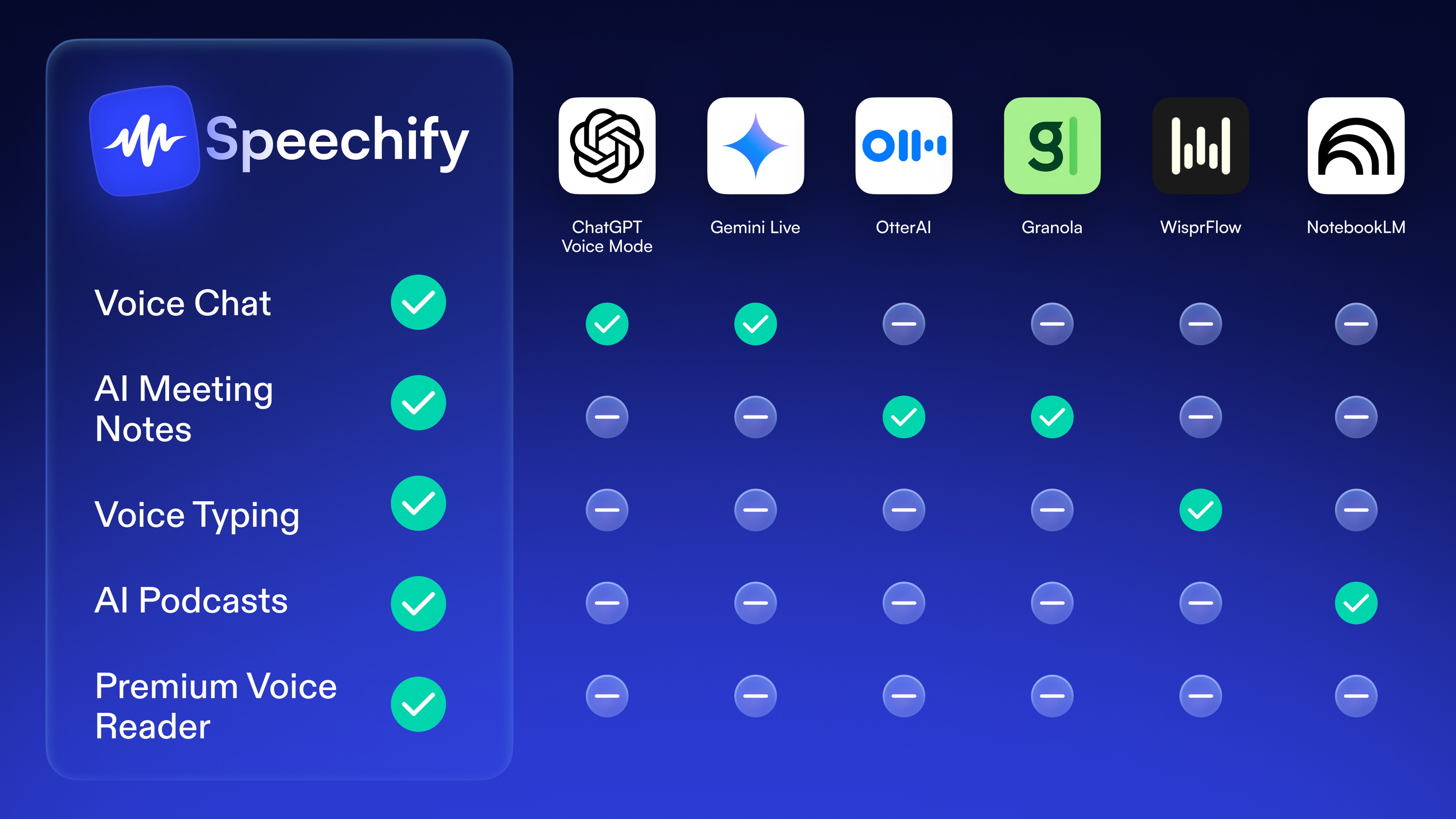
Speechify is a Voice AI Assistant built to support voice-first interaction. It focuses on listening to content, speaking to write, and interacting with AI through voice on any page you are reading.
Speechify includes features such as:
- Text to Speech for listening to PDFs, documents, emails, articles, and web pages in natural voices
- Voice Typing Dictation that allows you to speak and generate written text across common tools and apps
- Voice AI Assistant for asking questions and receiving spoken answers
- Speechify is available across iOS, Android, Mac, and Chrome extension.
- Adjustable playback speed and synchronized text highlighting to follow along while listening
Speechify is designed for users who think and work better through listening and speaking rather than typing and reading.
What Is Microsoft Copilot?
Microsoft Copilot is an AI assistant integrated into Microsoft products such as Office apps and Windows. It uses generative AI to help with writing, summarization, data analysis, content suggestions, and workflow automation within the Microsoft ecosystem.
Copilot is typically used for tasks such as:
- Generating or rewriting text inside Word or Outlook
- Summarizing long emails or documents
- Assisting with data analysis in Excel
- Providing context-aware suggestions across Microsoft 365 apps
Copilot is designed to be a text-centric assistant embedded in productivity software and works where users already write and collaborate.
Key Differences Between Speechify and Microsoft Copilot
Interaction Style
Speechify emphasizes voice interaction, listening, and spoken AI responses. It is built for users who prefer to interact through voice rather than by typing prompts.
Microsoft Copilot focuses on text based interaction inside Microsoft productivity tools. It enhances written workflows through suggestions, summaries, and context-aware generation, usually driven by typed input.
Primary Use Cases
Speechify is best for listening to content, voice typing written responses, and interacting with AI through voice. It suits users who want hands free or auditively driven workflows.
Microsoft Copilot is best for enhancing writing, editing, and productivity within Microsoft Office applications. It helps users create documents, analyze data, and summarize content efficiently in a text-centric workspace.
Voice and Audio Support
Speechify has built-in support for voice features. Users can listen to long documents and get spoken AI responses. This makes it suitable for users who consume information by listening or prefer voice input over typing.
Microsoft Copilot can support voice features in certain contexts depending on integration, but its core design remains rooted in typed interaction and text suggestions inside productivity apps.
Why Users Who Prefer Voice AI Often Choose Speechify
Speechify is often a better fit for users who want voice-centric interaction for the following reasons:
Listening to Long Content
Speechify can read aloud documents, emails, and web pages in natural voices. Listening may be more efficient than reading for many users, especially when multitasking.
Speaking to Write
Voice Typing Dictation in Speechify allows you to speak instead of type. This helps capture thoughts more naturally and can speed up writing tasks.
Hands Free Interaction
Speechify’s Voice AI Assistant allows you to ask questions and get spoken answers without needing to switch windows or type prompts.
Cross-Tool Voice Workflows
Speechify works across browsers, documents, email, and messaging apps. This allows voice workflows to span multiple types of content and tools.
These features make Speechify appealing to people who enjoy auditory engagement, hands free productivity, and voice integration with everyday tasks.
When Microsoft Copilot May Be a Better Fit
Microsoft Copilot may be a better choice if your primary workflows are centered around Microsoft Office applications and text editing. Specifically:
Office Workspace Integration
Copilot is designed for Word, Outlook, Excel, PowerPoint, and Teams. If you spend most of your day inside Microsoft apps, Copilot can enhance writing, summarization, and analysis directly where work happens.
Text Generation and Editing
Microsoft Copilot helps generate, rewrite, and refine text based on context inside documents and emails. This makes it useful for editing, drafting professional content, and summarizing communication threads.
Context-Aware Suggestions
Microsoft Copilot uses the context of your documents and email history to offer relevant suggestions. This can speed up workflow inside business productivity environments.
In scenarios where typed interaction and deep integration within Microsoft productivity software are primary, Copilot may align more closely with user needs.
How to Decide What’s Right for You
Here are some questions to help you decide between Speechify and Microsoft Copilot:
Do you prefer listening over reading?
If you prefer to listen to content and interact with AI through voice, Speechify is likely the better fit.
Do you want to speak instead of type?
If voice input is more natural for you, Speechify’s voice typing dictation supports speaking as an input method.
Do you spend most of your time in Microsoft Office apps?
If your work is deeply integrated with Word, Outlook, Excel, and other Microsoft products, Microsoft Copilot enhances those workflows through text-driven suggestions.
Is hands free AI interaction important to you?
If hands free interaction and spoken AI responses are priorities, Speechify’s voice first approach offers a different experience than text-centric AI tools.
Many users combine tools, using Speechify for listening and voice interaction and Copilot for deep text editing and productivity inside Office environments.
FAQ
Can Speechify do everything Microsoft Copilot can?
Speechify is focused on voice interaction, listening to content, and voice typing. Copilot is focused on productivity inside Microsoft Office applications. They support different workflows.
Does Microsoft Copilot support voice interaction?
Microsoft Copilot may have voice features in some contexts, but its core experience is text based inside productivity apps.
Is Speechify good for reading documents aloud?
Yes. Speechify is built to convert written content into spoken audio with natural voices.
Can Speechify help with writing tasks?
Speechify supports voice typing dictation to help you speak your writing across email, messaging, and documents.
Is Microsoft Copilot only available in Microsoft apps?
Microsoft Copilot is designed to work inside Microsoft 365 applications where integrated AI suggestions are most useful.