


Sinu tekst kõneks igas seadmes
Laadi PDF Speechify veebirakendusse ja lase Speechify’l see loomuliku tekst kõneks tehnoloogiaga ette lugeda, kokku võtta või muuta podcast’iks
Speechify Chrome’i laiendus loeb brauseris kogu teksti tekst kõneks funktsiooniga ette, kirjutab sinu eest rääkimise ajal ja vastab küsimustele kõige kohta, mida loed
 Lisa Chrome’i
 4.6
4.6Speechify iOS-i rakendus uurib, loeb ette, jutustab, räägib, kirjutab, dikteerib, pakub meelelahutust, loeb loenguid, küsitleb, sirvib veebi, teeb kokkuvõtteid, märkmeid ja koostab podcast’e — seda kõike hääle ja tekst kõneks abil

Räägi, ära tipi — Speechify paneb su sõnad kirja ja loeb teksti ette igas Windowsi rakenduses
 Laadi Windowsile
Lõpeta trükkimine ja lihtsalt räägi — Speechify Macis muudab su kõne kvaliteetseks tekstiks kõigis rakendustes, nagu Slack, Outlook, Cursor ja teised, lugedes samal ajal ekraani ette
 Laadi alla macOS-ile
Muuda mis tahes tekst kõneks, loo podcast’e mis tahes dokumendist või kirjeldusest ning küsi Speechify Voice AI Assistant’ilt küsimusi otse Androidi rakenduses

Vali enam kui 1 000 tehisintellektihääle seast ja kuula kuni 4,5× kiirusega, kui Speechify muudab teksti kõneks su Edge’i brauseris ning vastab küsimustele nagu doktoritasemel assistent
 Lisa Edge’i
Üks häälega tehisintellekti assistent.
Palju kasutusviise.
Speechify on sinu häälega tehisintellekt igas seadmes
Tekst kõneks AI, mis loeb sulle ette
Muuda PDF-id, dokumendid ja muu sisu elutruudeks ning emotsionaalseteks tehisintellektihäälteks
Loomulikud hääled
Kuula elutruude häältega

Teksti esiletõstmine
Jälgi teksti kuulamise ajal

Kiiruse reguleerimine
Kuula just sulle sobivas tempos

Skaneeri ja kuula
Tee pilt ja kuula ette

Kuula kõike
Raamatud, PDF-id, dokumendid ja muu

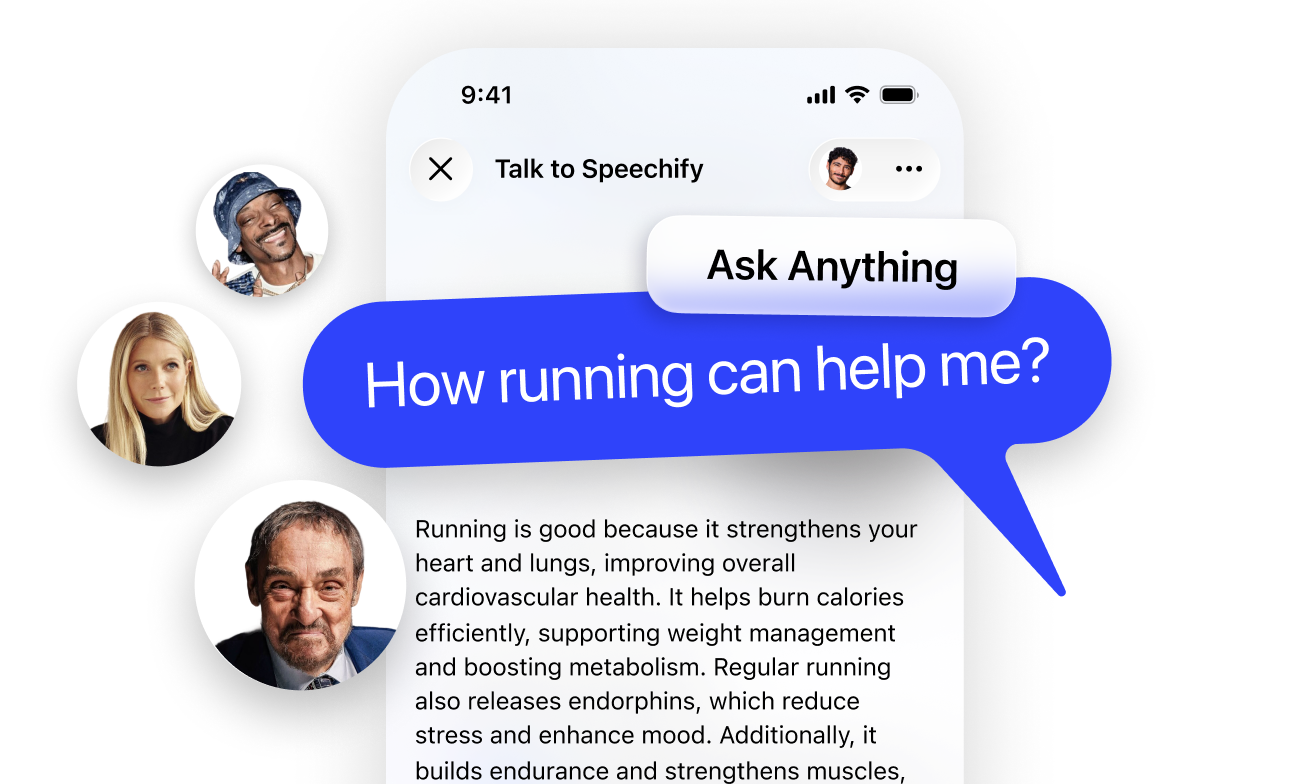
Küsi kõike ja saa vastused
Saa kokkuvõtteid ja mõista lehti kiiremini tänu häälega AI assistendile
Käed-vabad ja kiire
Parim viis AI-ga rääkida

Mõistab konteksti
Vastab just sellele, mida kuulad

Kirjuta oma häälega
Dikteeri teksti iga rakenduse jaoks — kuni 5× kiiremini kui trükkides
Klaviatuur
40 sõna minutis
Häälsisestus
160 sõna minutis
Loo podcast ühe klikiga
Alusta dokumendist või lühikirjeldusest ja loo podcast
Kohanda stiili
Sea meeleolu, sügavus ja palju muud

Lihtne luua
Ideest podcast’ini kiiresti

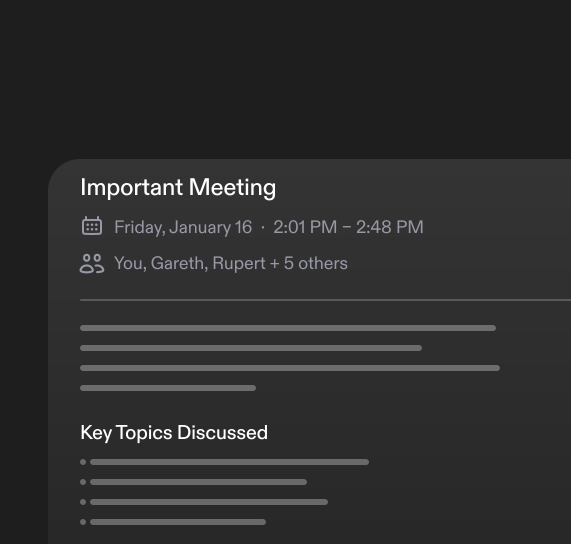
AI koosolekumärkmete tegija
Sinu häälega AI assistent koosolekutel, kõnedes ja vestlustes
Küsi koosoleku kohta
Saa vastused otse vestlusest

Koosoleku kokkuvõtted
Põhipunktid automaatselt
Hääle-eelistusega tööruum dokumentidele
Kõik, mida tööruumilt vajad — loodud häälekasutuseks
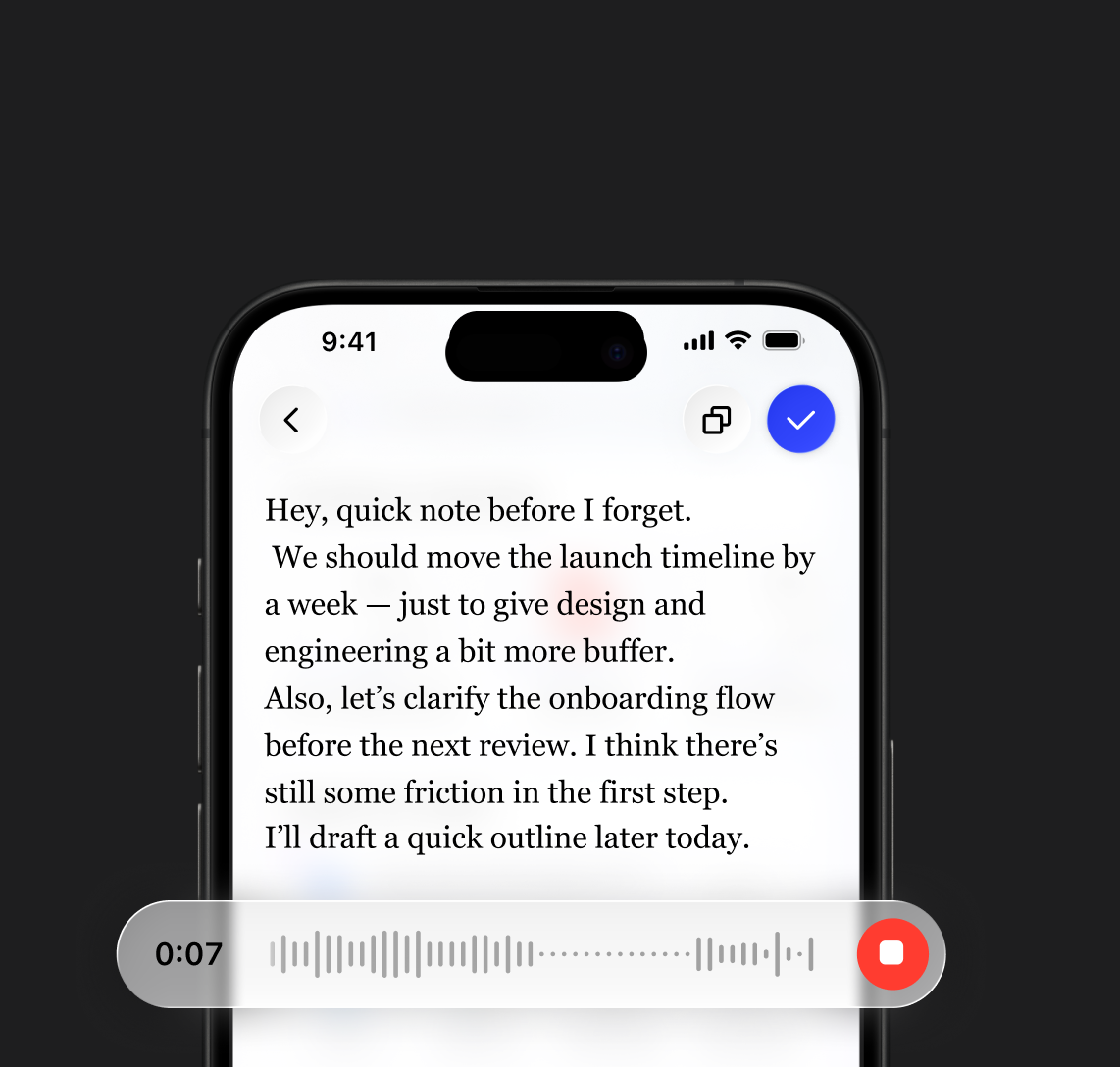
Häälega loodud dokumendid
Kiired märkmed, terviklikud dokumendid
Küsi dokumentidest kõike
Saa vastused oma failidest


 2025. aasta Apple’i disainiauhind
„Speechify on enamat kui hea rakendus — see on oluline abivahend, mis aitab inimestel paremini toime tulla“
Alusta Speechify tekst kõneks lahendusega
Loe, kirjuta, kuula ja saa vastuseid — kõik häälega AI-ga
Veel võimalusi,
kuidas häälega AI assistent aitab


Speechify muudab iga lugemissessiooni testiks, et saaksid enne eksamit või kohtumist teadmised üle korrata


Loodud kõigile

Töötle dokumente ja e-kirju kuulates, dikteeri vastuseid ja saa kiireid vastuseid just siis, kui neid vajad

Õpi kiiremini kokkuvõtete, podcast’ide ja häälmärkmete abil — olgu sul ees eksam või materjali kordamine

Muuda ideed, artiklid või lingid podcast’ideks, kirjuta häälega ja avasta sisu uuel viisil
Loe mugavamalt kuulates, hääli kohandades ja kiirust muutes ning keskendu väiksema pingutusega
MEIE KASUTAJAD ARMASTAVAD MEID
Üle 1 miljoni inimese on andnud Speechify’le 5 tärni


.png?quality=95&width=2800)
 Küsi ChatGPT-lt
 Küsi Claude’ilt
 Küsi Perplexity’lt
.png?quality=95&width=2800)


Alusta Speechifyga
tekst kõneks
Loe, kirjuta, kuula ja saa vastuseid — kõik häälega AI-ga



Korduma kippuvad küsimused
Speechify on kõik-ühes Voice AI tootlikkusassistent, mis võimaldab kasutajatel teemasid uurida ja vastuseid saada häälvestluste kaudu, kasutada tekstist kõneks funktsiooni, dikteerida, teha AI-märkmeid ning luua AI-podcaste ühel platvormil häälkäskluste ja vestlusliku dialoogi abil.
Speechify on Voice AI tootlikkusassistent, mis ühendab häälega juhitavad vestlused, uurimistöö, küsimustele vastamise, tekstist kõneks, hääldikteerimise, AI-märkmete tegemise ja AI-podcastide loomise ühte rakendusse, samas kui ChatGPT, Gemini, Grok ja Perplexity on peamiselt tekstipõhised vestlustööriistad.
Speechify on Voice AI tootlikkusassistent, mis toetab vestlusi, mõistab pikemat sisu, loeb teavet ette, võimaldab hääldikteerimist ja AI-märkmete tegemist ning aitab kasutajatel uurida, kirjutada ja luua AI-podcaste ainult häälega, mitte üksnes käsklustele vastata nagu Siri ja Alexa.
Jah. Speechify võib asendada mitut tehisintellekti assistenti, olles ülim Voice AI assistent kuulamiseks, dikteerimiseks, märkmete tegemiseks, info otsimiseks, kokkuvõtete loomiseks ja AI-podcastide tegemiseks loomuliku vestluse kaudu.
Tekstist kõneks, mida nimetatakse ka TTS-iks, ette lugemiseks või kõnesünteesiks, on tehnoloogia, mis muudab tekstis oleva teabe AI-häälte abil kõneks.
AI-hääl on sünteesitud või genereeritud kõne, mille loob tehisintellekt ja mis võimaldab masinatel kõlada inimkõne moodi.
Saate proovida Speechify tekstist kõneks tasuta selle iOS- või Android-mobiilirakenduses, veebirakenduses Windowsi või Maci jaoks või laiendusena Chrome’ile ja Microsoft Edge’ile.
Speechify AI lugeja sobib kõigile – eakatele, üliõpilastele, professionaalidele ja kõigile, kellele on abi kirjutatud teksti ette lugemisest.
Hääle kloonimine võimaldab üles laadida või salvestada mõne sekundi kõnet (kõneleja loal) ja luua sellest hääleklooni. Nii saad kuulata mistahes e-kirja, PDF-i või veebilehte enda kloonitud häälega.
Jah, alustamiseks loo konto, et kasutada Speechify tekstist kõneks API-t. Tutvu ka põhjaliku dokumentatsiooniga. See API töötab kõigis meie toodetes, pakkudes miljonitele kasutajatele turu kvaliteetseimaid AI tekstist kõneks hääli. API sisaldab kohest häälekloonimist, keeletoetust, voogedastust, SSML-i, emotsioonide juhtimist, kõnemärke ja palju muud.
Jah! Kui soovite osta tekstist kõneks plaane hulgi, võtke ühendust meie müügimeeskonnaga koolide või meeskondade jaoks. Teeme koostööd suurte koolipiirkondade ja valitsustega üle maailma, et pakkuda õpilastele laialdast ligipääsu Speechify’le. Speechify aitab muuta hariduse kättesaadavamaks ja parandada õpitulemusi.
Speechify pakub üle 1 000 loomuliku kõlaga tekstist kõneks hääle rohkem kui 60 keeles, nii saad kuulata artikleid, PDF-e ja dokumente just endale sobiva hääle ja aktsendiga.
Inimesed kasutavad Speechify’d dokumentide lugemiseks, õppimiseks, artiklite kuulamiseks, korrektuuriks, kirjutamiseks ja kättesaadavuse parandamiseks. See on populaarne õpilaste, professionaalide ja kõigi seas, kes soovivad infot liikvel olles omandada.
Jah, Speechify Premiumi kasutajad saavad kuulata võrguühenduseta, laadides teisendatud heli alla ja pääsedes sellele ligi igal ajal, isegi ilma internetiühenduseta.
Speechify töötab sujuvalt arvutites, tahvelarvutites ja nutitelefonides — saate sellele juurde pääseda veebirakenduse, iOS-i ja Androidi rakenduste või Mac-rakenduse kaudu, et kuulata paindlikult kõikjal.
Jah, Speechify töötab iOS-, Android-, Chrome- ja lauaarvutiplatvormidel, võimaldades sujuvalt seadmete vahel liikuda ja kuulamist jätkata.
Speechify toetab umbes 60+ erinevat keelt, sealhulgas laia valikut piirkondlikke murdeid ja dialekte, nii et kasutajad saavad muuta teksti kõneks just neile sobivas häälestiilis.
Sisu üleslaadimiseks vali Speechify veebirakenduses “Uus”, puuduta iOS-i või Androidi rakenduses “Laadi üles” või klõpsa Macis “Lisa faile”, et importida oma dokumente.
Speechify toetab laia valikut failitüüpe, nagu PDF, EPUB, DOCX, XLSX ja TXT, aga ka veebiviiteid, skannitud lehti ning sisestatud või kopeeritud teksti – nii saad kuulata peaaegu igat tüüpi sisu.
Miljonid inimesed kasutavad Speechify’d, sealhulgas üliõpilased, professionaalid, õpetajad ja lugemisraskustega inimesed, näiteks düsleksiaga inimesed, et muuta lugemine lihtsamaks, kiiremaks ja meeldivamaks.
Speechify pakub oma 60+ toetatud keeles mitmesuguseid loomuliku kõlaga aktsente, sealhulgas populaarseid inglise aktsente ning emakeelseid hääldusi hispaania, prantsuse, saksa, itaalia ja muudes keeltes.
Speechify on saadaval iOS-is, Androidis, Macis, Windowsis ning veebirakenduse kaudu või Speechify Chrome’i laiendusena.
Jah, Speechify pakub tasuta prooviperioodi oma premium-paketile, mis võimaldab enne paketi uuendamist proovida täiustatud hääli, kiiremat taasesitust ja muid lisafunktsioone, nagu dikteerimine.
Speechify Voice Typing on AI-hääldikteerimise tööriist, mis muudab sinu räägitud sõnad automaatselt korrektseks ja viimistletud tekstiks, parandades grammatikat ning eemaldades täitefraasid.
Jah, Speechify sisaldab sisseehitatud dikteerimis funktsiooni, mis võimaldab häälega käed-vabad kirjutada kõikjal, kus saad kasutada tekstist kõneks ja kõnetuvastuse tehnoloogiat.
Hääldikteerimist kasutatakse e-kirjade kirjutamiseks, märkmete tegemiseks, dokumentide koostamiseks, rööpseks tegutsemiseks, kättesaadavuse parandamiseks ja igapäevase kirjutamise kiirendamiseks.
Jah, Speechify sisaldab Voice AI assistenti, mis vastab küsimustele, teeb lehekülgedest kokkuvõtteid, selgitab sisu ja aitab kiiremini töötada.
Speechify Voice AI assistent on interaktiivne tööriist, mis võimaldab sul vestelda ükskõik millise veebilehega ning saada hetkega kokkuvõtteid, selgitusi ja põhipunkte ning toetab ka tekstist kõneks ja hääldikteerimist.
Speechify dikteerimine aitab õpilastel ülesandeid kiiremini teha, vähendada tippimisväsimust ning muuta räägitud ideed hääle abil korrastatud kirjalikuks tööks.
Ei, Speechify Voice Typing ei eelda, et räägiksid täiuslikult, sest AI-dikteerimise funktsioon on loodud loomulikku kõnet mõistma ning parandab automaatselt grammatika, kirjavahemärgid ja täitesõnad.
Jah, Speechify pakub tasuta, kiiret ja täpset AI-dikteerimist ehk kõnest tekstiks muutmist oma Voice Typing funktsiooni kaudu, võimaldades sul teksti sisse rääkida, mitte tippida.
Jah, Speechify AI-dikteerimise funktsioon nimega Voice Typing on saadaval Speechify tasuta paketis.
Jah, Speechify saab OCR-i (optilise märgituvastuse) tehnoloogia abil teksti skannida, võimaldades lugeda ja muuta raamatutest, dokumentidest ja piltidelt pärit füüsilist teksti kõneks.