


Text-to-Speech pe orice dispozitiv
Încarcă orice PDF în aplicația web Speechify și lasă Speechify să ți-l citească cu voce tare cu text-to-speech realist, să rezume conținutul sau să creeze un podcast pentru tine
Speechify Extensia Chrome citește orice din browserul tău prin text-to-speech, scrie când vorbești și răspunde la întrebări despre conținutul tău
 Adaugă în Chrome
 4.6
4.6Aplicația Speechify pentru iOS caută, citește, redă, vorbește, scrie, dictează, distrează, prezintă, testează, navighează pe internet, rezumă, ia notițe și creează podcasturi doar prin voce și text-to-speech

Vorbește în loc să tastezi — Speechify îți transcrie cuvintele și citește orice cu voce tare, în orice aplicație pe Windows
 Descarcă pentru Windows
Renunță la tastat și vorbește – Speechify pe Mac îți transformă vocea în text rafinat în Slack, Outlook, Cursor și orice altă aplicație, și citește totul de pe ecran
 Descarcă pentru macOS
Transformă orice text în voce, creează podcasturi din orice document sau descriere și adresează întrebări Speechify Voice AI Assistant oriunde, cu aplicația Android

Alege din peste 1.000 de voci AI și ascultă cu până la 4,5x viteză în timp ce Speechify transformă textul în voce în browserul Edge și răspunde ca un asistent la nivel de doctorat
 Adaugă în Edge
Un singur asistent vocal AI.
Mai multe moduri de utilizare.
Speechify este platforma ta vocală AI pe orice dispozitiv
Text-to-Speech AI care îți citește
Transformă PDF-uri, documente și altele în voci AI realiste și pline de emoție
Voci naturale
Ascultă voci care sună natural

Evidențierea textului
Urmărește textul în timp ce asculți

Controlul vitezei
Ascultă în ritmul tău

Scanează și ascultă
Fă o poză și ascultă textul citit

Ascultă orice
Cărți, PDF-uri, documente și multe altele

Pune orice întrebare și primește răspunsuri
Primește rezumate și înțelege mai repede paginile cu Asistentul vocal AI
Rapid și hands-free
Cea mai bună metodă de a vorbi cu AI

Înțelege contextul
Răspunde pe baza a ceea ce asculți

Scrie cu vocea ta
Dictează text în orice aplicație — de până la 5× mai rapid decât tastarea
Tastatură
40 de cuvinte pe minut
Dictare vocală
160 de cuvinte pe minut
Creează orice podcast cu un click
Pornește de la un document sau o scurtă descriere pentru a crea un podcast
Ajustează stilul
Setează tonul, profunzimea și altele

Creare rapidă
De la idee la podcast, rapid

Notițe de ședință cu AI
Asistentul tău vocal AI pentru ședințe, apeluri și conversații
Întreabă despre ședință
Primește răspunsuri din apel

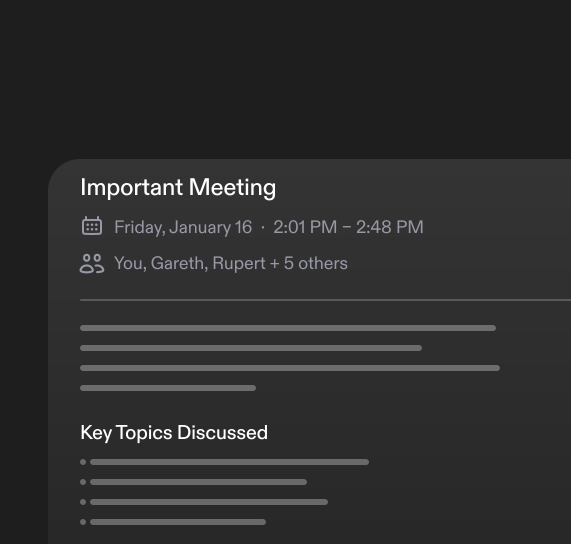
Rezumatul ședinței
Punctele cheie, automat
Spațiu de lucru pentru documente, bazat pe voce
Tot ce te aștepți de la un spațiu de lucru — construit în jurul vocii
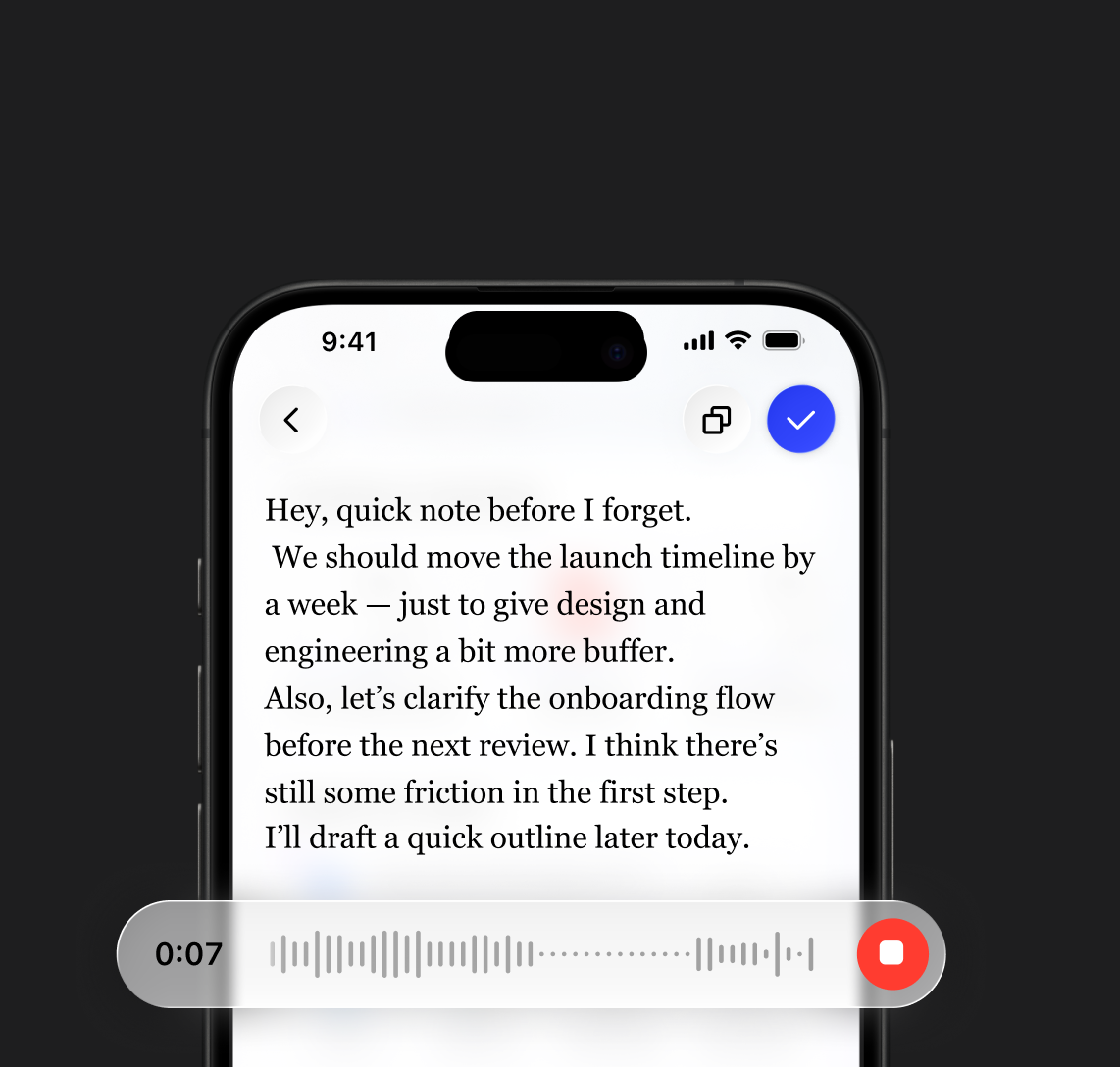
Documente create prin voce
De la notițe rapide la documente complete
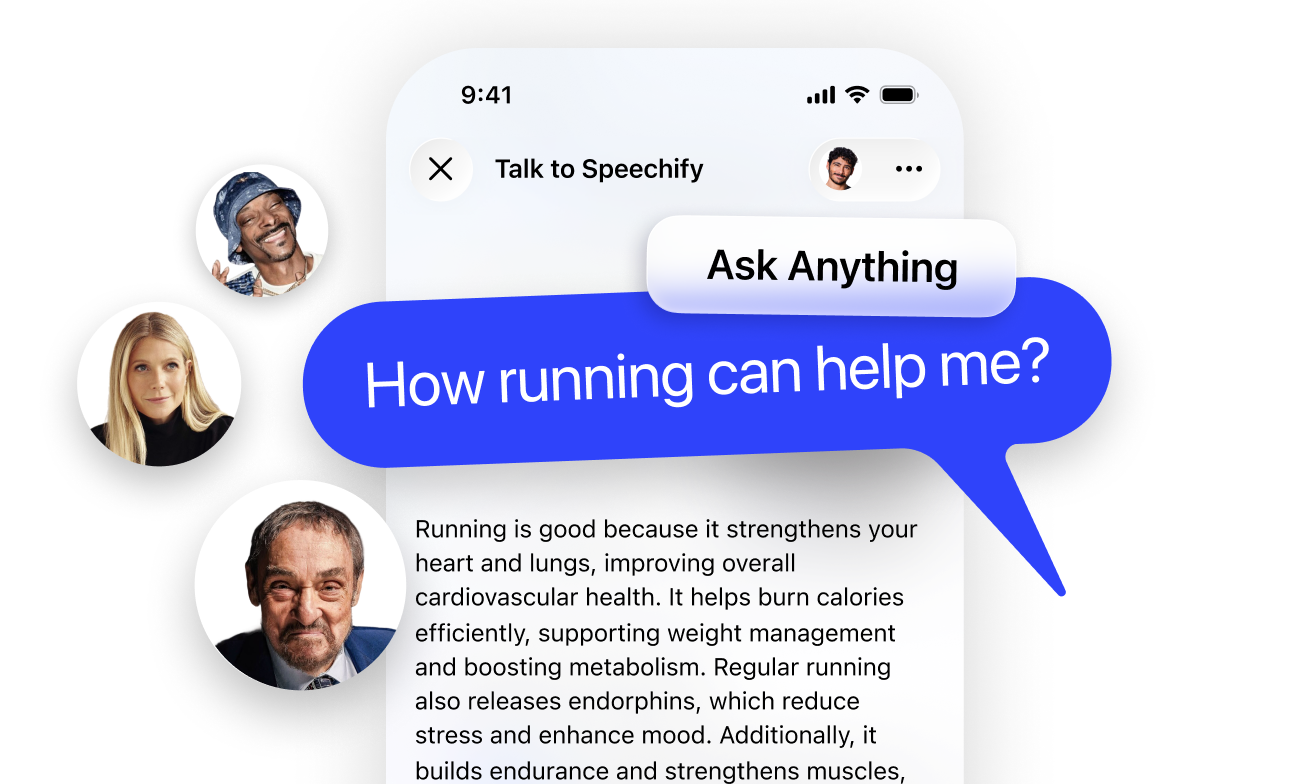
Întreabă în toate documentele
Obține răspunsuri din fișierele tale


 Apple Design Award 2025
„Speechify este mai mult decât o aplicație excelentă; este o resursă esențială care îi ajută pe oameni să-și trăiască viața”
Începe cu Speechify Text-to-Speech
Citește, scrie, ascultă și primește răspunsuri — totul cu Voice AI
Mai multe moduri în care
Asistentul vocal AI Speechify te ajută


Speechify transformă orice lectură într-un test ca să-ți verifici cunoștințele înainte de un examen sau o întâlnire


Pentru toată lumea

Parcurge documente și emailuri prin ascultare, dictează răspunsuri și obține răspunsuri rapide când ai nevoie

Învață mai repede cu rezumate, podcasturi și notițe vocale, fie că te pregătești pentru examene sau recitești materialul de curs
Distrează-te vorbind cu Speechify, ascultând conținutul preferat și creând podcasturi pe orice subiect

Transformă idei, articole sau linkuri în podcasturi, scrie cu vocea ta și explorează conținutul în formate noi
Citește mai ușor prin ascultarea textului, schimbarea vocii și a vitezei și concentrează-te fără efort
UTILIZATORII NE ADORĂ
Peste 1 milion de oameni au acordat Speechify 5 stele


.png?quality=95&width=2800)
 Întreabă ChatGPT
 Întreabă Claude
 Întreabă Perplexity
.png?quality=95&width=2800)


Începe cu
Speechify Text-to-Speech
Citește, scrie, ascultă și primește răspunsuri — totul cu Voice AI



Întrebări frecvente
Speechify este un asistent de productivitate Voice AI all-in-one care le permite utilizatorilor să cerceteze subiecte și să primească răspunsuri prin conversații vocale, să citească folosind text to speech, voice typing, să ia notițe cu AI și să creeze podcasturi AI într-o singură platformă, prin comenzi vocale și dialog conversațional.
Speechify este un asistent de productivitate Voice AI care combină conversații activate vocal, cercetare, răspunsuri la întrebări, text to speech, voice typing, notițe AI și creare de podcasturi AI într-o singură experiență, în timp ce ChatGPT, Gemini, Grok și Perplexity sunt în principal instrumente de chat bazate pe text.
Speechify este un asistent de productivitate Voice AI care poate purta conversații, înțelege conținut lung, citește informații cu voce tare, permite voice typing și luarea de notițe cu AI și îi ajută pe utilizatori să cerceteze, să scrie și să creeze podcasturi AI doar cu vocea, nu doar să răspundă la comenzi precum Siri și Alexa.
Da. Speechify poate înlocui mai mulți asistenți AI, funcționând ca un asistent Voice AI complet pentru ascultare, dictare, luarea de notițe cu AI, cercetare, rezumare și crearea de podcasturi AI prin conversații naturale.
Text to speech, numit uneori TTS, read aloud sau sinteză vocală, înseamnă folosirea vocilor AI pentru a transforma orice text în vorbire.
O voce AI este o voce sintetizată sau generată de sisteme de inteligență artificială, care permite mașinilor să comunice într-un mod asemănător vorbirii umane.
Poți încerca Speechify text to speech gratuit prin aplicațiile sale mobile iOS sau Android, aplicația web web app pe Windows sau Mac ori extensiile pentru Chrome și Microsoft Edge.
Speechify AI reader este pentru toată lumea, inclusiv pentru seniori, studenți, profesioniști și oricine preferă să asculte conținutul scris citit cu voce tare.
Da. Cititorul text to speech Speechify oferă unele dintre cele mai naturale voci disponibile pe piață. Vocile AI sunt acum aproape imposibil de deosebit de vocile umane și sunt disponibile în mai multe limbi, inclusiv spaniolă, portugheză, germană, franceză și altele.
Da, te rugăm să creezi un cont ca să începi cu Text to Speech API de la Speechify. Poți consulta și documentația noastră extinsă. Acesta este același API care stă la baza tuturor produselor noastre, oferind cea mai înaltă calitate pentru AI text to speech de pe piață pentru zeci de milioane de utilizatori. API-ul include suport pentru limbi, streaming, SSML, control emoțional, speech marks și multe altele.
Da! Dacă dorești să achiziționezi planuri text to speech la pachet, contactează echipa noastră de vânzări pentru școli sau echipe. Colaborăm cu districte școlare mari și guverne din întreaga lume pentru a oferi studenților acces la Speechify la scară largă. Speechify contribuie la creșterea accesibilității în educație și la îmbunătățirea rezultatelor elevilor.
Speechify oferă peste 1.000 de voci text to speech care sună natural, în mai mult de 60 de limbi, ca să poți asculta articole, PDF-uri și documente, într-o voce și cu un accent pe gustul tău.
Oamenii folosesc Speechify pentru citirea documentelor, învățare, ascultarea articolelor, corectură, scris și îmbunătățirea accesibilității. Este popular în rândul studenților, profesioniștilor și al oricui vrea să consume informație din mers.
Da, utilizatorii Speechify Premium pot asculta offline prin descărcarea conținutului audio convertit, ceea ce face accesul la conținut ușor oricând, chiar și fără conexiune la internet.
Speechify funcționează fără probleme pe computere, tablete și smartphone-uri — îl poți accesa prin aplicația Web, iOS și Android apps sau aplicația nativă Mac, pentru a asculta flexibil de oriunde.
Speechify suportă aproximativ peste 60 de limbi, inclusiv o gamă largă de accente regionale și variante dialectale, astfel încât utilizatorii pot transforma textul în voce într-un stil personalizat.
Pentru a încărca conținut, selectează „Nou” în aplicația Web Speechify, atinge „Upload” în aplicația iOS sau Android ori apasă „Add Files” în aplicația Mac pentru a importa documentele tale.
Speechify acceptă o gamă largă de tipuri de fișiere, inclusiv PDF, EPUB, DOCX, XLSX și TXT, precum și linkuri web, pagini scanate și text scris sau copiat, astfel încât poți asculta practic orice tip de conținut.
Speechify oferă o varietate de accente naturale în cele peste 60 de limbi suportate, inclusiv accente populare din engleză și pronunții native pentru spaniolă, franceză, germană, italiană și altele.
Da, Speechify oferă o perioadă de testare gratuită pentru planul său premium, permițându-ți să explorezi voci avansate, redare mai rapidă și funcții suplimentare, cum ar fi dictarea, înainte să faci upgrade.
Speechify Voice Typing este un instrument de dictare vocală AI care transformă cuvintele rostite în text clar, corectat automat gramatical și fără cuvinte de umplutură.
Da, Speechify include o funcție de dictare integrată care îți permite să scrii hands-free oriunde poți tasta, folosind tehnologia speech to text și recunoașterea vocală.
Voice typing este folosit pentru a scrie emailuri, a lua notițe, a redacta documente, multitasking, creșterea accesibilității și pentru a accelera sarcinile zilnice de scris.
Da, Speechify include un asistent vocal AI care îți poate răspunde la întrebări, rezuma pagini, explica conținutul și te poate ajuta să lucrezi mai rapid.
Speechify Voice AI assistant este un instrument interactiv care îți permite să vorbești cu orice pagină web și să obții instant rezumate, explicații și idei principale, susținând în același timp text to speech și voice typing.
Nu, nu trebuie să vorbești perfect cu Speechify Voice Typing, deoarece funcția AI dictation este concepută să înțeleagă vorbirea naturală și să corecteze automat gramatica, punctuația și cuvintele de umplutură.
Da, Speechify oferă dictare AI de ultimă generație, rapidă și precisă, precum și speech to text prin funcția Voice Typing, permițându-ți să dictezi textul în loc să tastezi.
Da, funcția AI dictation Speechify, numită Voice Typing, este disponibilă în planul gratuit Speechify.
Da, Speechify poate scana text folosind tehnologia OCR (Recunoaștere optică a caracterelor), permițându-i să citească și să convertească în audio text fizic din cărți, documente și imagini.