


Text to Speech Anda di Semua Perangkat
Unggah PDF apa pun ke aplikasi web Speechify dan Speechify akan membacakannya untuk Anda dengan text to speech yang alami, merangkum isinya, atau membuat podcast
Speechify Ekstensi Chrome membacakan apa pun di browser Anda dengan text to speech, mengetik saat Anda berbicara, dan menjawab pertanyaan tentang apa pun yang sedang Anda baca
 Tambahkan ke Chrome
 4.6
4.6Aplikasi Speechify di iOS membantu meneliti, membaca, membacakan, berbicara, menulis, mendikte, menghibur, memberi materi, membuat kuis, menjelajah internet, meringkas, mencatat, dan membuat podcast untuk Anda, semuanya dengan suara dan text to speech

Bicara tanpa perlu mengetik — Speechify menuliskan kata-kata Anda dan membacakan apa pun dengan lantang di semua aplikasi pada Windows
 Unduh untuk Windows
Tak perlu mengetik, cukup bicara – Speechify di Mac mengubah ucapan Anda menjadi teks berkualitas di Slack, Outlook, Cursor & semua aplikasi, sambil membacakan apa pun di layar Anda
 Unduh untuk macOS
Ubah teks menjadi suara, buat podcast dari dokumen atau deskripsi apa pun, dan tanya Speechify Voice AI Assistant kapan pun lewat aplikasi Android

Pilih dari 1.000+ suara AI dan dengarkan hingga kecepatan 4,5x saat Speechify mengubah teks menjadi suara di browser Edge Anda dan menjawab pertanyaan layaknya asisten PhD
 Tambahkan ke Edge
Satu Voice AI Assistant.
Banyak Cara Menggunakannya.
Speechify adalah AI suara Anda di setiap perangkat
Text to Speech AI yang Membacakan untuk Anda
Ubah PDF, dokumen, dan lainnya menjadi suara AI yang realistis dan penuh emosi
Suara Alami
Dengarkan suara yang terasa nyata

Penyorotan Teks
Ikuti teks sambil mendengarkan

Kontrol Kecepatan
Dengarkan sesuai kecepatan Anda

Pindai & Dengarkan
Ambil foto, lalu langsung dengarkan

Dengarkan Apa Saja
Buku, PDF, dokumen, dan lainnya

Tanyakan Apa Saja, Dapatkan Jawabannya
Dapatkan ringkasan dan pahami halaman lebih cepat dengan Voice AI Assistant
Bebas Tangan & Cepat
Cara terbaik untuk berbicara dengan AI

Paham Konteks
Menjawab berdasarkan yang Anda dengarkan

Menulis dengan Suara Anda
Dikte teks di semua aplikasi — hingga 5× lebih cepat daripada mengetik
Keyboard
40 Kata per Menit
Voice Typing
160 Kata per Menit
Buat Podcast Apa Pun dengan Satu Klik
Mulai dari dokumen atau deskripsi singkat untuk membuat podcast
Atur Gaya
Sesuaikan nuansa, kedalaman, dan lainnya

Mudah Dibuat
Dari ide ke podcast dalam sekejap

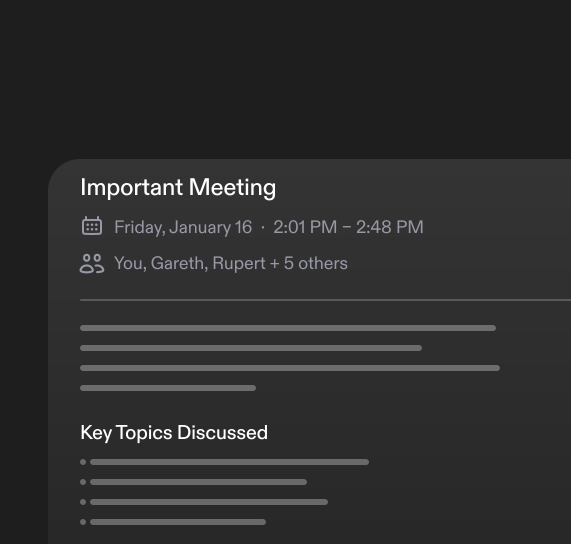
Pencatat Rapat AI
Voice AI Assistant Anda untuk rapat, panggilan, dan percakapan
Tanya Soal Rapat
Dapatkan jawaban dari percakapan Anda

Ringkasan Rapat
Poin-poin penting, otomatis
Workspace Berbasis Suara untuk Dokumen
Semua yang Anda butuhkan dari workspace — dibangun di sekitar suara
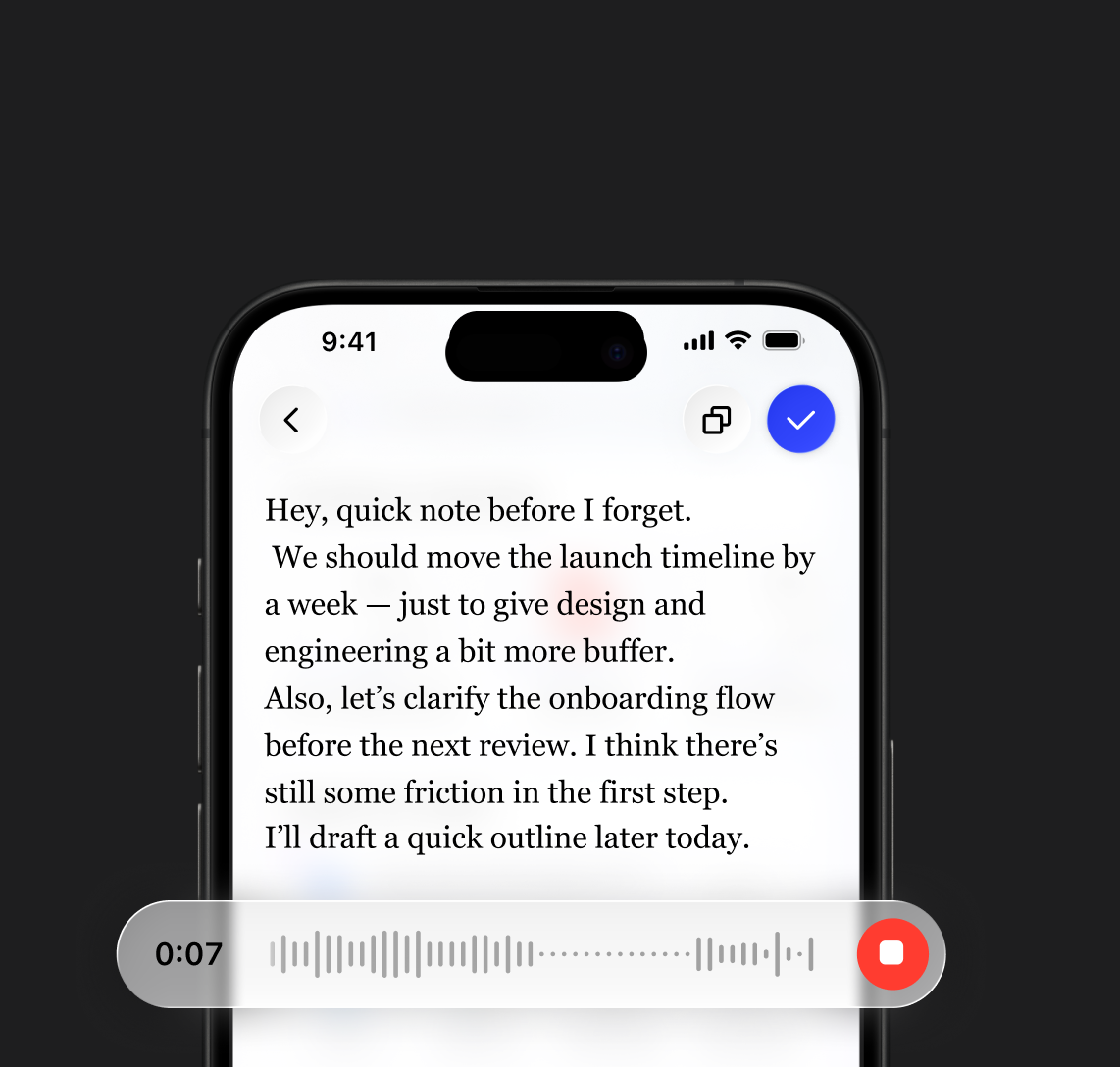
Dokumen dengan Suara
Dari catatan singkat ke dokumen lengkap
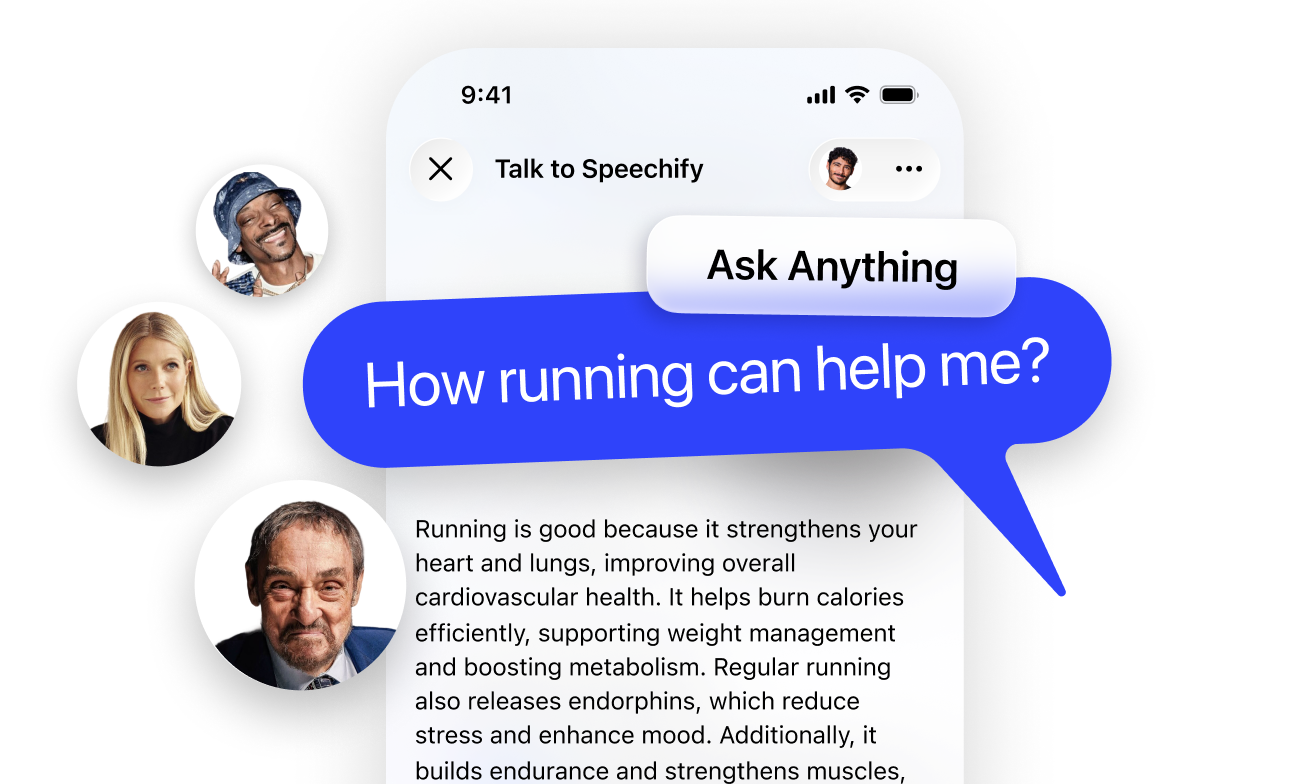
Tanya Seluruh Dokumen Anda
Dapatkan jawaban dari file Anda


 Penghargaan Desain Apple 2025
“Speechify lebih dari sekadar aplikasi; ini adalah alat penting yang membantu orang menjalani hidup mereka”
Mulai dengan Text to Speech dari Speechify
Baca, tulis, dengarkan, dan dapatkan jawaban — semua dengan Voice AI
Lebih Banyak Cara
Voice AI Assistant Speechify Membantu


Speechify mengubah bacaan apa pun menjadi kuis agar Anda bisa menguji pemahaman sebelum ujian atau rapat penting


Dibuat untuk Semua Orang

Selesaikan dokumen dan email dengan mendengarkan, mendikte balasan, dan dapatkan jawaban cepat saat dibutuhkan

Belajar lebih cepat dengan ringkasan, podcast, dan catatan suara — baik untuk ujian maupun mengulas materi kelas
Nikmati serunya berbicara dengan Speechify, mendengarkan konten favorit, dan membuat podcast tentang topik apa pun

Ubah ide, artikel, atau tautan menjadi podcast, tulis dengan suara, dan jelajahi konten dalam format baru
Membaca jadi lebih nyaman dengan mendengarkan teks, menyesuaikan suara dan kecepatan, serta tetap fokus tanpa cepat lelah
PENGGUNA KAMI MENYUKAI KAMI
Lebih dari 1 juta orang memberi Speechify 5 bintang


.png?quality=95&width=2800)
 Tanya ChatGPT
 Tanya Claude
 Tanya Perplexity
.png?quality=95&width=2800)


Mulai dengan
Text to Speech Speechify
Baca, tulis, dengarkan, dan dapatkan jawaban — semua dengan Voice AI


FAQ
Speechify adalah Voice AI Productivity Assistant serbaguna yang memungkinkan pengguna mencari tahu topik tertentu dan mendapatkan jawaban lewat percakapan suara, membaca dengan teks ke suara, mengetik dengan suara, membuat catatan dengan AI, dan membuat podcast AI dalam satu platform melalui perintah suara dan percakapan alami.
Speechify adalah Voice AI Productivity Assistant yang menggabungkan percakapan suara, riset, jawab pertanyaan, teks ke suara, pengetikan suara, pencatat AI, dan pembuatan podcast AI di berbagai aplikasi, sementara ChatGPT, Gemini, Grok, dan Perplexity umumnya lebih berfokus sebagai alat chat berbasis teks.
Speechify adalah Voice AI Productivity Assistant yang mendukung percakapan, memahami konten panjang, membacakan informasi, memungkinkan pengetikan suara dan pencatatan AI, serta membantu pengguna melakukan riset, menulis, dan membuat podcast AI hanya dengan suara, bukan sekadar merespons perintah seperti Siri dan Alexa.
Ya. Speechify bisa menggantikan berbagai asisten AI sebagai Voice AI Assistant utama untuk mendengarkan, mendikte, membuat catatan dengan AI, meneliti, meringkas, dan membuat podcast AI lewat percakapan yang alami.
Text to speech, atau yang biasa disebut TTS, pembacaan teks dengan suara, atau sintesis suara, adalah istilah untuk penggunaan suara AI untuk mengubah teks menjadi audio.
Suara AI adalah suara sintetis yang dihasilkan oleh sistem kecerdasan buatan, sehingga mesin dapat berkomunikasi dengan ucapan yang terdengar seperti manusia.
Anda dapat mencoba Speechify text to speech gratis melalui aplikasi seluler iOS atau Android, aplikasi web di Windows atau Mac, atau ekstensi untuk Chrome dan Microsoft Edge.
Speechify AI reader cocok untuk semua orang, termasuk lansia, pelajar, profesional, dan siapa saja yang ingin mendengarkan konten tertulis dibacakan.
Ya, silakan buat akun untuk mulai menggunakan Speechify's Text to Speech API. Anda juga dapat melihat dokumentasi lengkap yang kami sediakan. Ini adalah API yang sama yang saat ini digunakan di semua produk kami, menghadirkan suara AI text to speech berkualitas tertinggi untuk puluhan juta pengguna. API ini mencakup dukungan bahasa, streaming, SSML dan kontrol emosi, speech marks, dan masih banyak lagi.
Ya! Jika Anda ingin membeli paket text to speech dalam jumlah besar, silakan hubungi tim penjualan kami untuk sekolah atau tim. Kami bekerja sama dengan distrik sekolah dan pemerintah di seluruh dunia untuk menyediakan akses Speechify secara luas bagi para pelajar. Speechify membantu membuat pendidikan lebih mudah diakses dan meningkatkan hasil belajar siswa.
Speechify menawarkan lebih dari 1.000 suara text to speech yang terdengar alami dalam lebih dari 60 bahasa, sehingga Anda bisa mendengarkan artikel, PDF, dan dokumen dengan suara dan aksen sesuai preferensi Anda.
Orang-orang menggunakan Speechify untuk membaca dokumen, belajar, mendengarkan artikel, mengoreksi teks, menulis, dan meningkatkan aksesibilitas. Produk ini populer di kalangan pelajar, profesional, dan siapa saja yang ingin menyerap informasi sambil beraktivitas.
Ya, pengguna Speechify Premium bisa mendengarkan secara offline dengan mengunduh audio yang sudah dikonversi, sehingga Anda dapat mengakses konten kapan saja, bahkan tanpa koneksi internet.
Speechify dapat digunakan di komputer, tablet, dan ponsel pintar—Anda dapat mengaksesnya melalui Aplikasi Web, iOS dan Aplikasi Android, atau aplikasi Mac untuk fleksibilitas mendengarkan di mana saja.
Speechify mendukung sekitar 60+ bahasa berbeda, termasuk beragam aksen regional dan variasi dialek, sehingga pengguna bisa mengubah teks menjadi suara dengan gaya yang terasa personal.
Speechify mendukung berbagai format file seperti PDF, EPUB, DOCX, XLSX, dan TXT, serta tautan web, halaman hasil pindaian, dan teks yang diketik atau ditempel, sehingga Anda dapat mendengarkan hampir semua jenis konten.
Speechify menawarkan berbagai aksen alami pada 60+ bahasa yang didukung, termasuk aksen bahasa Inggris yang populer dan pelafalan asli untuk bahasa Spanyol, Prancis, Jerman, Italia, dan lainnya.
Ya, Speechify menyediakan percobaan gratis untuk paket premium, sehingga Anda dapat mencoba suara tingkat lanjut, kecepatan pemutaran yang lebih cepat, serta fitur tambahan seperti diktasi sebelum berlangganan.
Speechify Voice Typing adalah alat AI voice dictation yang otomatis mengubah ucapan Anda menjadi teks rapi, lengkap dengan koreksi tata bahasa dan penghapusan kata-kata pengisi.
Ya, Speechify memiliki fitur diktasi bawaan yang memungkinkan Anda mengetik tanpa tangan, di mana pun Anda perlu menulis, melalui teknologi speech to text dan pengenalan suara.
Voice typing digunakan untuk menulis email, mencatat, membuat dokumen, multitasking, meningkatkan aksesibilitas, dan mempercepat tugas menulis sehari-hari.
Ya, Speechify memiliki Voice AI assistant yang bisa menjawab pertanyaan, meringkas halaman, menjelaskan konten, dan membantu Anda bekerja lebih cepat.
Speechify Voice AI assistant adalah alat interaktif yang memungkinkan Anda berbicara dengan situs web apa pun dan mendapatkan ringkasan instan, penjelasan, dan poin-poin penting, sekaligus mendukung text to speech dan voice typing.
Tidak, Anda tidak harus berbicara sempurna saat menggunakan Speechify Voice Typing karena fitur AI dictation dirancang untuk memahami ucapan alami melalui pengenalan suara dan otomatis memperbaiki tata bahasa, tanda baca, serta kata-kata pengisi.
Ya, Speechify menawarkan AI dictation dan speech to text yang gratis, cepat, dan akurat melalui fitur Voice Typing, sehingga Anda bisa berbicara untuk menulis tanpa harus mengetik.
Ya, fitur AI dictation dari Speechify yang disebut Voice Typing tersedia dalam paket gratis Speechify.
Ya, Speechify dapat memindai teks menggunakan teknologi OCR (Optical Character Recognition), sehingga teks fisik dari buku, dokumen, dan gambar dapat dibaca dan diubah menjadi audio.