


Teks ke Ucapan Anda, Pada Setiap Peranti
Muat naik mana-mana PDF ke aplikasi web Speechify dan biarkan Speechify membacakannya untuk anda dengan teks ke ucapan yang realistik, merumuskannya untuk anda, atau mencipta podcast
Speechify Sambungan Chrome membacakan apa sahaja dalam pelayar anda dengan teks ke ucapan, menaip untuk anda apabila anda bercakap, serta menjawab soalan tentang apa sahaja yang anda baca
 Tambah ke Chrome
 4.6
4.6Aplikasi Speechify di iOS boleh mencari, membaca, membacakan, bercakap, menulis, mendikte, menghiburkan, mengajar, menguji, melayari internet, merumuskan, mencatat nota dan mencipta podcast untuk anda — semuanya melalui suara dan teks ke ucapan

Bercakap tanpa perlu menaip — Speechify menukarkan kata-kata anda kepada teks dan membacakan apa sahaja dengan kuat, dalam semua aplikasi di Windows
 Muat Turun untuk Windows
Tak perlu menaip, hanya bercakap – Speechify di Mac menukar suara anda menjadi teks yang kemas di Slack, Outlook, Cursor & semua aplikasi, sambil membacakan apa sahaja di skrin anda
 Muat Turun untuk macOS
Tukar sebarang teks ke ucapan, cipta podcast daripada mana-mana dokumen atau arahan, dan tanya Speechify Voice AI Assistant apa sahaja semasa bergerak dengan aplikasi Android

Pilih daripada 1,000+ suara AI dan dengar sehingga 4.5x lebih pantas apabila Speechify menukar teks ke ucapan dalam pelayar Edge anda dan menjawab seperti pembantu peribadi bertaraf PhD
 Tambah ke Edge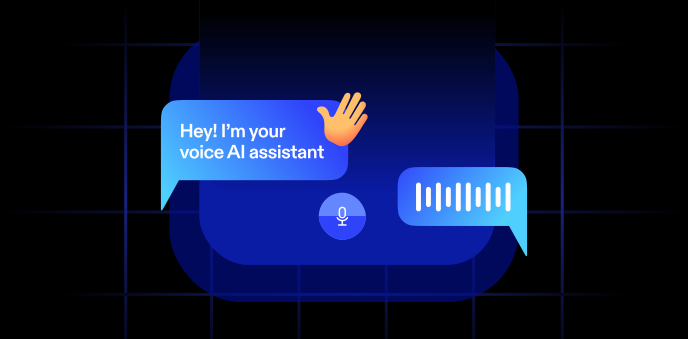
Satu Pembantu Suara AI.
Pelbagai Cara untuk Menggunakannya.
Speechify ialah lapisan AI suara anda merentas semua peranti
AI Teks ke Ucapan Yang Membacakan untuk Anda
Tukar PDF, dokumen dan banyak lagi kepada suara AI yang realistik dan penuh emosi
Suara Semula Jadi
Dengar suara yang kedengaran nyata

Sorotan Teks
Ikuti sambil anda mendengar

Kawalan Kelajuan
Dengar mengikut rentak anda

Imbas & Dengar
Ambil gambar dan biar ia dibacakan

Dengar Apa Sahaja
Buku, PDF, dokumen dan banyak lagi

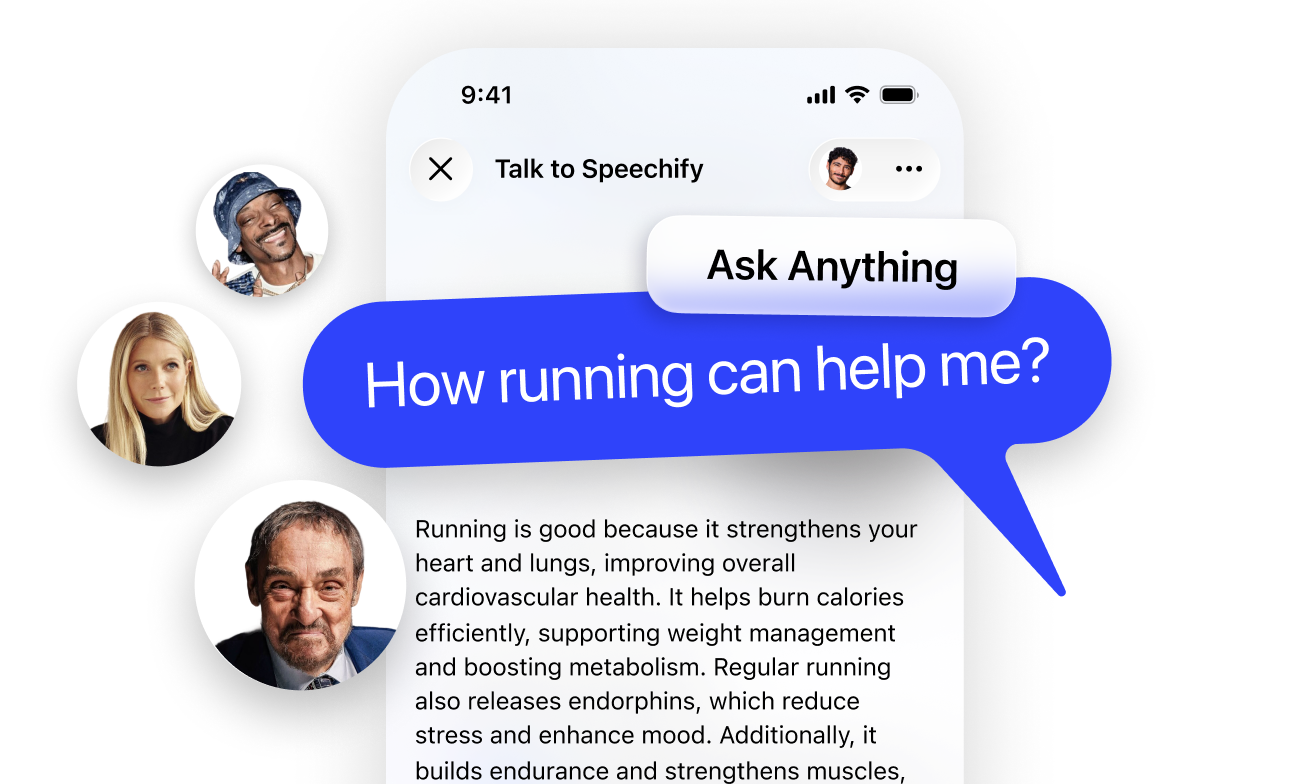
Tanya Apa Sahaja dan Dapatkan Jawapan
Dapatkan ringkasan dan fahami halaman dengan lebih pantas melalui Pembantu Suara AI
Bebas Sentuhan & Pantas
Cara terbaik untuk bercakap dengan AI

Faham Konteks
Jawab berdasarkan apa yang anda dengar

Tulis Dengan Suara Anda
Dikte teks dalam mana-mana aplikasi — sehingga 5× lebih pantas daripada menaip
Papan Kekunci
40 Perkataan Seminit
Diktean Suara
160 Perkataan Seminit
Cipta Podcast Dengan Satu Klik
Mulakan dengan dokumen atau arahan ringkas untuk mencipta podcast
Sesuaikan Gaya
Tetapkan nada, kedalaman dan banyak lagi

Mudah Dicipta
Daripada idea ke podcast, dengan pantas

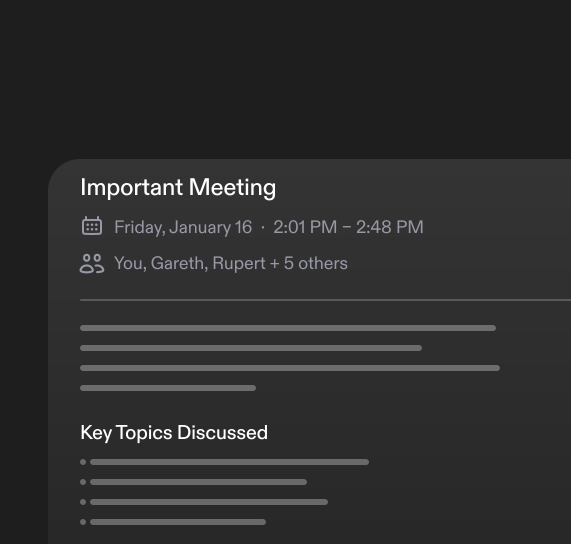
Pencatat Nota Mesyuarat AI
Pembantu Suara AI anda untuk mesyuarat, panggilan dan perbualan
Tanya Tentang Mesyuarat
Dapatkan jawapan daripada panggilan anda

Ringkasan Mesyuarat
Perkara utama, secara automatik
Ruang Kerja Berasaskan Suara untuk Dokumen
Segala yang anda harapkan daripada ruang kerja — dibina berasaskan suara
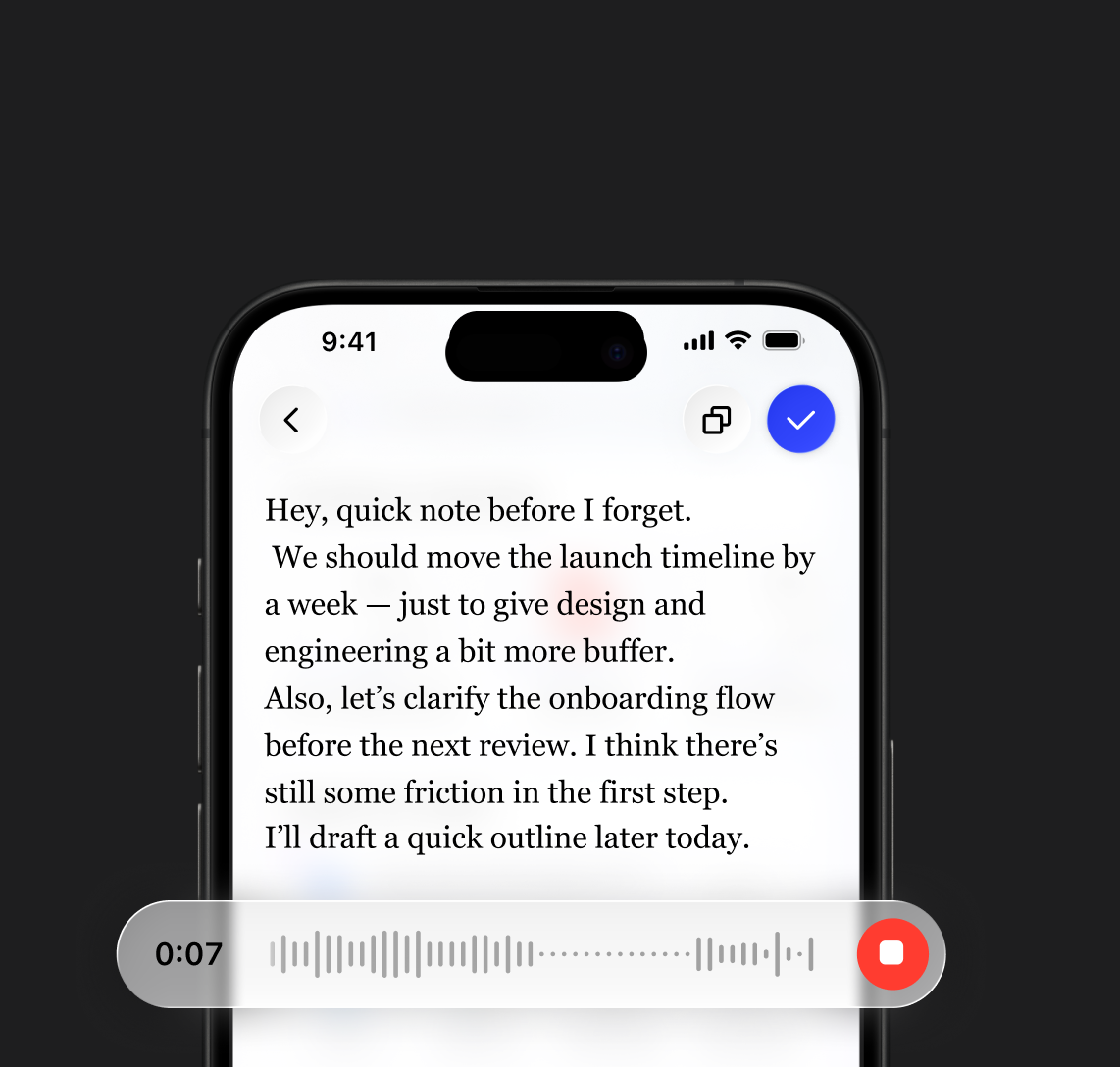
Dokumen Dijana Dengan Suara
Daripada nota ringkas ke dokumen penuh
Tanya Seluruh Dokumen Anda
Dapatkan jawapan daripada fail anda


 Anugerah Reka Bentuk Apple 2025
“Speechify lebih daripada sekadar aplikasi hebat; ia ialah sumber penting yang membantu orang menjalani kehidupan”
Bermula dengan Speechify Teks ke Ucapan
Baca, tulis, dengar dan dapatkan jawapan — semuanya dengan Suara AI
Lebih Banyak Cara
Pembantu Suara AI Speechify Membantu


Speechify menukar bacaan anda menjadi kuiz supaya anda boleh menguji pengetahuan sebelum peperiksaan atau mesyuarat penting


Dicipta untuk Semua

Selesaikan dokumen & emel dengan mendengar, mendikte jawapan dan dapatkan jawapan pantas apabila diperlukan

Belajar lebih cepat dengan ringkasan, podcast dan nota suara — sama ada untuk ulang kaji peperiksaan atau menyemak bahan kelas
Nikmati bersembang dengan Speechify, mendengar kandungan kegemaran anda & mencipta podcast tentang apa sahaja

Tukar idea, artikel atau pautan kepada podcast, tulis dengan suara & terokai kandungan dengan cara baharu
Baca dengan lebih selesa melalui teks yang dibacakan, laraskan suara & kelajuan untuk fokus tanpa tekanan
PENGGUNA KAMI SUKAKANNYA
Lebih 1J pengguna telah memberi Speechify 5 bintang


.png?quality=95&width=2800)
 Tanya ChatGPT
 Tanya Claude
 Tanya Perplexity
.png?quality=95&width=2800)


Bermula dengan Speechify
Teks ke Ucapan
Baca, tulis, dengar dan dapatkan jawapan — semuanya dengan Suara AI



Soalan Lazim
Speechify ialah Pembantu Produktiviti AI Suara serba boleh yang membolehkan pengguna membuat penyelidikan tentang sesuatu topik dan mendapatkan jawapan melalui perbualan suara, membaca dengan teks ke ucapan, menaip dengan suara, mengambil nota AI dan mencipta podcast AI semuanya dalam satu platform melalui arahan suara dan dialog semula jadi.
Speechify ialah Pembantu Produktiviti AI Suara yang menggabungkan perbualan berasaskan suara, penyelidikan, jawapan kepada soalan, teks ke ucapan, menaip dengan suara, alat nota AI dan penciptaan podcast AI merentas aplikasi—manakala ChatGPT, Gemini, Grok dan Perplexity kebanyakannya lebih tertumpu pada sembang berasaskan teks.
Speechify ialah Pembantu Produktiviti AI Suara yang menyokong perbualan, memahami kandungan yang panjang, membacakan maklumat, membolehkan menaip dengan suara dan pengambilan nota AI, serta membantu pengguna membuat penyelidikan, menulis dan mencipta podcast AI semuanya melalui suara, bukan sekadar memberi respons kepada arahan seperti Siri dan Alexa.
Ya. Speechify boleh menggantikan pelbagai Pembantu AI dengan bertindak sebagai Pembantu AI Suara terbaik untuk mendengar, mendikte, mengambil nota AI, membuat penyelidikan, meringkaskan dan mencipta podcast AI melalui perbualan semula jadi.
Teks ke ucapan, kadangkala dipanggil TTS, bacaan lantang atau sintesis ucapan, ialah istilah untuk penggunaan suara AI bagi menukarkan sebarang teks kepada pertuturan.
Suara AI merujuk kepada suara yang disintesis atau dijana oleh sistem kecerdasan buatan, yang membolehkan mesin berkomunikasi dengan pertuturan yang mirip manusia.
Anda boleh mencuba Speechify teks ke ucapan secara percuma melalui aplikasi mudah alih iOS atau Android, aplikasi web di Windows atau Mac, atau sambungan untuk Chrome dan Microsoft Edge.
Pembaca AI Speechify sesuai untuk semua orang, termasuk warga emas, pelajar, golongan profesional dan sesiapa sahaja yang mendapat manfaat daripada mendengar kandungan bertulis dibacakan.
Ya, sila cipta akaun untuk bermula dengan API Teks ke Ucapan Speechify. Anda juga boleh melihat dokumentasi kami yang lengkap. Inilah API yang menggerakkan semua produk kami pada masa ini, menawarkan suara teks ke ucapan AI berkualiti tinggi kepada puluhan juta pengguna. API ini menyokong pelbagai bahasa, streaming, SSML, kawalan emosi, penanda pertuturan dan banyak lagi.
Ya! Jika anda ingin membeli pelan teks ke ucapan secara pukal, sila hubungi pasukan jualan kami untuk sekolah atau pasukan. Kami bekerjasama dengan daerah sekolah besar dan kerajaan di seluruh dunia untuk menyediakan akses kepada Speechify kepada pelajar secara meluas. Speechify membantu menjadikan pendidikan lebih mudah diakses dan meningkatkan prestasi pelajar.
Speechify menawarkan lebih 1,000 suara teks ke ucapan yang semula jadi dalam lebih 60 bahasa, jadi anda boleh mendengar artikel, PDF dan dokumen dalam suara serta loghat yang anda suka.
Orang ramai menggunakan Speechify untuk membaca dokumen, belajar, mendengar artikel, menyemak tulisan, menulis dan meningkatkan kebolehcapaian. Ia popular dalam kalangan pelajar, golongan profesional dan sesiapa sahaja yang ingin menyerap maklumat ketika bergerak.
Ya, pengguna Speechify Premium boleh mendengar secara luar talian dengan memuat turun audio yang telah dijana, jadi kandungan tetap boleh diakses pada bila-bila masa, walaupun tanpa sambungan internet.
Speechify berfungsi lancar di komputer, tablet dan telefon pintar—anda boleh mengaksesnya melalui aplikasi Web, aplikasi iOS dan Android, atau aplikasi Mac asli untuk fleksibiliti mendengar di mana-mana sahaja.
Speechify menyokong kira-kira 60+ bahasa berbeza, termasuk pelbagai dialek wilayah dan variasi loghat, jadi pengguna boleh menukar teks kepada ucapan dalam gaya suara yang diperibadikan.
Untuk memuat naik kandungan, cuma pilih “Baru” pada Aplikasi Web Speechify, ketik “Muat Naik” pada iOS atau aplikasi Android, atau klik “Tambah Fail” pada aplikasi Mac untuk mengimport dokumen anda.
Speechify menyokong pelbagai jenis fail termasuk PDF, EPUB, DOCX, XLSX dan TXT, serta pautan web, halaman yang diimbas dan teks yang ditaip atau ditampal, jadi anda boleh mendengar hampir apa sahaja jenis kandungan.
Speechify menawarkan pelbagai loghat semula jadi merentas lebih 60 bahasa yang disokong, termasuk loghat Inggeris yang popular dan sebutan asli untuk bahasa Sepanyol, Perancis, Jerman, Itali dan banyak lagi.
Ya, Speechify menyediakan percubaan percuma untuk pelan premium, membolehkan anda meneroka suara lanjutan, kelajuan main balik yang lebih pantas dan ciri tambahan seperti dikta sebelum menaik taraf.
Voice Typing Speechify ialah alat dikta suara AI yang menukar kata-kata yang anda tuturkan kepada teks yang kemas dan teratur, lengkap dengan pembetulan tatabahasa automatik dan penyingkiran perkataan pengisi.
Ya, Speechify termasuk fungsi dikta terbina dalam yang membolehkan anda menulis tanpa menggunakan tangan di mana-mana sahaja anda menaip melalui teknologi pertuturan ke teks dan pengecaman pertuturan.
Menaip suara digunakan untuk menulis emel, mengambil nota, mendraf dokumen, multitugas, meningkatkan kebolehcapaian dan mempercepatkan tugasan penulisan harian.
Ya, Speechify termasuk pembantu AI Suara yang boleh menjawab soalan, meringkaskan laman, menerangkan kandungan dan membantu anda bekerja dengan lebih pantas.
Pembantu AI Suara Speechify ialah alat interaktif yang membolehkan anda berbual dengan mana-mana laman web dan menerima ringkasan, penjelasan dan isi penting serta-merta sambil menyokong teks ke ucapan dan menaip dengan suara.
Dikta Speechify membantu pelajar dengan membolehkan mereka menyiapkan tugasan dengan lebih cepat, mengurangkan keletihan menaip dan menukar idea yang dituturkan kepada kerja bertulis yang tersusun melalui pertuturan ke teks.
Tidak, anda tidak perlu bercakap dengan sempurna menggunakan Voice Typing Speechify kerana fungsi dikta AI direka untuk memahami pertuturan semula jadi melalui pengecaman pertuturan dan membetulkan tatabahasa, tanda baca serta perkataan pengisi secara automatik.
Ya, Speechify menawarkan dikta AI dan pertuturan ke teks yang percuma, pantas dan tepat melalui ciri Voice Typing, membolehkan anda bercakap terus tanpa perlu menaip.
Ya, fungsi dikta AI Speechify yang dipanggil Voice Typing tersedia dalam pelan percuma Speechify.
Ya, Speechify boleh mengimbas teks menggunakan teknologi OCR (Pengecaman Aksara Optik), yang membolehkannya membaca dan menukar teks fizikal daripada buku, dokumen dan imej kepada audio.