1. דף הבית
  2. VoiceOver
  3. כיצד לדבב וידאו לספרדית באמצעות קולות בינה מלאכותית
פורסם בתאריך VoiceOver

כיצד לדבב וידאו לספרדית באמצעות קולות בינה מלאכותית

Cliff Weitzman

קליף ויצמן

מנכ"ל ומייסד Speechify

יוצר הקריינות הקולית מס' 1 ב-AI.
צרו הקלטות קריינות באיכות אנושית
בזמן אמת.

apple logoApple Design Award 2025
מעל 50 מיליון משתמשים

דיבוב הוא כלי עוצמתי להנגשת תוכן לקהל עולמי, וספרדית, כאחת השפות המדוברות ביותר, היא יעד מרכזי להתאמת תוכן. אם אתם יוצרי תוכן שיווקי לאזורים שונים בניב ספרדי (קסטיליאני, מקסיקני או ספרדית לטינו-אמריקאית כללית), מתרגמים פודקאסט, או ממקמים סדרה בינלאומית כמו באולפנים הגדולים, הדיבוב יכול להגדיל משמעותית את החשיפה שלכם בכל 21 המדינות דוברות הספרדית. במדריך זה נחקור כיצד לדבב וידאו לספרדית באמצעות קולות בינה מלאכותית, כולל שיטות דיבוב מסורתיות וטכנולוגיות AI חדשות.

מהו דיבוב לספרדית?

דיבוב לספרדית הוא תהליך החלפת השמע המקורי של וידאו בקריינות בספרדית, המסונכרנת בקפידה לתנועות השפתיים, לטון ולהבעה הרגשית של הדובר המקורי. דיבוב לספרדית לא רק מתרגם מילים כמו כתוביות – הוא מעביר גם דקויות תרבותיות ולשוניות הייחודיות לשפה הספרדית.

לדוגמה, באזורים שונים באמריקה הלטינית, ביטויים כמו "platicar" (לשוחח) שכיחים יותר, בזמן שבספרד יעדיפו את "charlar". מעבר לאוצר המילים, בתהליך הדיבוב לספרדית ייתכן שיהיה צורך להתאים דפוסי דיבור – למשל את גלגול ה-"ר" הבולט במדינות מסוימות – או מבנה משפטים וניבים, כדי להבטיח שהתוכן יישמע טבעי ורלוונטי לקהל היעד.

אפשרויות דיבוב לספרדית: מסורתי מול דיבוב וידאו ב-AI

יוצרי סרטים ויוצרי תוכן שרוצים להרחיב את החשיפה לדוברי ספרדית, חייבים לבחור את שיטת הדיבוב הנכונה. קיימות שתי אפשרויות עיקריות: דיבוב מסורתי לספרדית עם שחקני קול, או דיבוב אוטומטי מבוסס בינה מלאכותית. הבנת היתרונות של כל שיטה עוזרת לבחור מה מתאים ביותר לפרויקט שלכם, אז נצלול פנימה:

דיבוב מסורתי לספרדית

דיבוב מסורתי דורש העסקת שחקני קול מקצועיים השולטים בספרדית ומכירים את ניואנסי הניבים הספרדיים. לדוגמה, שחקן קול למקסיקו ישתמש ב"ustedes" ל"אתם", בעוד שבספרד יאמרו "vosotros". ביטויים אזוריים כמו "che" בספרדית ארגנטינאית או "guagua" לאוטובוס בקובה מדגישים את העומק התרבותי שמביאים שחקני קול. שיטה זו מבטיחה אותנטיות והבעה רגשית, אך היא יקרה ודורשת זמן, כי צריך למצוא שחקנים מתאימים לניב (כמו ספרדית מקסיקנית מול קסטיליאנית) ולעבוד עם במאים כדי לדייק.

דיבוב לספרדית מבוסס בינה מלאכותית

דיבוב אוטומטי מבוסס AI עושה שימוש באלגוריתמים להפקת קולות דיבור טבעיים וריאליסטיים. מחוללי קול ספרדית ב-AI יודעים לנתח את האודיו, לתרגם ולדבב לספרדית בסנכרון עם תנועת שפתיים. בשונה מדיבוב מסורתי, דיבוב מבוסס AI מזהה ומיישם אוטומטית את הניב הספרדי הנדרש לקהל היעד.

לדוגמה, ה-AI יכול לעבור מיידית בין קסטיליאנית ("ordenador" למחשב) לבין ספרדית לטינו-אמריקאית ("computadora"), והוא שולט גם בדקויות הגייה שונות. כך דיבוב ב-AI הוא פתרון מהיר, משתלם ומותאם במיוחד לפרויקטים כמו קמפיינים שיווקיים, סרטוני רשת או קורסי eLearning, שבהם חשובים דיוק ומהירות.

איך לדבב וידאו לספרדית בעזרת קולות AI ב-Speechify Studio

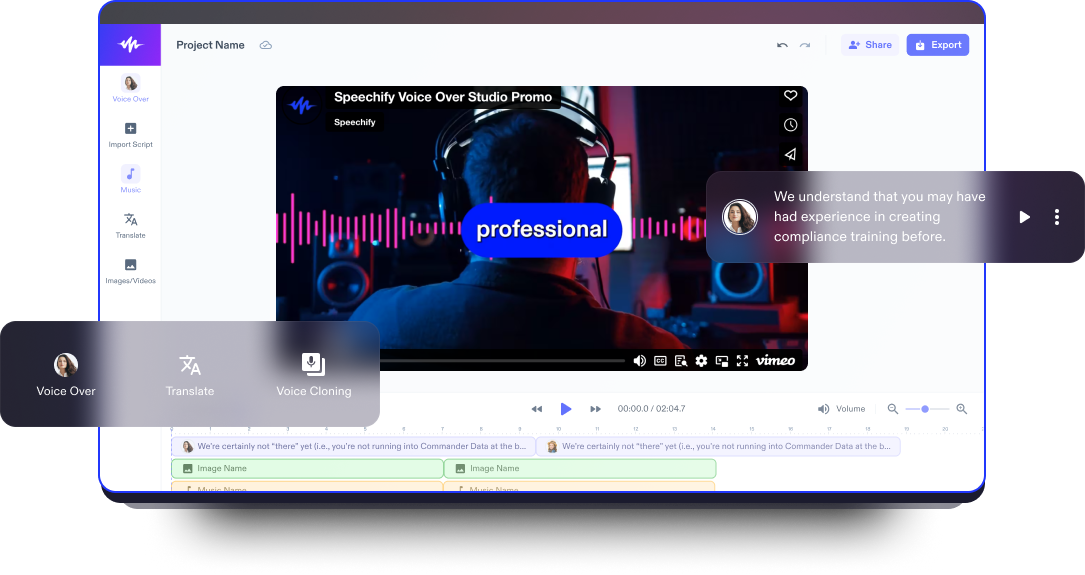
Speechify Studio מציע פלטפורמה אינטואיטיבית לדיבוב וידאו עם קולות בינה מלאכותית ספרדית. כך תעשו זאת, שלב אחר שלב:

התחילו פרויקט חדש: בחרו "התחל פרויקט חדש" ואז "דיבוב".

Dubbing

העלאת הווידאו: העלו את הקבצים, בחרו את מספר הדוברים, את שפת הווידאו המקורית (לדוגמה אנגלית), והאם להסיר מילים מיותרות או השהיות. לסיום, לחצו על “שליחה”.

Upload

תמלול האודיו: Speechify Studio יתמלל אוטומטית את האודיו, ותוכלו לערוך את הטקסט כרצונכם.

Choose Spanish AI Voice

בחרו ספרדית כשפת יעד: לחצו "תרגם", ובחלון "אל" בחרו את ניב הספרדית הרצוי לדיבוב.

Select Spanish language

בחרו קול ספרדי: בחרו קול AI ספרדי טבעי לכל דובר בווידאו.

Generate Spanish AI Voice

דבבו את הווידאו: לחצו על "צור" ו-Speechify Studio יתרגם וידבב את התוכן לספרדית עם סינכרון שפתיים.

Generate Spanish AI Voice

הורידו את הווידאו הסופי: לאחר סיום הדיבוב, הורידו את הווידאו החדש עם קריינות ספרדית ע"י בחירת "ייצוא".

Export Spanish AI Voice

מחולל הקול הספרדי של Speechify Studio

למחולל הקול הספרדי של Speechify Studio יש יתרונות בולטים כפתרון AI לדיבוב – עם התמקדות ברמה הלשונית והתרבותית כדי להפיק קול אותנטי ואיכותי, ובכלל זה:

  • Extensive library of lifelike AI voices: With over 150+ AI voices in various languages and accents, including but not limited to Spanish, Polish, Korean, Tamil, Russian, Chinese, Japanese, Italian, Arabic, German, Greek, French, Portuguese, Hindi, and more, Speechify Studio provides some of the most realistic and lifelike voices available on the market.
  • Largest selection of Spanish languages and accents: Speechify Studio features over 150+ languages and accents, including Spanish dialects found in Argentina, Bolivia, Chile, Columbia, Costa Rica, Cuba, the Dominican Republic, Ecuador, El Salvador, Equatorial Guinea, Guatemala, Honduras, Nicaragua, Panama, Peru, Puerto Rico, Paraguay, Spain, the United States, Uruguay, Venezuela as well as European Spanish and Mexican Spanish.
  • AI voice cloning: Speechify Studio not only offers users an advanced Spanish dubbing platform, but it also offers you access to Speechify Voice Over Studio which features Spanish AI voice cloning, enabling users to replicate their own voice and maintain their unique style in translated videos.
  • Precise control: Speechify Studio allows for pronunciation adjustments. With the platform, users can easily edit Spanish dubs on a granular level line by line where necessary.
  • Voice over adjustments: Through the Voice Over feature users can also adjust the pitch, emotion, and tone of the Spanish AI voices. These features are coming soon to the Dubbing interface as well.
  • Pronunciation of unique sounds: Speechify Studio correctly pronounces key Spanish sounds like the rolled "R" in “perro” and the “ñ” in “niño” to maintain authenticity. It also knows the differences between dialects such as that the 'll' sound in Argentina is pronounced as 'sh' (e.g., 'calle' pronounced 'cashe'), which differs from the 'y' sound used in Spain (e.g., 'calle' pronounced 'caye')."
  • Context-aware translations: Speechify Studio recognizes formal vs. informal contexts and adjusts pronouns and speech patterns, such as using “usted” for formal settings and informal language for casual ones.
  • Emotion synthesis: Speechify Studio can detect emotional tones in the original audio and adjust the dub accordingly, adding excitement, sadness, or sarcasm where needed.
  • Lip syncing and synchronization: Speechify Studio offers advanced lip-syncing to ensure voice matches mouth movements, while also handling longer Spanish phrases without losing sync.
  • Gender-specific forms: Speechify Studio differentiates between masculine and feminine forms of Spanish words, adjusting adjectives, pronouns, and verbs to match the gender of the characters, such as “niño” (boy) and “niña” (girl).
  • Multi-speaker support: Speechify Studio allows seamless dubbing for multiple speakers within the same video, distinguishing between different voices and adjusting language nuances accordingly, ensuring clear and accurate translations for multi-character dialogue.
  • API solution: Speechify Studio provides a robust Spanish AI voice API for easy integration into other platforms, allowing businesses and developers to incorporate its powerful AI dubbing and voice generation capabilities into their workflows with minimal hassle.

Speechify Studio’s AI Voice Generator Understands Spanish

Not only is Speechify Studio able to dub and translate content into Spanish, but it truly understands the linguistic diversity of the language so that your Spanish AI voice overs and dubs are as natural as possible. Here’s a brief look at how Speechify Studio understands the differences and nuances across the various regions where Spanish is spoken to ensure the highest quality dubs:

Pronunciation

Speechify Studio knows that different regions have different pronunciations such as:

  • Spain (Castilian Spanish): Castilian Spanish is known for the use of "ceceo" (the “th” sound for "c" and "z" before "i" or "e"), so words like zapato (shoe) are pronounced "thapato" in much of Spain, unlike in Latin America where it would be "sapato." In Spain, the pronoun vosotros (you all) is used for the informal plural “you,” whereas in Latin America, only ustedes is used for both formal and informal contexts.
  • Mexico (Mexican Spanish): Mexican Spanish offers a clear, neutral accent. There is minimal use of the “seseo” (softened "s" sound), making it close to textbook Spanish in pronunciation.
  • Central America (Guatemala, Honduras, El Salvador, Nicaragua, Costa Rica, Panama): Each Central American country has its own Spanish accent, but they share similarities, often having a softer tone and incorporating indigenous and colloquial influences. It knows that certain sounds may be softened or dropped at the ends of words, like in “está” (is), which might sound like "eh-tá."
  • Caribbean (Cuba, Puerto Rico, Dominican Republic): Caribbean Spanish is fast-paced and features some of the most distinctive pronunciation patterns in the Spanish-speaking world. such as consonants at the ends of words, particularly "s" and "r." For instance, estar might sound like "etá" and pues like "pue”, which makes Caribbean Spanish sound more relaxed.

Vocabulary Differences

In addition to pronunciation differences, Speechify Studio has mastered the regional vocabulary differences across Spanish dialects, so it makes sure to use the proper word for the same object or concept depending on which dialect it’s dubbing in. This helps protect against cultural sensitivity since certain phrases or terms may hold different meanings in various regions due to cultural context. For example, coger means “to take” in Spain, but in Mexico, it has a strong slang connotation. Here are some more examples of vocabulary differences:

  • Bus: Autobús (Spain, Mexico), guagua (Caribbean and Canary Islands), ómnibus or colectivo (Argentina).
  • Computer: Ordenador (Spain), computadora (Latin America).
  • Juice: Zumo (Spain), jugo (Latin America).
  • Popcorn: Palomitas (Spain), pochoclo (Argentina), canchita (Peru), maíz pira (Colombia).

Grammatical Differences

Speechify Studio understands the differences in grammar between various Spanish dialects, including:

  • Pronouns and verb conjugation: For instance, many South American countries, including Argentina, Uruguay, and parts of Central America, use voseo, where vos replaces tú for “you” in informal situations. This also changes verb conjugations; for example, “you eat” is vos comés in Argentina instead of tú comes.
  • Verb tenses: In Spain, the present perfect tense is often used to describe recent events (e.g., he comido for “I have eaten”). In Latin America, the preterite is used more frequently in such cases (e.g., comí for “I ate”). The AI should adjust these tense preferences based on the target audience.
  • Diminutives: Diminutives like -ito and -ita are widely used in Spanish, but some regions have their own variations. In Mexico, -ito is standard, while Costa Rica and Colombia may use -ico or -ica (e.g., momentico for “little moment”).
  • Augmentatives: In Argentina, -azo is commonly used for emphasis (e.g., golazo for a great goal in soccer), while in Mexico, -ón is more common (e.g., comilón for “big eater”). The AI should adapt these suffixes to align with regional usage.

Benefits of Spanish Dubbing

With over 500 million native Spanish speakers worldwide, dubbing your content in Spanish opens up opportunities to reach a vast audience, especially in regions like Latin America and the U.S. Hispanic market. Some of the benefits of using Spanish AI voices include:

  • Accurate localization: Spanish is spoken across many countries, each with its own accents and dialects. AI dubbing tools allow you to adapt the voice over to specific regions, such as the softer "z" sound of Castilian Spanish in Spain versus the "s" sound common in Latin American Spanish.
  • Cost-effectiveness: Traditional dubbing can be expensive, especially when localizing into multiple languages. AI dubbing provides an affordable alternative, making it accessible to content creators and businesses on a budget.
  • Scalability: AI-powered dubbing tools can handle anything from single videos to entire content libraries. You can easily dub hundreds of videos into Spanish or other languages like French, German, and Portuguese, saving time and reducing costs.

AI Dubbing: Text to Speech Spanish AI Voices vs. Voice Cloning

If using Spanish AI voices seems like a good fit for your project, there’s good news - you can choose between Spanish text to speech AI voices or voice cloning. Both are powerful methods that offer lifelike Spanish AI voice overs.

Spanish Text to Speech Voices

If you use text to speech dubbing, Spanish AI voices can be used to read a script, converting text into lifelike speech. These are pre-designed Spanish text to speech AI voices, each optimized for clarity and realism and designed to be easily understood by a wide audience. They are perfect for business or tutorial videos, multilingual social media campaigns, and marketing ads. These Spanish text to speech AI voices have improved significantly over the years and can now mimic human emotion and tone, making them sound just as natural as voice actors. Spanish TTS voices also come with different accents, so whether you're targeting Mexican, European, or Argentine audiences, there's a TTS voice to fit your needs.

Spanish Voice Cloning

Voice cloning technology, on the other hand, allows AI to replicate a specific person’s voice, which can then be used to dub content in different languages, such as in this case, Spanish. The result is a seamless, natural-sounding dub that closely matches the speaker’s tone, inflection, and personality. Voice cloning is particularly useful for content creators who want to maintain their personal brand across different languages, allowing their original voice to remain intact even when speaking in a foreign language, such as podcasters, YouTubers, or other well-known creators.

Speechify Studio Use Cases for Spanish AI Dubbing

Dubbing with Spanish AI voices has a wide range of applications that allow creators, businesses, and media companies to reach Spanish-speaking audiences more effectively. Below are several key use cases and scenarios where dubbing in Spanish using AI voices on Speechify Studio can be particularly beneficial:

Spanish AI Voices for Podcasts

Dubbing podcasts into Spanish helps creators reach large audiences in Spain, Latin America, and the U.S. For example, The Daily from The New York Times is available in Spanish. Speechify Studio allows podcasters to dub episodes without hiring voice actors.

Spanish AI Voices for Social Media

Creators on TikTok and YouTube, like MrBeast, use dubbing to expand their reach to Spanish-speaking audiences. Speechify Studio helps YouTubers dub content into Spanish, maximizing engagement.

Spanish AI Voices for Multilingual Marketing Campaigns

Brands like Coca-Cola and Telefónica dub campaigns into Spanish to connect with Spanish-speaking markets worldwide. Speechify Studio can assist companies in localizing ads and marketing materials to reach a wider audience.

Spanish AI Voices for Audiobooks

Spanish-language audiobooks are on the rise and platforms like Audible offer bestsellers such as El Alquimista, a translation of The Alchemist by Paulo Coelho. AI dubbing with Speechify Studio enables faster production of Spanish audiobooks.

Spanish AI Voices for Entertainment

Television shows and streaming platforms often rely on dubbing to ensure their content reaches global audiences. For example, Netflix dubs shows in Spanish like Stranger Things and The Witcher in both Latin American and Castilian. With Speechify Studio, production teams can streamline the Spanish dubbing process for global markets.

Spanish AI Voices for Educational Content

Spanish educational platforms and online eLearning courses have increasingly adopted AI dubbing to create multilingual versions of their content. Companies like Coursera and edX offer courses in multiple languages, and Speechify Studio’s AI dubbing allows these platforms to easily convert their content into Spanish.

Spanish AI Voices for Video Games

Popular titles like The Last of Us and Assassin’s Creed have been dubbed into multiple languages, including Spanish, allowing players to fully immerse themselves in the game’s narrative. By using Speechify Studio, game developers can dub video game dialogue in Spanish in real time, reducing production time and costs.

Spanish AI Voices for Accessibility

AI dubbing enhances accessibility for Spanish-speaking audiences, particularly for the visually impaired. Organizations like ONCE (Organización Nacional de Ciegos Españoles), which advocates for visually impaired individuals in Spain, could use AI dubbing to enhance accessibility of its video content.

Speechify Studio Competitors with Spanish AI Voices

Although Speechify Studio ranks among the top AI dubbing platforms, it's not the only Spanish AI voice generator available. Let’s take a look at how it compares to some of its competitors that also provide Spanish AI voice options:

Speechify Studio

  • 150+ languages & accents, including 50+ Spanish AI voices
  • Easy-to-use all-in-one video editing platform
  • Preserves emotion, timing, tone, and unique characteristics of the original speaker
  • Multi-speaker support
  • Auto-subtitling
  • Stock music and video footage

ElevenLabs

  • 29 languages
  • Editing interface
  • Preserves emotion, timing, tone, and unique characteristics of the original speaker
  • Multi-speaker support
  • Voice cloning and text to speech AI voices

Rask

  • 135 languages
  • Voice cloning and text to speech AI voices
  • Made for films
  • Multi-speaker support
  • Lip sync

Murf

  • 20+ languages
  • Maintains the same vibe, tone, and emotion of original speakers
  • Voice cloning and text to speech AI voices

DupDub

  • 70+ languages & accents
  • Auto subtitles
  • Multi-speaker support
  • Maintains original speaker style and presentation
  • Lip sync
  • Voice cloning and text to speech AI voices

Dubverse

  • 60+ languages
  • Auto subtitling
  • Contextual translations
  • Lip sync
  • Multi-pronunciation and tone capabilities depending on the speaker
  • Voice cloning and text to speech AI voices

Wavel

  • 70+ languages
  • Maintains tone, speech style, and timing of original speaker
  • 95% accuracy
  • Multi-speaker support
  • Synchronization
  • Voice cloning and text to speech AI voices

InVideo

  • 50+ languages & accents
  • Multiplayer editing for teams
  • 16+ million stock media
  • Voice cloning and text to speech AI voices

Conclusion

AI-powered dubbing tools have changed the way content creators can dub videos into multiple languages, including Spanish, French, Japanese, and beyond. With platforms like Speechify Studio offering high-quality, natural-sounding AI voices, it’s easier than ever to reach a global audience and break language barriers. Whether you're creating podcasts, YouTube videos, or marketing ads, AI dubbing can help you localize your content quickly, efficiently, and affordably.

FAQ

How can I dub a video online using AI?

To dub a video online using AI, you can upload the video to platforms like Speechify Studio, choose the target language, and apply AI-generated voices for the dubbing process.

What is localization?

Localization involves adapting content to fit the cultural and linguistic nuances of a specific region, and platforms like Speechify Studio help achieve this by offering AI dubbing in various languages.

How easy is Spanish video dubbing online?

Spanish video dubbing is made incredibly easy with AI tools like Speechify Studio, which provides quick voice generation and seamless integration into videos.

Can AI translate a video?

Yes, AI platforms like Speechify Studio allow you to translate and dub videos with natural-sounding AI voices.

How can I dub a video with AI voice?

To dub a video with AI voice, upload the video, select the preferred AI voice, and sync the voice over with the video using tools like Speechify Studio’s AI voice over generator.

What is AI video dubbing?

AI video dubbing refers to the use of artificial intelligence to generate voice overs either through text to speech or voice cloning in different languages for videos, a process made simple and efficient by platforms like Speechify Studio.

Can I add a Spanish voice over for free?

Some platforms, including Speechify Studio’s Spanish AI voice over generator, offer free pricing tiers or trials that allow you to add Spanish voice overs, although premium features may require a subscription.

צרו קריינויות, דיבובים ושכפולים עם למעלה מ-1,000 קולות ביותר מ-100 שפות

נסו בחינם
studio banner faces

שתפו את המאמר הזה

Cliff Weitzman

קליף ויצמן

מנכ"ל ומייסד Speechify

קליף ויצמן הוא פעיל למען דיסלקסיה, מנכ"ל ומייסד Speechify, אפליקציית טקסט־לדיבור המובילה בעולם, עם למעלה מ-100,000 דירוגי חמישה כוכבים ודירוג ראשון ב-App Store בקטגוריית חדשות ומגזינים. ב-2017 נבחר לרשימת פורבס "30 מתחת ל-30" בזכות קידום הנגישות לאנשים עם לקויות למידה. הופיע ב-EdSurge, Inc., PC Mag, Entrepreneur, Mashable ועוד.

speechify logo

אודות Speechify

הקורא הטוב בעולם לטקסט לדיבור

Speechify היא הפלטפורמה המובילה בעולם לטקסט לדיבור, שנשענת על למעלה מ-50 מיליון משתמשים ומגובה ביותר מ-500,000 ביקורות חמישה כוכבים על מוצרי הטקסט לדיבור שלה ל-iOS, Android, הרחבת כרום, אפליקציית ווב ואפליקציית דסקטופ למק. ב-2025, אפל העניקה ל-Speechify את פרס ה-Apple Design Award היוקרתי ב-WWDC, ותיארה אותה כ"משאב חיוני שעוזר לאנשים לחיות את חייהם." Speechify מציעה יותר מ-1,000 קולות טבעיים ביותר מ-60 שפות, ונמצאת בשימוש כמעט ב-200 מדינות. בין קולות הסלבריטאים ניתן למצוא את Snoop Dogg ו-Gwyneth Paltrow. ליוצרים ולעסקים, Speechify Studio מספקת כלים מתקדמים, כולל מחולל קולות AI, שיבוטי קול AI, דיבוב AI וגם מחליף קולות AI. Speechify גם מספקת יכולות טקסט לדיבור מתקדמות, איכותיות ומשתלמות למוצרים מובילים באמצעות ה-API לטקסט לדיבור שלה. הופיעה ב-The Wall Street Journal, CNBC, Forbes, TechCrunch וגופי חדשות נוספים, Speechify היא ספקית טקסט לדיבור הגדולה בעולם. בקרו ב-speechify.com/news, speechify.com/blog ו-speechify.com/press למידע נוסף.